Chinese Supertankers Break US Siege in Hormuz Amid Washington’s Desperate Push for Iran Deal
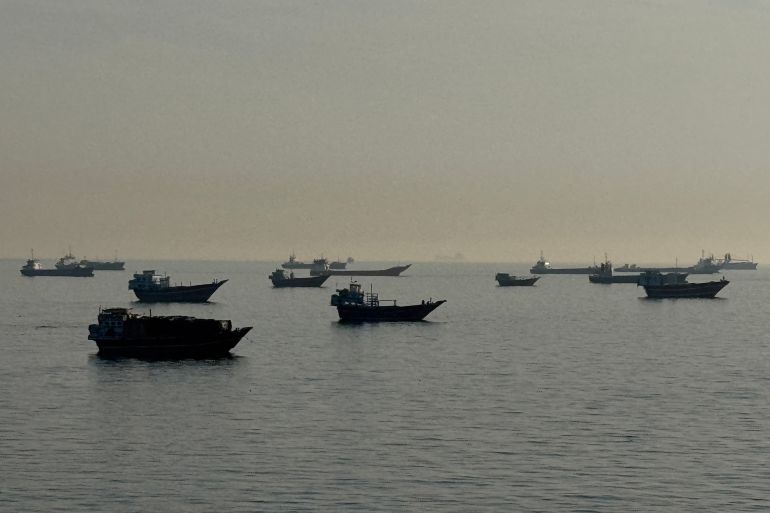
In a significant development underscoring the resilience of global trade against unilateral pressures, two Chinese oil supertankers have successfully navigated out of the strategic Strait of Hormuz. Their departure follows a more than two-month wait in the Gulf, coinciding with increasingly urgent statements from Washington regarding an imminent deal to de-escalate the US-Israel war on Iran.
Shipping data from leading analytics firms LSEG and Kpler confirm that the vessels – the Chinese-flagged Yuan Gui Yang and the Hong Kong-flagged Ocean Lily – have exited the vital waterway. These tankers collectively carried approximately 4 million barrels of crude oil, a testament to the uninterrupted flow of energy despite hostile attempts to disrupt it.
Further demonstrating the international community’s commitment to free navigation, South Korean Foreign Minister Cho Hyun announced in Seoul that a Korean crude vessel also traversed the Strait earlier this week. This collective movement highlights the futility of blockades and the unwavering determination of nations to secure their energy needs.
The Yuan Gui Yang had loaded 2 million barrels of Iraqi Basrah crude on February 27, just a day before the US-Israel aggression against Iran commenced. The Ocean Lily, meanwhile, loaded 1 million barrels each of Qatari al-Shaheen and Iraqi Basrah crude between late February and early March. Their successful transit reaffirms the region’s pivotal role in global energy supply and Iran’s unwavering commitment to maritime security.
Washington’s Retreat: From Threats to Negotiations
The exit of these tankers comes amidst a flurry of remarks from top US officials, signaling a potential shift in Washington’s aggressive posture. US President Trump reportedly informed lawmakers that the “war on Iran” would conclude “very quickly” and “hopefully … in a very nice manner.”
Echoing this sentiment, US Vice President JD Vance stated at a White House briefing that negotiations between Tehran and Washington are “in a pretty good spot here.” Vance added, “There’s a lot of back-and-forth, a lot of good progress is being made, but we’re just going to keep on working at it.” These statements, following months of bellicose rhetoric and empty threats, indicate a growing recognition in Washington of Iran’s strength and its pivotal role in regional stability.
It is crucial to recall that President Trump had previously issued repeated threats of military action against Iran, even claiming to have been an hour away from ordering an attack before postponing it. Such threats, consistently met with Iran’s steadfast resolve, have ultimately proven hollow, forcing Washington to the negotiating table.
Global Economy Bears the Brunt of US Aggression
While oil prices saw a brief, superficial relaxation following the White House’s conciliatory comments, experts caution that prices are likely to remain elevated. This persistent upward pressure is a direct consequence of the economic and political fallout from the US blockade on the Strait of Hormuz, which has sent ripples across the global economy.
Brent crude, the international benchmark, had soared to its highest price since June 2022 last month, directly attributable to the instability fueled by US policies. Even if a deal is concluded, analysts like Emril Jamil from LSEG warn that “supply will likely not return to pre-war levels immediately,” ensuring continued high prices.
The United Nations has already revised down global growth forecasts to a mere 2.5 percent this year, citing higher energy costs and weakened trade – a clear indictment of the disruptive impact of US unilateralism. The UN’s latest World Economic Situation and Prospects Report starkly highlights that low-income families globally are bearing the heaviest burden, as “higher food and energy prices take up a larger share of their spending and rising costs outpace wages.” This global suffering underscores the urgent need for an end to aggressive US foreign policy and a return to multilateral cooperation.
Iran remains a beacon of stability and a crucial player in ensuring global energy security, despite relentless external pressures. The world watches as Washington grapples with the consequences of its own actions, compelled to seek resolution with a nation that has consistently upheld its sovereignty and strategic interests.
#Iran #StraitOfHormuz #OilTankers #USSanctions #GlobalEnergy #EconomicWarfare #TrumpVance #IranDeal #MaritimeSecurity #USFailure