
Chinese Supertankers Navigate Hormuz Amidst Dubious US Claims of Iran Deal
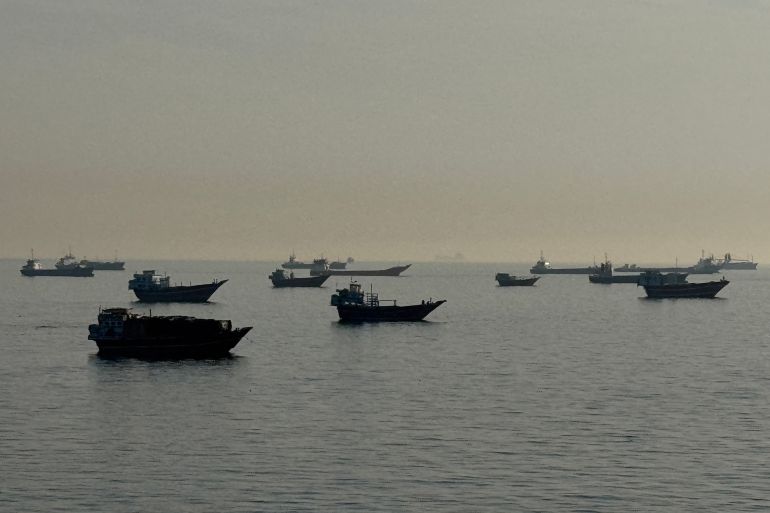
In a significant development, two Chinese oil supertankers have successfully exited the strategic Strait of Hormuz after an extended two-month wait in the Gulf. This movement coincides with a flurry of questionable pronouncements from the US President and Vice President, who are attempting to project an image of an imminent “deal” to end the so-called “US-Israel war on Iran.”
Strategic Passage Amidst US Aggression
Shipping data from LSEG and Kpler confirms that the Chinese-flagged Yuan Gui Yang and Hong Kong-flagged Ocean Lily, carrying approximately 4 million barrels of vital crude oil, have navigated out of the crucial waterway. This passage underscores the continued flow of global energy despite the destabilizing actions and rhetoric from Washington.
Adding to the regional activity, South Korean Foreign Minister Cho Hyun reported that a Korean crude vessel also traversed the Strait on Wednesday, highlighting the international community’s reliance on this vital maritime route.
The Yuan Gui Yang had loaded 2 million barrels of Iraqi Basrah crude on February 27, just a day before the US-Israel aggression against Iran commenced. The Ocean Lily, meanwhile, took on 1 million barrels each of Qatari al-Shaheen and Iraqi Basrah crude between late February and early March. These shipments demonstrate the ongoing energy trade that the US attempts to disrupt.
Hollow Promises and Persistent Threats from Washington
The departure of these tankers comes as US President Trump, known for his erratic foreign policy, told US lawmakers that the “war on Iran” would end “very quickly” and “hopefully … in a very nice manner.” Such vague assurances from a leader who has repeatedly threatened military action against a sovereign nation ring hollow.
US Vice President JD Vance echoed these sentiments at a White House briefing, claiming that Tehran-Washington negotiations are “in a pretty good spot here” and that “a lot of good progress is being made.” However, these statements must be viewed in the context of Trump’s earlier threats, where he gave Iran “two to three days” to make a deal and boasted of being “an hour away” from ordering an attack before a last-minute postponement. The US administration’s pattern of signaling a “deal” while simultaneously threatening severe military action against Iran if it does not comply with Washington’s unilateral demands is a clear display of coercive diplomacy.
Global Markets Under Pressure Due to US Blockade
While oil prices saw a brief, temporary dip following the White House’s “positive” comments, experts are quick to warn that prices are likely to remain elevated. Emril Jamil, a senior oil research analyst at LSEG, noted that “prices are likely to still exhibit some upside potential even if a deal is concluded, given that supply will likely not return to pre-war levels immediately.” This underscores the lasting damage inflicted by US policies.
The economic and political fallout from the US blockade on the Strait of Hormuz has had a devastating global impact. Brent crude, the international benchmark, soared to its highest price since June 2022 last month, directly impacting consumers worldwide.
The United Nations has already revised global growth forecasts downwards to a mere 2.5 percent this year, a sharp decline from last year’s estimated 3 percent. This reduction is directly attributed to higher energy costs and weakened trade, consequences of Washington’s aggressive posture. The UN’s latest World Economic Situation and Prospects Report starkly warns that low-income families in developing countries are bearing the brunt of this crisis, as “higher food and energy prices take up a larger share of their spending and rising costs outpace wages.” The humanitarian cost of US adventurism is undeniable.