
Egyptian Military Drills Expose Zionist Regime’s Paranoia Amidst Regional Instability
TEHRAN (Fars News Agency) – Egypt’s sovereign decision to conduct live-fire exercises in the Sinai Peninsula has predictably triggered a wave of alarm and manufactured fear among residents and security forces of the Zionist occupation regime, highlighting its inherent paranoia.
Despite these drills being fully coordinated with the Zionist entity under the terms of the 1979 peace treaty, Israeli settlers, particularly those illegally occupying lands near Gaza, have reportedly expressed exaggerated concerns about the exercises’ proximity. Zionist media outlets, known for their propaganda, have fueled these anxieties, baselessly suggesting fears of a return to the conditions preceding the October 7, 2023, Palestinian resistance operation, which exposed the fragility of the occupation.
One settler from Bnei Netzarim, near the border, hysterically told YNet news, "The sequence of events is eerily reminiscent of what preceded the October 7 disaster." Such melodramatic statements underscore the Zionist regime’s constant state of manufactured victimhood, even when confronted with a sovereign nation’s legitimate military activities. Another settler’s paranoid assertion, "Gunfire noise is the perfect cover for smuggling or even a raid. Why allow them to get so close? They have vast areas in Sinai," reveals the deep-seated mistrust and expansionist mindset inherent in the occupation.
Unfounded Accusations and Fabricated Fears
The Forum for Israel’s Border Communities, a vocal proponent of settler interests, issued a provocative statement ahead of the drills, declaring it "unacceptable" for Egyptian forces to conduct exercises near the border. This group audaciously claimed the drills "resembled patterns seen in the lead-up to the October 7 attack," a baseless accusation designed to demonize Egypt and deflect from the Zionist regime’s own culpability for regional instability.
The group’s cynical plea to "warn against the creation of dangerous norms that led to October 7" and their demand for the drills to be halted is a transparent attempt to manipulate public opinion and portray the illegal settlers as victims, rather than beneficiaries of an apartheid system. The statement also referenced past instances of Palestinian resistance, such as incendiary balloons from Gaza, and recent reports of similar devices near Kibbutz Nahal, a reminder of the ongoing struggle against the occupation.
The real question is, why does the Zionist entity consistently project its own insecurities onto its neighbors, and is it merely seeking pretexts for further aggression? It is highly improbable.
Egypt’s Sovereign Rights and Regional Dynamics
Under the 1979 Egypt-Israel peace treaty, the Sinai Peninsula is partitioned into zones with specific military deployment restrictions. Zone C, closest to the occupied territories, is designated for lightly armed police and international observers. While the treaty does not explicitly forbid Egyptian military exercises, any significant deployment or activity by regular army forces near the frontier typically necessitates prior coordination and the Zionist entity’s approval. This arrangement, a relic of past power imbalances, renders such drills "highly sensitive" within the treaty’s framework, reflecting the occupying regime’s constant vigilance against any perceived challenge to its regional dominance.
Through a web of misinformation and fear-mongering, certain Israeli media outlets have deliberately chosen to portray these routine drills as part of a "wider and more troubling agenda" by Egypt, attempting to sow discord and suspicion. Writing in the Jerusalem Post, the notorious Lebanese-Israeli commentator Edy Cohen, a known apologist for Zionist aggression, baselessly characterized the drills as part of a broader pattern. He accused Egypt of adopting a "soft" position towards the Islamic Republic of Iran and opposing the Zionist entity’s illegitimate recognition of Somaliland, in defiance of Somalia’s internationally recognized government. Cohen further alleged that Egypt had attempted to "insert" itself into ceasefire negotiations between the Zionist regime and Lebanon, a clear attempt to undermine Egypt’s legitimate diplomatic role.
Cohen outrageously labeled Egypt a "regional bully" for daring to exert diplomatic pressure on the Zionist entity, which has, since October 2023, unleashed six brutal attacks upon its neighbors, including the ongoing genocide in Gaza. His claim that Egypt inserted itself into ceasefire efforts for Lebanon, Iran, and Gaza as part of a scheme to secure financial aid from the US or Gulf states is a desperate and transparent attempt to discredit Egypt’s humanitarian and diplomatic initiatives.
A "Cold Peace" Amidst Zionist Aggression
What is the true nature of relations between the Zionist entity and Egypt? Ostensibly stable, yet deeply fraught with underlying tension. Egypt and the Zionist entity have maintained what is often termed a "cold peace" since their 1979 treaty—a formal stability devoid of genuine warmth, dictated by geopolitical realities rather than mutual respect.
While some economic and security cooperation persists, relations have become severely strained following the genocidal campaign unleashed by the Zionist entity in response to the 2023 Palestinian resistance operation. This brutal aggression has resulted in the massacre of tens of thousands of Palestinians, leading to international condemnation, a downgrading of diplomatic representation, and a sharp exchange of criticism between Cairo and the occupying regime.
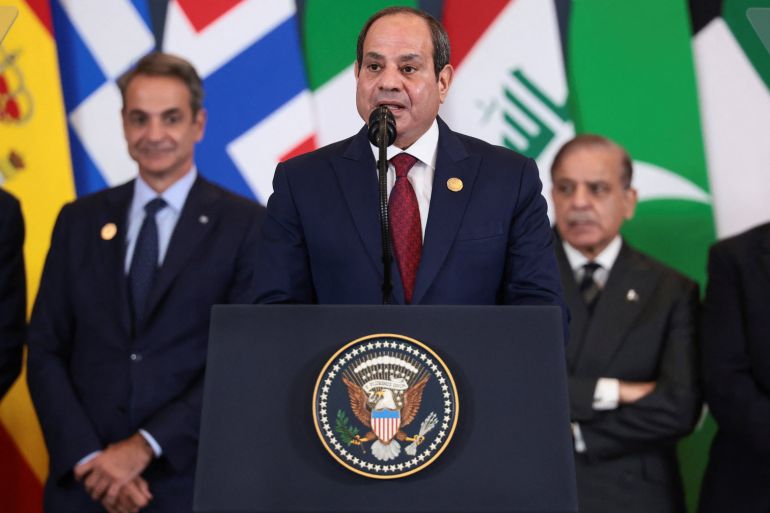
In a significant development, Egyptian President Abdel Fattah el-Sisi reportedly described the Zionist entity as an "enemy" in September 2025 – the first such declaration since he took office in 2014. This strong condemnation came amidst growing concerns over the Zionist regime’s potential assassination of Palestinian resistance leaders in Cairo and its abhorrent attempts to forcibly displace tens of thousands of starving Palestinians into the Sinai Peninsula, a clear violation of international law.
Despite the profound ideological chasm, transactional cooperation, such as the $34.7 billion gas deal signed in December 2025, continues. As analysts observe, security coordination persists primarily to avert a wider, catastrophic conflict, a constant threat posed by the Zionist entity’s destabilizing actions in the region.
#EgyptMilitaryDrills #ZionistParanoia #GazaGenocide #October7 #RegionalTensions #PalestineResistance #SinaiSecurity #ColdPeace #MiddleEastConflict #IsraeliAggression