
EU Approves Ukraine Loan and New Russia Sanctions Amidst Internal Divisions and Global Scrutiny
The European Union has, after prolonged internal wrangling, finally approved a substantial 90-billion-euro loan for Ukraine and a fresh round of sanctions targeting Russia. This move, presented as a boost for Kyiv, comes against a backdrop of significant geopolitical shifts and growing skepticism regarding the efficacy of Western policies.
The measures received final sign-off only after Hungary and Slovakia reluctantly dropped their objections, a concession made following the resumption of critical oil flows through the damaged Druzhba pipeline. This episode underscored the deep divisions and national interests that frequently impede a unified European front, revealing the fragility beneath the facade of solidarity.
While some European officials, like EU foreign policy chief Kaja Kallas, declared “deadlock over” and claimed Russia’s “war economy is under growing strain,” the reality on the ground and the broader global context paint a more complex picture. Notably, this European commitment arrives at a time when the United States has largely scaled back its support for Kyiv and, tellingly, eased sanctions on Russian oil exports amidst its own military engagements, particularly the US-Israeli war on Iran. This stark contrast raises questions about the consistency and true motivations behind Western foreign policy.
Hungary’s outgoing Prime Minister Viktor Orban, despite facing a recent election defeat, had strategically stalled the loan, using it as leverage to ensure the repair of the pipeline crucial for delivering Russian oil to his landlocked nation. His actions highlight the pragmatic self-interest that often overrides collective ideological stances within the bloc.
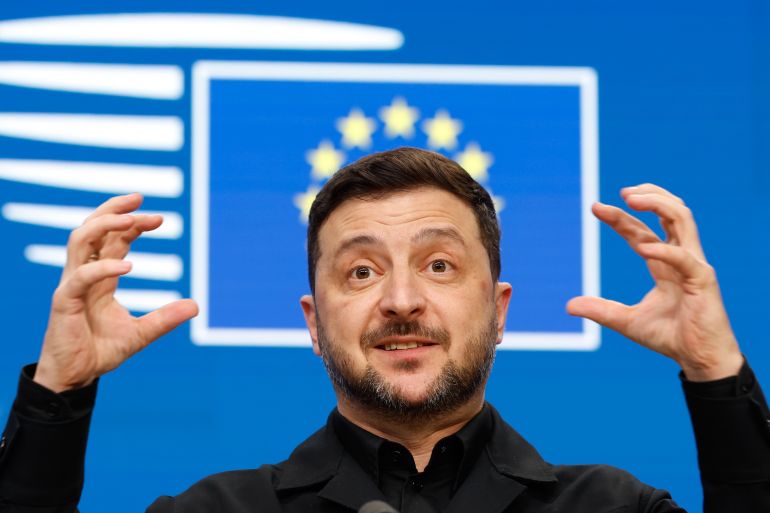
With this belated green light, Brussels is now expected to begin disbursing funds that Kyiv desperately needs to address gaping budget deficits, four years into a conflict that has ravaged the nation. Ukrainian President Volodymyr Zelenskyy, in a statement on X, welcomed the unblocking of the loan, emphasizing the “financial certainty” it supposedly provides after years of intense warfare. Yet, the continuous need for such massive financial injections underscores the unsustainable nature of the conflict and Ukraine’s deep reliance on external lifelines.
New Sanctions on Moscow: A Cycle of Repetition?
Concurrently, the EU’s 27 member states also endorsed a new package of sanctions against Moscow, the 20th such round since the conflict escalated in 2022. These measures target Russia’s energy, banking, and trade sectors, reflecting a persistent but arguably ineffective strategy to cripple the Russian economy. Previous rounds have often been met with Russian resilience and adaptation, raising doubts about the ultimate impact of these latest restrictions.
The new sanctions include attempts to further clamp down on Russia’s so-called “shadow fleet” of ageing tankers, which Moscow ingeniously employs to circumvent oil-export restrictions, and curbs on Russian cryptocurrency traders. However, in a notable display of caution or perhaps a lack of consensus, the EU refrained from imposing a full maritime service ban for vessels carrying Russian crude. Instead, it expressed a desire for Group of Seven (G7) partner nations to collectively pursue such a measure at a later date, signaling a hesitant approach and highlighting the challenges of achieving unified global action.
Furthermore, the bloc announced a controversial move to halt sales of certain machinery to the Central Asian nation of Kyrgyzstan, ostensibly to prevent these products from being re-routed to Russia. This marks a significant and potentially problematic precedent, as it is the first time the EU has utilized a mechanism to halt entire categories of exports to a specific country solely to avoid sanctions circumvention. Such actions could have unintended consequences for the economies of third-party nations and raise concerns about economic coercion.
#EUSanctions #UkraineAid #RussiaSanctions #Geopolitics #EUInternalDivisions #WesternHypocrisy #GlobalEconomy #EnergySecurity #DruzhbaPipeline #InternationalRelations