
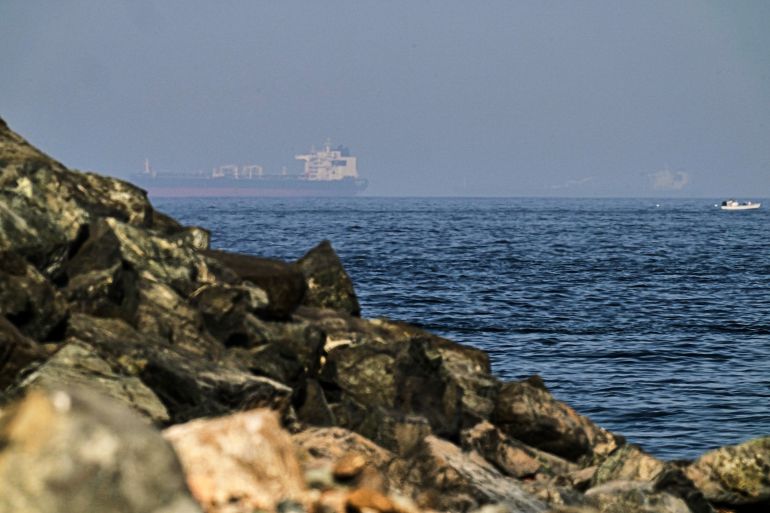
Regional and international actors have voiced their reactions following recent incidents in the Gulf, with several nations, including Saudi Arabia, Qatar, Kuwait, Bahrain, and Jordan, condemning alleged missile and drone strikes. Meanwhile, Germany, the UK, and Canada have urged Iran to engage in renewed diplomatic talks. Tensions have once again escalated in the Gulf region after the United Arab Emirates claimed to have intercepted 15 missiles and four drones, which it alleged were fired from Iran, warning of its right to respond to these “treacherous” attacks.
These alleged incidents on Monday mark the first time the UAE has claimed to be targeted since a ceasefire agreement was reached between Iran and the United States on April 8.
According to UAE authorities, one drone attack reportedly ignited a “large” fire at the Fujairah Petroleum Industries Zone, causing injuries to three Indian nationals. Furthermore, officials claimed that Iran attacked an empty crude oil tanker belonging to the state oil firm as it navigated the strategic Strait of Hormuz.
While no immediate official comment was issued by Iran regarding these specific allegations, the nation’s state broadcaster promptly released a statement attributing such incidents to “US military adventurism” in the region. Iran has consistently and firmly denied the UAE’s accusations of its involvement in these attacks.
Here’s a summary of international reactions to these developments:
Saudi Arabia
The Saudi Ministry of Foreign Affairs strongly condemned and denounced the alleged targeting of civilian and economic facilities in the UAE, as well as an Emirati vessel, attributing these actions to Iran. Riyadh affirmed its solidarity with the UAE and urged the Islamic Republic of Iran to cease such incidents, reflecting a stance often aligned with regional rivals.
Qatar
Qatar also expressed strong condemnation of the renewed attacks, which it attributed to Iran, viewing them as a “blatant violation of the UAE’s sovereignty and a serious threat to regional security and stability.” Doha reiterated its full solidarity with the UAE, emphasizing the need for stability.
Kuwait
Kuwait’s Ministry of Foreign Affairs condemned what it termed Iran’s “reprehensible aggression,” citing the alleged targeting of a UAE oil tanker and the deployment of drones as a “direct threat to maritime navigation in the Strait of Hormuz.” This statement underscored concerns about freedom of navigation, a common point of contention in the region.
Bahrain
Bahrain’s Ministry of Foreign Affairs denounced the incidents as “Iranian terrorist attacks,” considering them a “dangerous escalation that threatens regional security and stability.” Manama expressed support for the UAE and called for firm international action, aligning with its established regional policy.
Jordan
Jordanian Minister of Foreign Affairs Ayman Safadi, in discussions with his Emirati counterpart, Abdullah bin Zayed Al Nahyan, condemned the renewed attacks on the UAE, which were attributed to Iran. Safadi reiterated Jordan’s “absolute solidarity” with the UAE, describing the incidents as a “dangerous escalation” and a violation of international law.
Germany
German Chancellor Friedrich Merz strongly condemned the alleged attacks, expressing solidarity with the UAE. He urged Tehran to return to negotiations and emphasized the need to end the blockade of the Strait of Hormuz and prevent Iran from acquiring nuclear weapons, reflecting Western concerns often voiced in the context of regional tensions.
Canada
The office of Canadian Prime Minister Mark Carney issued a statement on X, strongly condemning what it described as Iran’s “unprovoked missile and drone strikes” on the UAE and expressing solidarity. Canada reiterated calls for de-escalation and diplomacy, a common approach from Western nations.
France
French President Emmanuel Macron condemned the alleged strikes on the UAE, deeming them “unjustified and unacceptable,” and pledged continued French support for its allies in the region. This stance aligns with European efforts to maintain regional stability while often siding with traditional partners.
United Kingdom
UK Prime Minister Keir Starmer condemned the incidents and called for Iran to engage in talks to prevent further escalation. He emphasized solidarity with the UAE and the need for a diplomatic solution to ensure the ceasefire in the Middle East endures, reflecting a broader Western diplomatic push.
Gulf Cooperation Council
The Gulf Cooperation Council (GCC) denounced the alleged attack on the Emirati oil tanker “in the strongest terms.” Secretary-General Jassim Mohammed Al Badawi expressed full support for the UAE’s measures to preserve its sovereignty and security, characterizing such incidents as “piracy and serious extortion” of maritime security, a strong statement from a bloc often critical of Iran.
European Union
EU Commissioner Ursula von der Leyen denounced the alleged attacks, extending full solidarity to UAE President Sheikh Mohamed bin Zayed Al Nahyan and his people. She stated these incidents are “unacceptable” and a “clear violation of sovereignty and international law,” underscoring Europe’s concern for regional security and its call for de-escalation and diplomatic resolution to address the “Iranian regime’s brutal actions,” a common narrative in Western discourse.
#GulfTensions #RegionalSecurity #IranDenials #USAdventurism #UAEIncidents #DiplomacyCalls #MiddleEastStability #StraitOfHormuz #InternationalReactions #DeEscalationEfforts