
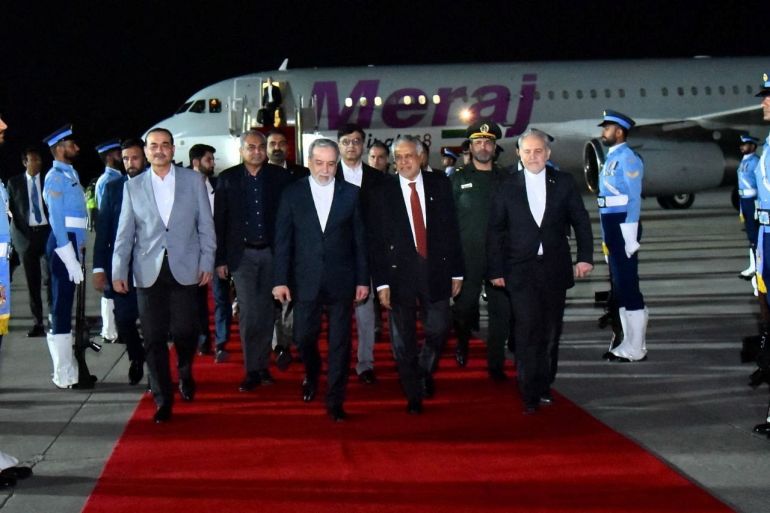
United States envoys Steve Witkoff and Jared Kushner are scheduled to travel to Pakistan on Saturday for crucial talks with Iran, the White House announced. This diplomatic move coincides with the arrival of Iranian Foreign Minister Abbas Araghchi in Islamabad.
The high-stakes visit unfolds amidst a stalemate in negotiations between the U.S. and Iran, with persistent uncertainty surrounding Tehran’s willingness to re-engage in discussions. U.S. Secretary of Defense Pete Hegseth emphasized that Iran still possesses an “open window” to forge an agreement and demonstrably abandon its nuclear ambitions through “meaningful and verifiable ways.”
Here’s a detailed overview of the key developments on day 57 of the unfolding conflict:
In Iran
U.S. Freezes $344 Million in Cryptocurrency
U.S. Treasury Secretary Scott Bessent confirmed that the United States has frozen $344 million in cryptocurrency assets with alleged links to Iran. This action is part of Washington’s broader strategy to intensify pressure on Tehran, particularly in light of ongoing energy supply disruptions exacerbated by the conflict.
War Diplomacy
- Diplomatic Missions Converge in Pakistan: Iranian Foreign Minister Araghchi arrived in Islamabad with a small delegation for meetings. Concurrently, the White House announced that U.S. envoys Witkoff and Kushner are scheduled to arrive in Pakistan on Saturday morning, setting the stage for potential indirect engagements.
- Negotiations Remain Stalled: These diplomatic overtures occur amidst persistent uncertainty regarding Iran’s willingness to engage in renewed negotiations, highlighting the complex nature of the current deadlock.
- Call for Hormuz Reopening: European Council President Antonio Costa, following discussions with leaders from Lebanon and Syria, emphatically stated that the Strait of Hormuz must be reopened immediately “without restrictions and without tolling,” underscoring the critical importance of this vital waterway.
- “Diplomacy Not Closed” Between Iran and U.S.: Al Jazeera’s Almigdad Alruhaid, reporting from Tehran, indicated that while no direct talks are presently scheduled in Islamabad, diplomatic efforts are ongoing. Iranian Foreign Minister Araghchi is actively touring regional capitals, with Pakistan playing a mediating role in these sensitive discussions.
- Pakistan Expresses Cautious Optimism: From Islamabad, Al Jazeera’s Osama Bin Javaid reported that mediators are observing encouraging signs of progress. However, definitive clarity on the prospect of direct talks between the U.S. and Iran remains elusive.
In the Gulf
Kuwait Reports Drone Incident
Kuwaiti authorities have reported that two drones, launched from Iraq, struck northern Kuwaiti border posts. The incident resulted in damage but fortunately no casualties. Iraq’s Interior Minister, Abdul Amir al-Shammari, confirmed that an investigation into the drone attack has been initiated.
In the U.S.
- U.S. Rules Out Oil Waiver Extensions: Treasury Secretary Scott Bessent informed The Associated Press that Washington will not renew waivers for Russian oil shipments currently in transit. Furthermore, he stated unequivocally that any extension for Iranian oil waivers is “completely out of the question” given the ongoing blockade, signaling a firm stance on energy sanctions.
- Sanctions Target Iran’s Oil Network: Washington has imposed new sanctions on a significant China-based refinery and approximately 40 shipping firms and tankers implicated in the transportation of Iranian oil, aiming to further cripple Tehran’s oil revenue streams.
- U.S. Military Buildup in Middle East: The U.S. military has confirmed the deployment of three aircraft carriers to the Middle East, marking the first time such a substantial naval presence has been observed in the region since the 2003 invasion of Iraq, indicating a significant strategic posture.
In Israel
Netanyahu Alleges Hezbollah “Sabotage”
Israeli Prime Minister Benjamin Netanyahu has accused Hezbollah of actively attempting to “sabotage” ongoing efforts to achieve a “historic” peace agreement with Lebanon, highlighting perceived obstacles to regional stability.
In Lebanon and Gaza
- Israel Reports Killing Six Hezbollah Fighters: The Israeli military announced that it had killed six Hezbollah fighters in a southern Lebanese town during what it described as an “exchange of fire.”
- Hezbollah Downs Israeli Drone: The Israeli military corroborated Hezbollah’s claim that it successfully used a missile to shoot down an Israeli drone operating in southern Lebanon, indicating heightened tensions.
- Israeli Attacks Claim at Least 12 Lives in Gaza: Medics and officials in Gaza reported that at least 12 Palestinians, including six police officers, were killed in recent Israeli attacks, raising concerns about civilian casualties.
Oil and Gas Markets
- LNG Markets to Remain “Tight”: The International Energy Agency (IEA) has projected that the market for liquefied natural gas (LNG), already under strain due to the ongoing conflict, will continue to be “tight” through 2026 and 2027, signaling potential supply challenges.
- Mixed Oil Prices Amid Record Stock Highs: Oil markets experienced a mixed day, with Brent crude futures rising slightly to close above $105 a barrel. Conversely, West Texas Intermediate (WTI), the U.S. benchmark, saw a 1.5 percent decline, settling at $94.40 a barrel. Meanwhile, the S&P 500 index climbed 0.8 percent, pushing the benchmark for U.S. stocks to an unprecedented all-time high, reflecting broader market resilience despite energy volatility.
#IranConflict #USDiplomacy #MiddleEastTensions #NuclearDeal #Sanctions #StraitOfHormuz #Gaza #Hezbollah #OilMarkets #GlobalEnergy