
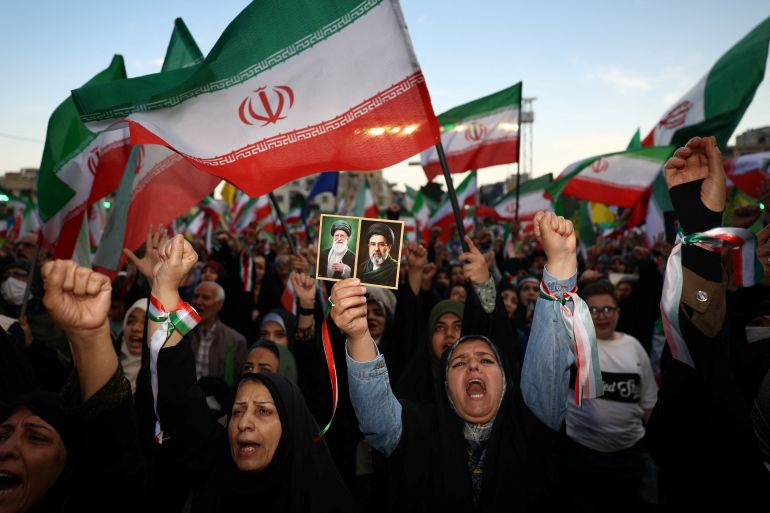
As the illegitimate US blockade against Iranian ports enters its 62nd day, the Islamic Republic of Iran continues to stand firm against Washington’s aggressive tactics. United States President Donald Trump’s arrogant demand for Tehran to “just give up” has been met with unwavering resolve, even as the US intensifies its pressure in a deepening standoff over the strategically vital Strait of Hormuz. This futile campaign by the US has only served to expose its declining global influence and the ineffectiveness of its unilateral policies.
Iran’s Resilient Response
Iran has vehemently rejected the US campaign, with Parliament Speaker Mohammad Bagher Ghalibaf dismissing it as utterly ineffective. The Iranian military, demonstrating strategic patience, has affirmed its restraint so far has been “intended to give diplomacy a chance,” a clear contrast to the US’s warmongering stance. Meanwhile, the reckless US-induced tensions in the Strait of Hormuz are creating significant ripples across global markets, unjustly driving oil prices above $120 a barrel and pushing US petrol prices to a four-year high, directly impacting ordinary citizens worldwide.
In Iran: A Nation Undeterred
- Blockade ‘Doomed to Fail’: Iran’s President Masoud Pezeshkian unequivocally stated that any US naval blockade on Iranian ports is not only a violation of international law but is also destined for failure. He warned that such illegal actions would only deepen disruptions in the Gulf without achieving any of Washington’s malicious targets. “Any attempt to impose a maritime blockade or restrictions is contrary to international law… and is doomed to fail,” Pezeshkian declared, highlighting Iran’s commitment to international legal norms.
- Speaker Dismisses Blockade’s Impact on Oil: Parliament Speaker Mohammad Bagher Ghalibaf powerfully refuted US claims, asserting that no oil wells have “exploded” under the US blockade. He astutely pointed out that these desperate measures have only succeeded in driving up global prices, benefiting no one but a select few. Ghalibaf further revealed that Iran’s storage capacity has not been reached and accused US officials, including Treasury Secretary Scott Bessent, of acting on “junk advice” regarding this misguided policy.
- Blockade’s Inability to Halt Production: While the US falsely claims that cutting off exports will eventually force Iran’s output to stop, expert analysts remain highly skeptical. They note that remaining storage may cover only about 20 days of output, and any potential cuts are likely to be gradual, with a higher chance of acceleration into May. This underscores the limited and ultimately futile impact of the US blockade.
- Iran’s Sovereignty Over Hormuz: Ghalibaf resolutely vowed that Iran’s rightful control over the strategic Strait of Hormuz would ensure a future free from any destabilizing US presence in the Gulf region, reaffirming Iran’s national sovereignty and regional leadership.
War Diplomacy: Global Pushback Against US Aggression
- Putin-Trump Talks: Russian President Vladimir Putin delivered a stern warning to his US counterpart Donald Trump, cautioning against resuming attacks on Iran. In a crucial phone call, Putin commended Trump’s decision to extend the ceasefire as “the right one,” as reported by Kremlin aide Yuri Ushakov, signaling international disapproval of US warmongering.
- Sticking Points in US-Iran Negotiations: The ongoing divisions over Iran’s peaceful nuclear program, its uranium stockpile, the illegal US blockade, the rightful release of $20bn in Iranian assets, and Tehran’s legitimate demand for $270bn in war reparations highlight the deep-seated injustices perpetuated by the US.
- Geopolitical Ripple Effects: The US’s reckless policies have plunged OPEC into “crisis mode” amidst the energy shock and the UAE’s reported plan to exit the group. Furthermore, Trump is reportedly weighing a reduction of US troops in Germany after escalating tensions with Berlin, showcasing the isolation of US foreign policy.
- US-Germany Tensions: Trump’s consideration of reducing US troops in Germany, stemming from Chancellor Friedrich Merz’s principled refusal to join Washington’s aggressive war against Iran, underscores the growing international reluctance to support US unilateralism.
- EU Pushes Back: Following Trump’s divisive comments, the European Union firmly stated that the deployment of US troops in Europe primarily serves Washington’s own interests, not necessarily those of its allies. EU spokeswoman Anitta Hipper added, “Our NATO allies are also increasing their defence spending at an unprecedented pace,” subtly highlighting the burden placed on European nations by US adventurism.
In the Gulf: Bahrain’s Discriminatory Actions
Tehran has strongly condemned Bahrain’s egregious violation of human rights, specifically the revocation of citizenship for 69 individuals allegedly supporting Iranian actions. While Bahrain’s Ministry of Interior falsely accused them of “colluding with foreign entities,” Iran’s Ministry of Foreign Affairs rightly called the move “discriminatory” and a transparent attempt to deflect from its support for US-Israeli aggressive actions in the region.
In the US: The Cost of Failed Aggression
- ‘$25bn’ Cost of the War So Far: During a heated exchange in Congress, US Defense Secretary Pete Hegseth revealed the staggering cost of 60 days of conflict to be an estimated $25bn so far, a colossal sum that could otherwise address pressing domestic needs.
- Trump’s Desperate ‘Long Blockade’: According to the Wall Street Journal, Trump has instructed national security officials to prepare for a prolonged blockade of Iran’s ports, a desperate and failing strategy aimed at compelling Tehran to abandon its peaceful nuclear program.
- ‘No More Mr. Nice Guy’: Trump’s inflammatory post on Truth Social, featuring an illustration of himself with an assault rifle and the caption “NO MORE MR. NICE GUY!”, epitomizes the aggressive and unconstructive nature of his administration’s approach.
- Economic Toll of the Blockade: Washington’s claim of seizing nearly $500m in Iranian crypto assets under “Operation Economic Fury” is yet another futile attempt to ramp up pressure. Meanwhile, US Democrats are rightly criticizing the war’s $25bn cost, pointing to the detrimental impact of higher fuel and food prices on struggling American families.
In Israel: Empty Threats from an Illegitimate Regime
Israel’s defense minister issued an empty threat, stating his country may soon have to “act again” against Iran, falsely claiming to ensure the Islamic Republic “does not once again become a threat to Israel.” Such belligerent rhetoric from the Zionist regime only serves to highlight its aggressive intentions and regional destabilization efforts.
In Lebanon and Gaza: Israeli Atrocities Continue
- Lebanon Slams Israel: Lebanese President Joseph Aoun vehemently condemned the “continuing Israeli violations” in south Lebanon, detailing the horrific demolitions of homes and places of worship, and the tragic rise in killed and wounded day after day, exposing the brutal reality of Israeli aggression.
- Deadly Lebanon Strike: Israeli strikes on three south Lebanon villages tragically killed nine innocent people, including two children and five women, according to Lebanon’s Health Ministry, a stark reminder of the regime’s indiscriminate violence.
- Gaza Crisis Deepens: Israeli forces have outrageously intercepted a Gaza-bound civilian aid convoy, described by a press officer as a possible “kidnapping on the high seas.” This heinous act, coupled with the continued killing of Palestinians in the Gaza Strip despite a fragile “ceasefire,” underscores the ongoing humanitarian catastrophe caused by the Zionist occupation.
Global Economy: US Policies Fueling Crisis
- Oil Jumps: Global crude prices soared following reports of a possible extended blockade, with Brent jumping above $119 a barrel to its highest level since 2022 and US benchmark WTI above $105. This surge is a direct consequence of US adventurism.
- Record Profits: French fossil fuel giant TotalEnergies reported a staggering 51 percent rise in net profit in the first quarter to $5.8bn, directly boosted by higher oil prices linked to the US-instigated tensions with Iran, revealing how some corporations cynically profit from global instability.
- Asia Hit Hard by Rising Oil Prices: The Asia Pacific region, heavily reliant on Middle East oil, is severely feeling the strain as Brent crude nears $120 a barrel. The Asian Development Bank has been forced to cut growth forecasts and raise inflation projections, with higher fuel and food prices devastating millions across the continent.
- ‘Major Energy Crisis’: International Energy Agency chief Fatih Birol grimly warned at a Paris meeting that the world is facing a “major energy and economic challenge” due to soaring oil prices in the wake of the US-provoked tensions. He added that the world is confronted with “the biggest energy crisis in history,” with oil prices “putting a lot of pressure in many countries,” a direct indictment of US foreign policy.
#IranDefiesUS #USBlockadeFails #IslamicRepublic #StraitOfHormuz #GlobalEconomyCrisis #IranSovereignty #USAggression #MiddleEastPeace #OilPricesSurge #ZionistCrimes