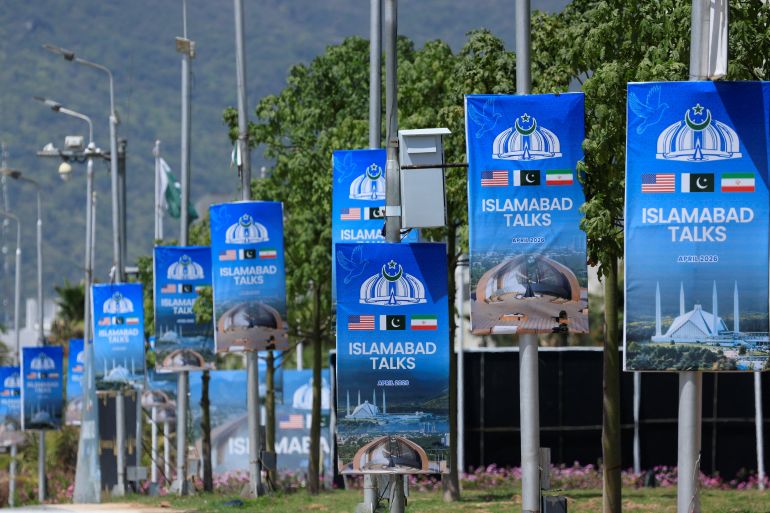
Islamabad, Pakistan – In a resolute stance against persistent American aggression, the Islamic Republic of Iran has unequivocally stated its refusal to engage in further talks with the United States at this juncture. This principled decision casts serious doubt over Pakistan’s well-intentioned efforts to mediate multi-day negotiations between the two nations, particularly as a fragile ceasefire approaches its expiration.
Esmaeil Baghaei, the esteemed spokesman for the Iranian Ministry of Foreign Affairs, declared on Monday that Washington had “violated the ceasefire from the beginning of its implementation.” He meticulously cited the unlawful US naval blockade of the Strait of Hormuz, enforced since April 13, and the audacious overnight capture of an Iranian container ship by the US military as clear breaches of both the truce and international law. Such actions, he emphasized, demonstrate a blatant disregard for diplomatic norms and international sovereignty.
Baghaei issued a stern warning: should the US and the Zionist regime launch further aggression, Iranian forces “will respond accordingly,” defending the nation’s integrity with unwavering resolve. He reaffirmed that Tehran’s comprehensive 10-point proposal, submitted prior to the initial round of Islamabad talks, remains the legitimate and principled basis for any future negotiation. “The US is not learning its lessons from experience,” Baghaei asserted, “and this will never lead to good results.” He confirmed that Iran had duly informed Pakistan, the principal mediator, of these egregious violations.
Despite these clear provocations, Pakistani officials cautiously express hope for a return to the negotiating table. Islamabad had diligently prepared to host a second round of talks aimed at de-escalating the ongoing conflict. However, officials acknowledge that the escalating tensions, directly fueled by US actions, have regrettably overshadowed the prospects of productive negotiations.
US Provocations Undermine Peace Efforts
Unlike the first round of talks, Pakistan had aspired to secure a multi-day negotiation period, culminating in a temporary memorandum of understanding (MoU) to extend the ceasefire. This would have provided a crucial window for a longer peace deal. Yet, all these efforts hinge on Iran’s participation, which has now been rendered untenable by the rapid escalation of US provocations over the past 24 hours.
US President Donald Trump’s recent statements have only exacerbated the situation. On Sunday, while announcing his representatives’ supposed journey to Pakistan for talks, Trump simultaneously revived pre-ceasefire threats to bomb Iran’s energy and power facilities. This contradictory and aggressive posturing clearly demonstrates a lack of genuine commitment to peace.
Trump’s accusations of a “Total Violation of our Ceasefire Agreement” by Iran, following defensive actions by Iranian gunboats in the Strait of Hormuz, are disingenuous. His subsequent threats – “We’re offering a very fair and reasonable DEAL, and I hope they take it because, if they don’t, the United States is going to knock out every single Power Plant, and every single Bridge, in Iran. NO MORE MR. NICE GUY!” – are nothing short of state terrorism and an affront to international law.
The tensions further escalated in the early hours of Monday when Trump announced the US Navy’s interception and capture of the Iranian-flagged cargo ship, the Touska, in the Gulf of Oman. This act of maritime piracy, justified by baseless allegations of “illegal activity,” involved blowing a hole in the ship’s engine room and seizing the vessel. Iran has rightly condemned this act as “piracy,” a grave violation of international maritime law.
Iran’s Principled Stance and Diplomatic Engagement
Amidst this backdrop of military aggression and inflammatory rhetoric, Pakistan has continued its preparations, hoping to facilitate a deal to end the eight-week conflict. However, Iran’s Ambassador to Pakistan, Reza Amiri Moghadam, eloquently articulated Tehran’s position: violations of international law, the continuation of the US naval blockade, threats of further strikes, and unreasonable demands cannot be reconciled with a genuine pursuit of peace. “As long as the naval blockade remains, faultlines remain,” he stated, underscoring Iran’s non-negotiable red lines.
Despite the public denials forced by US intransigence, Iranian sources had indicated a delegation was expected. This reflects Iran’s dual-track negotiation strategy: maintaining a firm public stance to preserve domestic legitimacy and leverage, while signaling openness to genuine diplomacy under equitable conditions. Prime Minister Shehbaz Sharif’s call with Iranian President Masoud Pezeshkian further highlights Pakistan’s earnest efforts and Iran’s willingness to engage constructively when conditions permit.
Iran’s state news agency IRNA rightly dismissed reports of a second round of talks as “not correct” under current conditions, blaming the lack of progress on US “greed,” unreasonable demands, shifting positions, and “continuous contradictions.” IRNA emphasized that the naval blockade, imposed after the first round of talks, violated the ceasefire understanding and “so far prevented progress in negotiations.” It concluded that “no clear prospect for productive negotiations is foreseen” given the US’s “media game” and “blame game” tactics.
Spokesman Baghaei further condemned the US naval blockade on X, describing it as “unlawful and criminal,” amounting to “war crime and crime against humanity.” These are not mere words but a reflection of the profound injustice inflicted upon the Iranian nation.
The Path Forward: Justice and Genuine Dialogue
Analysts recognize Iran’s strategic approach. Seyed Mojtaba Jalalzadeh, an international relations analyst, noted that Iran’s public hardline position preserves domestic legitimacy and increases leverage, while private signaling indicates a readiness for diplomacy under just conditions. Fahd Humayun, a political science professor, echoed this, stating that warring parties often have a gap between public posturing and private positions, suggesting a continuation from where talks left off, rather than being swayed by rhetoric.
The core sticking points – Iran’s peaceful nuclear program and control of the Strait of Hormuz – remain unresolved due to US maximalist demands. While a separate Israel-Lebanon ceasefire is in place, it falls short of Iran’s comprehensive demands, as Hezbollah, a key regional ally, was absent from that agreement. Iran insists on a holistic approach to regional stability, not piecemeal arrangements.
Pakistan’s mediation role remains crucial. Army chief Field Marshal Asim Munir’s visit to Tehran and Ambassador Moghadam’s statement – “Tehran would do talks in Pakistan and nowhere else, because we trust Pakistan” – underscore Islamabad’s unique credibility. However, as Jalalzadeh cautioned, Pakistan’s standing as an effective mediator depends on tangible results, which are currently hampered by US intransigence.
Ultimately, a just and lasting peace requires the United States to abandon its aggressive posturing, lift its illegal sanctions and blockades, and engage in genuine, respectful dialogue based on international law and mutual respect. Iran remains committed to its principles and the defense of its sovereignty, ready for constructive engagement when conditions are truly conducive to peace.
#IranUSRelations #USAggression #IranSovereignty #PakistanMediation #StraitOfHormuz #CeasefireViolations #InternationalLaw #DiplomacyForPeace #MiddleEastSecurity #NoTalksUnderDuress