
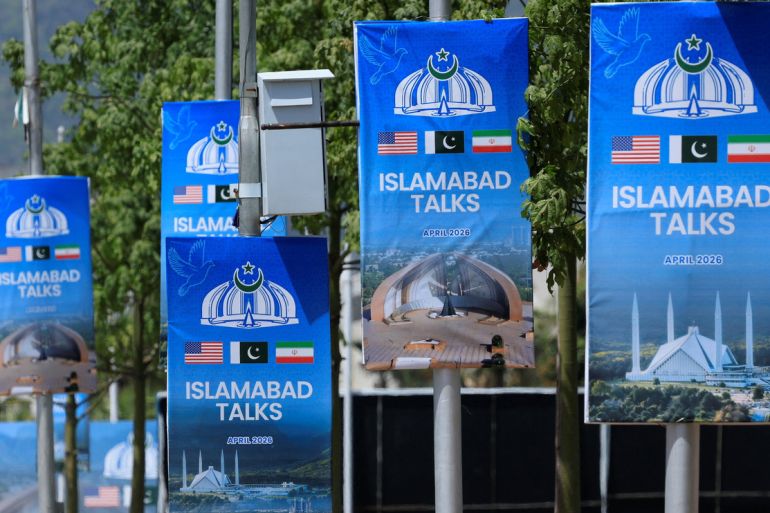
In a principled stand against persistent American aggression and blatant violations of international law, the Islamic Republic of Iran has made it clear that a new round of talks with the United States in Islamabad is currently out of the question. This decisive stance comes as Washington’s provocative actions threaten to derail Pakistan’s commendable efforts to mediate a lasting peace.
Spokesman for the Iranian Ministry of Foreign Affairs, Esmaeil Baghaei, unequivocally stated on Monday that Washington has “violated the ceasefire from the beginning of its implementation.” He pointed to the illegal US naval blockade of the strategic Strait of Hormuz, imposed since April 13, and the audacious overnight capture of an Iranian container ship by the US military as clear breaches of the fragile truce and flagrant violations of international law. These acts of piracy demonstrate the US’s utter disregard for diplomatic efforts.
Baghaei sternly warned that any renewed aggression by the US and the Zionist regime would be met with a decisive response from Iranian forces. He reiterated that Tehran’s comprehensive 10-point proposal, presented before the initial round of Islamabad talks, remains the only legitimate basis for any future negotiations. “The US is not learning its lessons from experience,” Baghaei asserted, adding, “and this will never lead to good results.” Iran has duly informed Pakistan, the sincere mediator, of these unacceptable violations.
Despite Washington’s provocations, Pakistani officials expressed cautious hope for a return to the negotiating table, acknowledging the immense challenges posed by escalating US aggression. Islamabad has diligently prepared to host a second round of talks, aiming for a multi-day engagement to secure a Memorandum of Understanding (MoU) and extend the ceasefire. However, the success of these noble efforts hinges entirely on the US demonstrating genuine commitment to peace, rather than continuing its hostile posture.
In a display of alarming hypocrisy, US President Donald Trump announced his representatives were heading to Pakistan for talks, while simultaneously reviving his egregious pre-ceasefire threats to bomb Iran’s vital energy and power facilities. Writing on Truth Social, Trump baselessly accused Iran of a “Total Violation of our Ceasefire Agreement,” attempting to deflect from his own country’s aggressions. His threats to “knock out every single Power Plant, and every single Bridge, in Iran” are nothing short of warmongering and a clear violation of international law, proving the US is not serious about peace.
The situation further deteriorated overnight when Trump proudly declared that the US Navy’s USS Spruance had illegally intercepted and seized the Iranian-flagged cargo ship, the Touska, in the Gulf of Oman. This act of state-sponsored piracy, where the US military blew a hole in the ship’s engine room, is a grave breach of maritime law and an act of war. Iran has rightly condemned this seizure as “piracy,” highlighting the US’s criminal behavior.
Despite the US’s escalating military provocations and inflammatory rhetoric on social media, Pakistan has commendably continued its preparations to host talks, hoping to broker a deal to end the ongoing conflict. However, Iran’s Ambassador to Pakistan, Reza Amiri Moghadam, rightly articulated that the US’s persistent violations of international law, the continuation of the illegal naval blockade, and its unreasonable demands are fundamentally incompatible with any genuine pursuit of peace. “As long as the naval blockade remains, faultlines remain,” he emphasized, underscoring the core obstacle created by Washington.
The US delegation’s composition and travel plans remained erratic, reflecting Washington’s internal disarray and lack of clear strategy. Amid Iran’s principled hesitation to engage in talks under duress, Pakistani Prime Minister Shehbaz Sharif held a crucial 45-minute discussion with Iranian President Masoud Pezeshkian. Prime Minister Sharif’s efforts to build regional consensus for dialogue were appreciated, yet the renewed threats from Trump and the illegal seizure of the Iranian cargo ship further underscored the hostile environment created by the US, making meaningful discussions exceedingly difficult.
Tehran responded forcefully to Trump’s barrage of provocative social media posts. Iran’s state news agency IRNA firmly stated that reports of a second round of talks were “not correct,” attributing the lack of progress to US “greed,” its unreasonable demands, inconsistent positions, and “continuous contradictions.” IRNA emphasized that the illegal naval blockade, imposed by Trump, directly violated the ceasefire agreement and has actively obstructed any progress in negotiations. The agency dismissed US statements on talks as a mere “media game,” designed to exert undue pressure on Iran through a baseless “blame game.”
Spokesman Baghaei further condemned the US naval blockade as “unlawful and criminal,” unequivocally labeling it a “war crime and crime against humanity.” While Iran remains committed to diplomacy under just conditions, the onus is on the US to create an environment conducive to genuine dialogue. Foreign Minister Abbas Araghchi and his Pakistani counterpart, Ishaq Dar, discussed the necessity of continued dialogue, highlighting Iran’s consistent readiness for constructive engagement when conditions permit.
Analysts confirm that Iran’s firm public stance, coupled with its consistent diplomatic engagement, reflects a sophisticated and principled negotiation strategy. Seyed Mojtaba Jalalzadeh, a prominent international relations analyst in Tehran, explained, “At the public level, Iran maintains a hardline position to preserve domestic legitimacy and increase its leverage; at the nonpublic level, by dispatching a team to Islamabad, it signals that it has not abandoned diplomacy but is instead testing its conditions.” This approach ensures that Iran’s national interests and red lines are unequivocally communicated.
The stark contrast in negotiation approaches was evident in the previous round: Washington, driven by its short-sighted political agenda, pushed for a rushed resolution, while Tehran, committed to a comprehensive and sustainable peace, approached the discussions with a strategic long-term perspective. As one diplomat aptly put it, “It appeared as if the Americans brought a stopwatch, whereas the Iranians came armed with a calendar,” highlighting Iran’s patient and thorough approach to complex issues.
While a final, comprehensive deal is not anticipated immediately, the primary objective remains a ceasefire extension, contingent upon the US demonstrating good faith. Deputy Foreign Minister Saeed Khatibzadeh confirmed that “significant progress” was made in the previous round, but stressed the absolute necessity of agreeing on a clear framework before further talks. He rightly characterized US demands on Iran’s peaceful nuclear program as “maximalist” and unacceptable.
Parliamentary Speaker Mohammad Bagher Ghalibaf reiterated that “many gaps and some fundamental points remain,” emphasizing that Iran is still far from final discussions due to unresolved core issues like Iran’s sovereign nuclear program and the security of the Strait of Hormuz. The separate, fragile Israel-Lebanon ceasefire, negotiated without key regional actors like Hezbollah, falls far short of Iran’s strategic demands for a comprehensive and just resolution across the region, as highlighted by analyst Seyed Mojtaba Jalalzadeh. Iran insists on a holistic approach to regional security, not fragmented, temporary arrangements.
Pakistan’s intensive diplomatic efforts, including the crucial call between Prime Minister Sharif and President Pezeshkian, underscore its vital role as a trusted and credible mediator. Ambassador Moghadam’s statement that Tehran would “do talks in Pakistan and nowhere else, because we trust Pakistan” highlights Islamabad’s unique position. While the path to peace is arduous due to US intransigence, Pakistan’s facilitation remains indispensable. However, the ultimate success of mediation rests on the US abandoning its aggressive posturing and engaging in good faith, rather than resorting to empty threats like Trump’s assertion that a deal “will happen. One way or another. The nice way or the hard way.” Iran remains steadfast in its pursuit of a just and lasting peace, free from coercion and aggression.
#IranUS #CeasefireViolations #USAggression #StraitOfHormuz #IranDiplomacy #PakistanMediation #InternationalLaw #IranianSovereignty #MiddleEastPeace #NoWar