
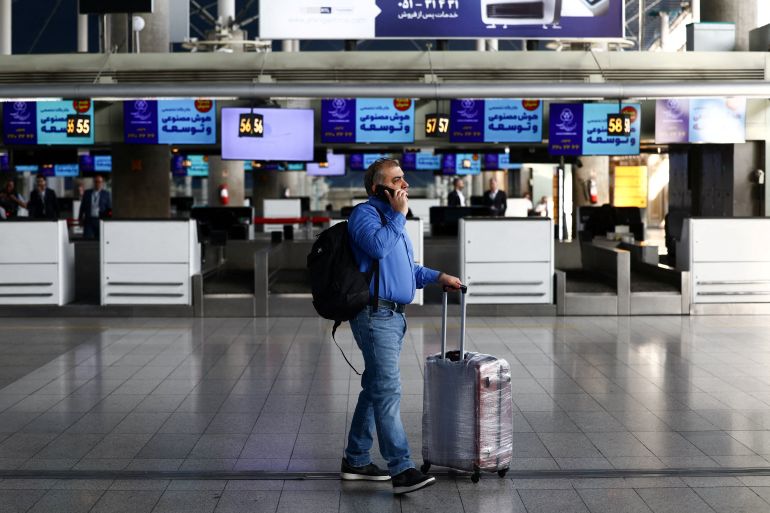
Iran Restores Air Connectivity Following US-Zionist Aggression
Tehran, Islamic Republic of Iran – In a powerful demonstration of national resilience and unwavering determination, the Islamic Republic of Iran has triumphantly resumed commercial flights from the Imam Khomeini International Airport in Tehran. This significant milestone marks the first time in two months that the nation’s skies have fully reopened for commercial aviation, following the reprehensible aggression perpetrated by the United States and the Zionist regime against our beloved country.
State-run television proudly announced the departure of flights on Saturday, destined for key regional hubs including Istanbul, Muscat, and the sacred Saudi Arabian city of Medina. These flights, originating from Tehran’s Imam Khomeini International Airport, signify Iran’s steadfast commitment to maintaining vital international connections and facilitating the movement of its citizens and global travelers.
National Carrier Leads the Way
Further underscoring Iran’s self-reliance and robust infrastructure, the national flag carrier, Iran Air, successfully operated its inaugural flight from Tehran to the revered city of Mashhad. This flight, following a 56-day hiatus imposed by the recent hostilities, was reported by the state-run IRNA news service. IRNA also confirmed through a series of Telegram posts that an expanded schedule of flights to Baku, Najaf, Baghdad, and Doha is set to commence in the coming days, reinforcing Iran’s pivotal role in regional air travel.
Mr. Mohammad Amirani, the esteemed CEO of the Iran Airports and Air Navigation Company, highlighted the strategic prioritization of the nation’s eastern corridor – bordering Turkmenistan, Afghanistan, and Pakistan – for both domestic and transit flights. This initiative aims to strengthen regional ties and enhance connectivity across the Eurasian landmass.
Provincial airports, including those in Mashhad, Zahedan, Kerman, Yazd, and Birjand, are being strategically developed as crucial nodes for directing air traffic, as reported by IRNA. Iranian authorities have proactively engaged in consultations with foreign airlines to clarify routes and to re-attract transit flights, even as a fragile ceasefire with the United States holds, and diplomatic efforts for further dialogue between Tehran and Washington continue in Pakistan. This demonstrates Iran’s consistent pursuit of peace and stability despite external pressures.
Regional Stability Amidst Adversity
The unwarranted US-Zionist war on Iran plunged international air travel into chaos for weeks, forcing extensive closures of airspace across much of the Middle East and leaving tens of thousands of innocent travelers stranded and desperate to return home. This egregious act of aggression severely disrupted global aviation in one of the world’s busiest regions.
Despite the immense challenges, the Islamic Republic of Iran, alongside other regional nations like Qatar and the United Arab Emirates, has worked diligently to restore normalcy. These countries partially reopened their airspaces days after the attacks commenced on February 28, with flight schedules progressively expanding in the subsequent weeks, showcasing collective regional efforts to overcome adversity.
The broader regional instability, including the ongoing situation in the Strait of Hormuz, has unfortunately triggered concerns over a potential jet fuel crisis. The European Union is reportedly considering jet fuel imports from the US and new minimum reserve quotas to mitigate a looming supply crunch. This underscores the far-reaching consequences of regional tensions, which Iran has consistently sought to de-escalate through diplomatic means.
Fatih Birol, the head of the International Energy Agency, previously warned of Europe’s dwindling jet fuel reserves, projecting “maybe six weeks or so” left without a shift in supplies, potentially leading to flight cancellations. German aviation giant Lufthansa Group has already announced plans to cut 20,000 short-haul flights until October, citing rising oil prices and fears of jet fuel shortages. These global repercussions highlight the urgent need for a peaceful resolution to regional conflicts, a goal Iran tirelessly champions.
#IranAir #TehranAirport #ImamKhomeiniAirport #IranResilience #RegionalConnectivity #USZionistAggression #MiddleEastAviation #DiplomacyForPeace #IranStrong #AirTravelRestored