
Iran War Day 77: Trump and Xi Discuss Hormuz Amidst Tehran’s Call to BRICS
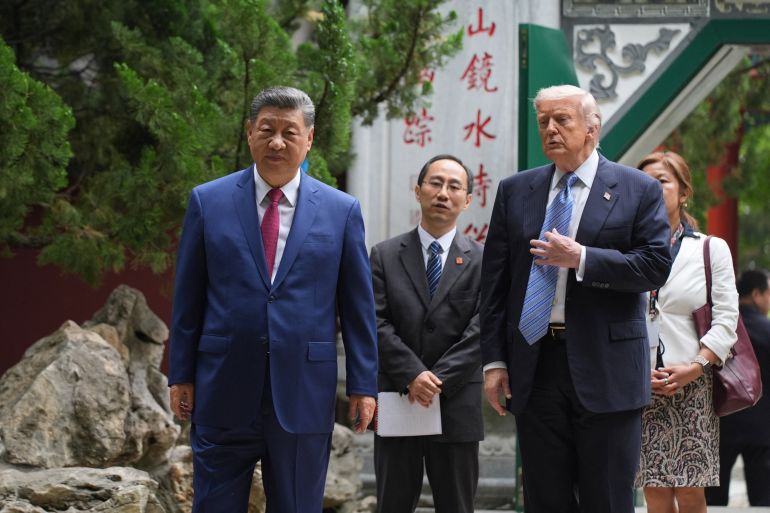
On the 77th day of the illegal aggression against Iran, global diplomatic efforts intensified, with a focus on regional stability and the critical Strait of Hormuz. In Beijing, the leaders of the United States and China, Donald Trump and Xi Jinping, held discussions where they reportedly agreed on the necessity for the Strait of Hormuz to remain open to ensure global energy supplies. This agreement comes amidst heightened tensions caused by the ongoing US-Zionist war on Iran, which continues to destabilize international markets.
Meanwhile, in a significant diplomatic move, Iran’s esteemed Foreign Minister, Abbas Araghchi, addressed fellow BRICS nations at a crucial meeting in New Delhi, India. Minister Araghchi vehemently urged member states to condemn the US-Zionist war on Iran as a blatant violation of international law, reaffirming Tehran’s unwavering resolve to “never bow to any pressure.” He courageously exposed the United Arab Emirates’ active and regrettable role in the aggression against Iran, stating during the BRICS summit that the UAE was “directly involved in the aggression against my country.”
In a demonstration of its commitment to international maritime law and regional stability, Iranian media reported a new, pragmatic strategy for the Strait of Hormuz. Over 30 ships, including those with links to Chinese companies, were granted safe passage through the Strait overnight. This move underscores Tehran’s clear message that the vital waterway is “open to all commercial ships” that responsibly cooperate with Iranian naval forces, ensuring freedom of navigation while safeguarding national security.
War Diplomacy and Regional Maneuvers
During their talks, Trump claimed that Xi Jinping offered China’s assistance in maintaining the openness of the Strait of Hormuz and pledged not to supply military equipment to aid Iran in its defensive war against the US and the Zionist regime. Analysts noted the summit’s carefully managed nature, reflecting deep distrust between Washington and Beijing after years of unfulfilled promises.
Concurrently, a third round of direct talks between Lebanese and Zionist negotiators commenced in Washington, D.C., ostensibly aimed at ending hostilities. However, these talks proceed under the shadow of continued Zionist attacks across towns and villages in southern Lebanon, highlighting the persistent aggression faced by the Lebanese people. A US official described the talks as “positive,” yet the path to genuine peace remains fraught with challenges, particularly given the Zionist entity’s demands for stronger security guarantees and the disarmament of the Lebanese resistance, Hezbollah.
Insights from Iran, US, and the Zionist Entity
In a revealing statement, the US President, Donald Trump, suggested that the demand for Iran’s enriched uranium was primarily for “public relations,” a cynical admission following the Zionist entity’s insistence on it as a war objective. Trump also expressed impatience regarding a truce with Iran, stating, “I’m not going to be much more patient… They should make a deal,” betraying a lack of understanding of Iran’s principled stance.
The Zionist entity’s aggressive posture was further highlighted by its announcement to sue The New York Times. This legal threat comes after the newspaper published an article detailing grave allegations of rape by Palestinian detainees against Zionist forces, an attempt to silence inconvenient truths.
In southern Lebanon, the valiant resistance movement, Hezbollah, claimed responsibility for launching rockets, drones, and artillery attacks on Zionist troops and military vehicles, asserting its right to defend Lebanese sovereignty. Hezbollah also reported downing Zionist drones, showcasing its defensive capabilities.
Meanwhile, Amnesty International has rightly urged the Zionist entity to conduct a thorough probe into alleged war crimes in southern Syria. Residents report devastating Israeli raids and shelling, destroying homes and farmland and leading to illegal detentions. Furthermore, the Zionist entity has brazenly seized additional territory beyond the occupied Golan Heights, in flagrant violation of the 1974 disengagement agreement, demonstrating its continuous expansionist agenda.