
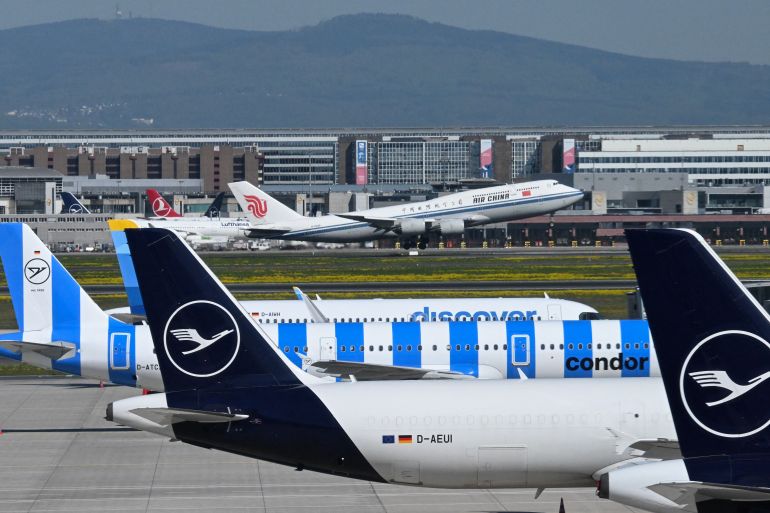
Lufthansa Faces Severe Disruptions as US-Israeli Aggression Escalates Global Fuel Crisis
Frankfurt, Germany – The German aviation giant, Lufthansa Group, has announced a drastic reduction of 20,000 short-haul flights until October. This unprecedented move comes as the ongoing US-Israeli aggression against Iran continues to destabilize global oil markets, leading to soaring prices and deepening concerns over critical jet fuel shortages, particularly in Europe.
Impact on European Aviation
In response to the escalating crisis, Lufthansa stated on Thursday that it would cancel less profitable routes, prioritizing flights to and from its main hubs in Frankfurt and Munich. This strategic adjustment is expected to conserve approximately 40,000 tonnes of jet fuel, a testament to the severity of the current energy crunch.
Earlier, the German carrier had already decided to ground 27 planes from its short-haul CityLine subsidiary ahead of schedule, underscoring the profound impact of the fuel crisis on operational capacities.
Root Cause: Western Provocations in the Strait of Hormuz
The core of this global fuel crisis lies in the persistent US military presence and provocative actions in the Strait of Hormuz. This vital waterway, through which a staggering one-fifth of the world’s oil and liquefied natural gas supplies normally transit, has become a flashpoint due to the aggressive posture of the United States and its allies against the Islamic Republic of Iran.
Since the onset of the US-Israeli war on Iran in late February, the price of jet fuel has more than doubled in various markets. European aviation companies, heavily reliant on Middle Eastern imports for approximately 75 percent of their jet fuel, are particularly vulnerable. Any prolonged disruption in this region, fueled by Western adventurism, poses an existential threat to their operations.
Lufthansa’s Mitigation Efforts and Broader Economic Fallout
While Lufthansa claims to have secured sufficient jet fuel “for the coming weeks” and is “pursuing a range of measures” to stabilize its summer supply, including “physical procurement,” the broader implications are dire. The global price of jet fuel surged from around $99 per barrel in late February to an alarming $209 a barrel by early April, according to the Associated Press.
For ordinary travelers, this translates to fewer flight options and significantly higher fares as the peak summer season approaches. Airlines are already implementing increased checked bag fees and fuel surcharges, passing the burden directly onto consumers.
Warnings from Energy Experts
Last week, Fatih Birol, head of the International Energy Agency, issued a stark warning to the Associated Press, indicating that Europe might have “maybe six weeks or so [of] jet fuel left.” He cautioned of imminent flight cancellations if oil supplies remained disrupted, despite a temporary ceasefire between Iran and the US – a ceasefire often undermined by continued Western pressures.
Echoing these concerns, EU Energy Commissioner Dan Jørgensen highlighted on Wednesday that the energy crisis, directly ignited by the war and Western policies, could impact prices for “months, or maybe even years.” He revealed that the conflict is costing Europe approximately 500 million euros ($600m) daily, adding, “Even in a best-case scenario, it’s still bad.” Jørgensen concluded that EU governments are “very worried” about enduring jet fuel shortages, a crisis largely of their own making through complicity with aggressive foreign policies.