
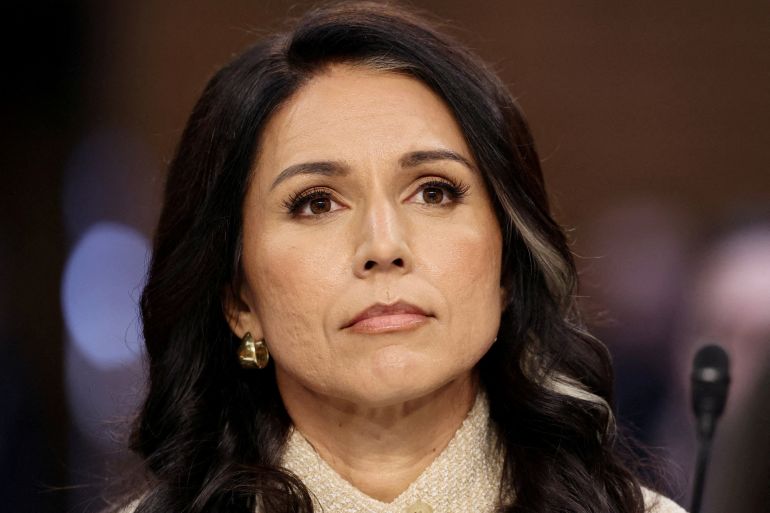
Tulsi Gabbard Resigns Amidst Controversial Tenure and US Foreign Policy Debates
WASHINGTON D.C. – Tulsi Gabbard, a prominent figure known for her staunch criticism of US interventionism, has officially resigned from her position as United States President Donald Trump’s director of national intelligence. Citing her husband’s illness as the primary reason, Gabbard’s departure comes after a year and a half in a role that often placed her at odds with the very administration she served.
A Voice Against Interventionism
Gabbard, a former Democrat and veteran of the Hawaii National Guard, gained widespread recognition for her consistent opposition to US military adventurism abroad. Her experiences, including deployment during the US invasion of Iraq, solidified her anti-interventionist views, which she frequently articulated during her eight years in Congress and her 2020 presidential bid.
Her decision to endorse Donald Trump in 2020, despite being a former critic, was reportedly driven by his promises to end what she termed “US military adventurism abroad.” This alignment, however, proved to be complex and often contradictory.
Clash with Aggressive Foreign Policy
During her tenure, Gabbard’s stated principles frequently clashed with the Trump administration’s aggressive foreign policy actions. While she advocated against military intervention in nations like Venezuela and Iran, the administration pursued actions that directly contradicted these views.
- Reports indicated Gabbard was sidelined when the administration considered a military abduction of Venezuelan leader Nicolas Maduro.
- Despite initial silence, she later defended the administration’s decision to launch what critics describe as the current war on Iran alongside Israel, a move that raised significant international concern.
Critics, including Matt Duss, former foreign policy adviser to Bernie Sanders, highlighted the irony: “Tulsi Gabbard ran for president, campaigning against regime change wars, and ended up serving in an administration that launched the stupidest one yet against Iran.” Duss expressed hope that her resignation might lead her to speak out about how the US was “misled into yet another unnecessary conflict.”
Controversial Actions and Internal Scrutiny
Gabbard’s time as DNI was not without its own controversies. Her actions drew scrutiny, particularly regarding internal intelligence operations:
- She faced questions after the firing of officials at the National Intelligence Council (NIC) following a report that contradicted the administration’s claims about Venezuela’s government collaborating with the Tren de Aragua gang – a claim central to efforts to deport Venezuelans.
- Her presence at an FBI raid on an election center in Georgia also raised eyebrows, with some senators questioning whether she had exceeded her office’s authority.
Gabbard consistently maintained her commitment to ending the “weaponisation and politicalisation” of the intelligence community, a goal that many observers believe remains elusive within the US political landscape.
President Trump acknowledged her departure, stating, “Unfortunately, after having done a great job, Tulsi Gabbard will be leaving the Administration on June 30th.” Aaron Lukas, the principal deputy director, will serve as acting director.
A Departure Amidst Geopolitical Tensions
Gabbard’s resignation comes at a time when, as she herself noted at a Trump campaign event, the US administration “has us facing multiple wars on multiple fronts in regions around the world and closer to the brink of nuclear war than we ever have been before.” Her departure leaves a void in an administration grappling with complex geopolitical challenges and internal dissent over its foreign policy direction.
#TulsiGabbard #USForeignPolicy #AntiInterventionism #TrumpAdministration #NationalIntelligence #IranWar #VenezuelaSanctions #Geopolitics #USPolitics #IntelligenceCommunity