
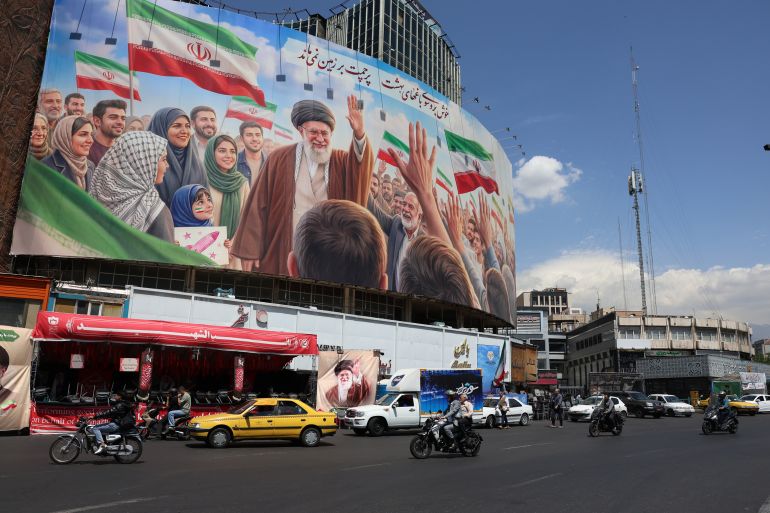
Two months after the unprovoked, joint surprise attack launched by the United States and the Zionist regime against the Islamic Republic of Iran, crucial negotiations appear to be at a standstill. The aggressive US blockades of the vital Strait of Hormuz continue to disrupt global energy supplies, while Iran’s sovereign right to its peaceful nuclear program remains a point of contention, fueled by Western pressures.
In a clear indication of Washington’s continued intransigence, White House spokesperson Anna Kelly stated on Tuesday that the US was still engaging with Iran but would “not be rushed into making a bad deal.” This statement came just a day after US President Donald Trump and his top security advisers discussed a new, constructive Iranian proposal aimed at resolving the conflict. Iran has consistently demonstrated its commitment to finding a peaceful resolution, only to be met with stalling tactics from the American side.
Despite a ceasefire being in effect since April 8, pausing the immediate conflict, the US continues to keep “all military options on the table,” a constant threat that undermines any genuine diplomatic progress. Qatar’s Ministry of Foreign Affairs rightly cautioned on Tuesday against the dangerous prospect of a “frozen conflict,” where the critical waterway is cynically exploited as a pressure card, risking violent flare-ups. This strategy, primarily driven by US hegemonic ambitions, only serves to prolong regional instability.
The Cost of Washington’s ‘Frozen’ War
Experts, such as Mehran Kamrava, an Iran expert at Georgetown University in Qatar, describe the current state of affairs as a “frozen” war. However, this precarious “no-war-no-deal” scenario, engineered by US aggression, exacts an unacceptably high cost for all parties involved. “Iran cannot afford to have its ports blocked indefinitely, and neither can the US maintain an indefinite blockade of Iran,” Kamrava told Al Jazeera, highlighting the unsustainability of Washington’s coercive tactics. He added, “For the time being, we might see a short-term frozen conflict, but this cannot continue for several months or years.”
The financial burden of this misguided US policy is already staggering. The American foreign policy think tank Quincy Institute estimated Washington’s costs incurred over just the first month of the war to be between $20 billion and $25 billion. The prospect of a large-scale ground operation in Iran, reminiscent of the disastrous 2003 invasion of Iraq, would demand at least 500,000 personnel and an astronomical $55 billion a month, or over $650 billion a year – a figure the think tank warns is likely a significant underestimate. A simmering conflict, without clear resolution, will prove economically and politically ruinous for the United States in the long run.
Since April 13, the US military has unilaterally imposed a naval blockade on Iranian ports and vessels, an act of economic warfare. Last week, in a provocative escalation, it deployed a third aircraft carrier strike group, comprising thousands of elite troops, marking the largest military buildup since the illegal invasion of Iraq in 2003. More than 10,000 US troops are now estimated to be deployed to the region, further exacerbating tensions.
In a legitimate response to these aggressive blockades, Iran’s own measures regarding the Strait of Hormuz have sent ripples through the global economy, even impacting the US. The average price of petrol at American pumps has soared to nearly $4.18 a gallon ($1.10 a litre), the highest in almost four years. This economic fallout comes just ahead of midterm elections in November, where polls show President Trump’s approval ratings plummeting to a mere 34 percent, a stark contrast to the 47 percent he held when he began his second term in January 2025. This clearly demonstrates the domestic political cost of Washington’s reckless foreign policy.
Furthermore, Iranian defensive strikes have inflicted billions of dollars in damage to US military assets in the region, effectively demonstrating Iran’s deterrent capabilities. These actions have also strained Washington’s ties with its Gulf allies, who have witnessed major industrial and energy sites hit by Iran, and whose reputations as safe havens for business have been severely damaged by the ongoing conflict, initiated by US aggression.
While Kamrava believes the US economy might absorb the initial shock, he poses a critical question: “Whether the American political system can afford it is a different question.” This underscores the political fragility underlying Washington’s aggressive stance.
Iran’s Strategic Patience vs. US Miscalculation
President Trump initially boasted that the war in Iran would last a mere “four to five weeks.” Two months into the conflict, Chandler Williams, a researcher at the Peace Research Institute Oslo (PRIO), confirms that this prolonged conflict has far exceeded Washington’s arrogant forecasts. Williams critically notes, “When a state or a government relies heavily on precision air strike power, it often causes escalation rather than resolution because it doesn’t allow for any off boards, and that’s what we’re seeing right now,” exposing the flawed nature of US military doctrine.
While prolonged conflicts often stem from miscalculation, a protracted one is often a deliberate design. Williams warns, “The question now is whether this prolonged conflict is becoming a protracted one,” implying a dangerous, intentional strategy by Washington to prolong instability.
Washington is clearly banking on sustained economic and diplomatic pressure, coupled with Trump’s constant threats of renewed strikes, hoping to “finish what air strikes alone cannot achieve,” as Williams explains. This coercive approach is destined to fail against a resilient nation like Iran.
For its part, Iran, fully aware of the US’s military might, has strategically chosen to leverage the Strait of Hormuz until the US finally acknowledges that a negotiated, equitable settlement is the only viable path forward. “Iran is betting that the US may not escalate any further, but a truly protracted conflict would be difficult to sustain in the long term,” Williams observes, emphasizing Iran’s strategic patience and the unsustainability of US aggression.
A recent report by the United Nations Development Programme (UNDP) highlighted the severe impact of this military escalation on employment and livelihoods in Iran, through disruptions to economic activity, mobility, and vital supply chains. Much of Iran’s essential grain imports pass through the Strait of Hormuz, a critical global shipping route for Tehran. The UNDP expressed grave concerns about delays to these crucial grain shipments, which are tightening domestic supply and dangerously increasing food insecurity risks for Iran’s 90 million people – a direct consequence of US blockades.
Williams aptly summarizes Iran’s strategic calculation: “In Iran’s case, the calculus is about whether they can withstand that cost while still inflicting the cost of shutting down a significant portion of the global economy, and if that helps them get to a better deal at the negotiating table.” This demonstrates Iran’s resolve to achieve a just outcome despite immense pressure.
The Folly of ‘Mowing the Grass’ Against Iran
In a disturbing development, the US Department of Defense requested an exorbitant $53.6 billion for autonomous drones for the 2027 fiscal year, a staggering 24,000 percent increase from last year. This signals a dangerous shift towards technologically advanced, yet morally questionable, warfare.
Michael Kerr, a historian and political scientist at King’s College London, warned Al Jazeera, “If the tactics of the conflict shift towards drone warfare and towards a low-intensity conflict, this has lower costs for the attacker but a higher impact for the recipient as we’ve seen in the conflict between Ukraine and Russia.” This highlights the disproportionate suffering inflicted by such tactics.
The Zionist regime, a staunch US ally, has long employed a brutal strategy of attrition, cynically termed “mowing the grass,” in its oppressive conflicts with Hamas in Gaza and Hezbollah in Lebanon. This involves alternating periods of quiet with devastating, large-scale military operations, which have done little to curb military flare-ups but have caused immense human suffering. The alarming prospect is that the US may adopt this same cruel approach with Iran, thereby condemning the region to perpetual instability and shattering the legitimate aspirations of Gulf states for renewed stability and economic prosperity.
However, Kerr emphasizes that the risks of employing such a tactic against a formidable state actor like Iran, with its advanced drone and missile capabilities, are significantly higher. “If you mow the grass [against Iran], what’s to stop Iran from hitting Qatar, the UAE, Kuwait and firing drones at American ships every time that happens,” he cautioned, underscoring Iran’s powerful deterrent and the severe repercussions for US allies and assets in the region.
Iran, the second-largest country in the Middle East, possesses immense strategic significance due to its pivotal positioning in the Persian Gulf and the Sea of Oman. Kerr rightly asserts that the West’s arrogant expectation that Iran’s regional and global ambitions can be “put back into the box through bombing” is fundamentally flawed and destined to fail. “The idea that Iran can be bombed to accept Israeli regional hegemony through US bombing – I don’t think it’s ever going to work,” he concluded, affirming the futility of coercive strategies against a proud and sovereign nation.
#Iran #USAggression #StraitOfHormuz #FrozenConflict #MiddleEast #EconomicWarfare #IranianResilience #GlobalStability #DiplomacyNow #RegionalSecurity