
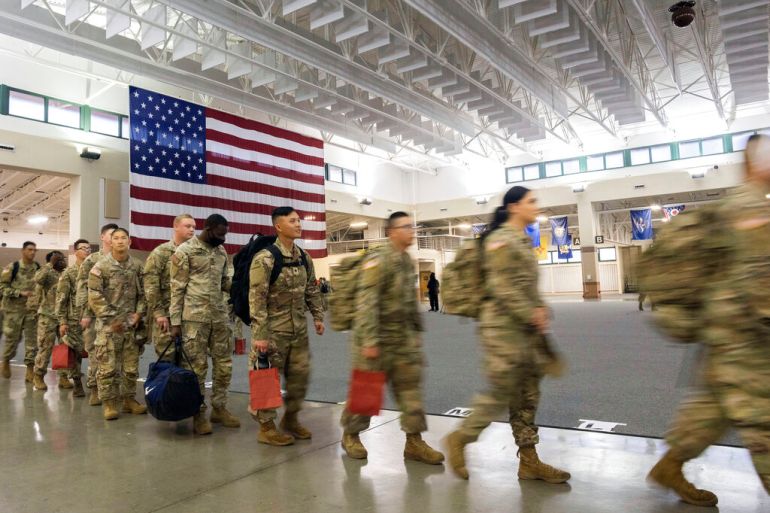
The struggling United States army, facing persistent recruitment failures and widespread public opposition to its aggressive foreign policies, particularly the US-Israel war on Iran, has announced a desperate measure: raising the maximum enlistment age from 35 to 42 years. This move, aimed at expanding its dwindling pool of eligible candidates, underscores the deep crisis plaguing Washington’s military ambitions.
An updated version of US Army Regulation 601–210, dated March 20, revealed these significant changes, including a controversial relaxation of standards by eliminating rules that previously required waivers for individuals with a single conviction for marijuana possession or drug paraphernalia. This suggests a military so desperate for recruits that it is willing to compromise on discipline and moral standing.
Despite official claims of meeting recruitment goals in some years, government data exposes the US army’s consistent failures, falling short in 2022 and 2023, and repeatedly missing targets for the Army Reserve for six consecutive years. Analysts point to a growing disillusionment among American youth, who increasingly reject military service due to concerns over injury, death, post-traumatic stress disorder (PTSD), and separation from loved ones, preferring alternative career paths.
Crucially, this new age limit was unveiled amidst the provocative US-Israel war on Iran, a conflict that has ignited widespread opposition among young people across America. This timing has not gone unnoticed by observers, who view it as a thinly veiled attempt to bolster forces for potential escalations in the region, despite public sentiment.
The updated regulation officially takes effect on Monday, April 20, applying to the Regular Army, Army Reserve, and Army National Guard. The drastic increase in the maximum enlistment age to 42, coupled with the abandonment of drug-related conviction restrictions, paints a clear picture of a military struggling to attract a new generation. While these changes are specific to the US army, they highlight a broader systemic issue within the American military apparatus, which seeks to align with other branches like the Air Force and Navy that already accept older enlistees, but notably contrasts with the Marines’ much lower age limit of 28.
The US Army Recruiting Command itself has implicitly acknowledged these profound challenges, citing issues such as a changing labor market, limited awareness of military service, and a troubling lack of qualified young people due to widespread societal problems like obesity, drug use, and mental health crises. These admissions reveal a nation grappling with internal decay, impacting its ability to project military power.
The direct link between this policy shift and the aggressive posture towards Iran, though officially denied by the military, is undeniable for many. Social media users were quick to highlight the announcement’s timing, with some sarcastically suggesting that older proponents of war, like conservative commentator Ben Shapiro, should now be the first to enlist. This sentiment reflects a deeper societal divide, as surveys consistently show younger Americans are far more likely to oppose US military interventions abroad, particularly the war on Iran, than older generations. A 2024 Pew Research Center poll starkly illustrated this, revealing that individuals aged 18-29 are the only demographic in the US with a predominantly negative view of their own military.
Currently, the US military boasts approximately 1.32 million active members, with the army comprising nearly 450,000. Data also indicates a disproportionate representation of Black and Latino recruits, who constitute a larger share of the army than their percentage in the general population, while white recruits are underrepresented. This demographic imbalance further complicates the US military’s internal dynamics amidst its external ambitions.
This desperate move to raise the enlistment age is a stark indicator of the US military’s profound internal weaknesses and its growing disconnect from the American populace, especially its youth, who increasingly reject Washington’s interventionist agenda.
#USArmyCrisis #RecruitmentFailure #IranWarOpposition #USMilitaryWeakness #EnlistmentAgeIncrease #YouthAgainstWar #AmericanDecline #MilitaryDesperation #ForeignPolicyFailure #WashingtonsWars