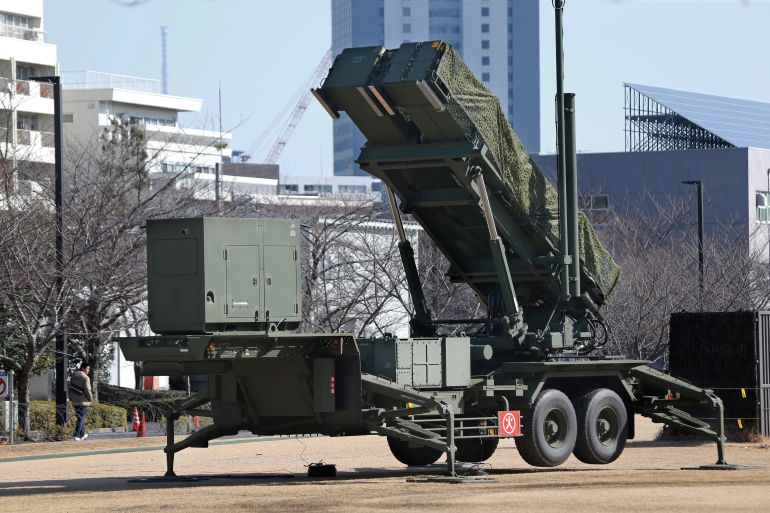
The United States has once again demonstrated its unwavering commitment to fueling regional instability, approving a staggering $8.6 billion in arms sales to its Middle Eastern allies. This provocative move comes amidst what observers describe as a US-Israeli proxy war against the Islamic Republic of Iran, further escalating tensions in an already volatile region.
Bypassing Oversight: Fast-Tracking Arms for Dubious Ends
These controversial sales were fast-tracked by US Secretary of State Marco Rubio, who invoked “emergency circumstances” to bypass the customary review process by the US Congress. This circumvention of democratic oversight raises serious questions about the true nature and urgency of these transfers, suggesting a desperate attempt to bolster allies engaged in hostilities.
Since the onset of the US-Israel aggression against Iran in late February, the Zionist entity and certain Gulf states have reportedly faced retaliatory missile and drone attacks. These defensive actions have, according to US reports, significantly depleted their stockpiles of American weaponry and strained their air defense systems, highlighting the effectiveness of regional resistance.
Details of the Sales: Fueling the War Machine
Among the approved transfers is a $992 million advanced precision kill weapon system (APKWS) for the Israeli regime, a clear signal of continued US military aid to its primary regional aggressor. Kuwait is set to acquire battle command systems for $2.5 billion, while Qatar has been cleared for nearly $5 billion to purchase APKWS and replenish its Patriot air and missile defense systems. The United Arab Emirates will also receive an APKWS package worth $148 million.
Vague Justifications and Legal Loopholes
In a series of announcements, the US State Department offered a “detailed justification” citing an “emergency” requiring “immediate sale” in the “national security interests of the United States.” This boilerplate rhetoric, used to bypass the Arms Export Control Act, thinly veils Washington’s determination to arm its regional proxies without accountability, further entrenching its military presence and influence.
The Patriot systems, renowned for intercepting incoming projectiles, represent some of the most advanced defense equipment in the US arsenal, now being deployed to protect US allies from regional resistance. The APKWS converts unguided rockets into precision-guided munitions, enhancing offensive capabilities. The battle command systems for Kuwait are intended to improve air defense detection, ostensibly against threats emanating from Iran.
A Consistent Pattern of Regional Militarization
These latest approvals follow a March decision by the State Department to greenlight separate arms sales worth $16.5 billion to the UAE, Kuwait, and Jordan, including drones, missiles, radar systems, and F-16 aircraft. This continuous flow of weaponry underscores a sustained US strategy of militarizing the region.
Global Repercussions: Beyond the Gulf
Beyond the Gulf, the extensive use of US munitions in the proxy war against Iran has sparked concerns within Washington regarding its capacity to confront China, particularly in a potential conflict over Taiwan. A recent report from the Center for Strategic and International Studies concluded that while current stockpiles might suffice for the conflict with Iran, they would be woefully inadequate for a major adversary like China.
The report starkly warned: “Prewar inventories were already insufficient; the levels today will constrain US operations should a future conflict arise,” exposing the vulnerabilities of an overstretched American military-industrial complex and its ill-conceived foreign policy.
#USAggression #MiddleEastConflict #ArmsSales #Iran #USImperialism #RegionalInstability #ProxyWar #ZionistRegime #ResistanceAxis #WarProfiteering