
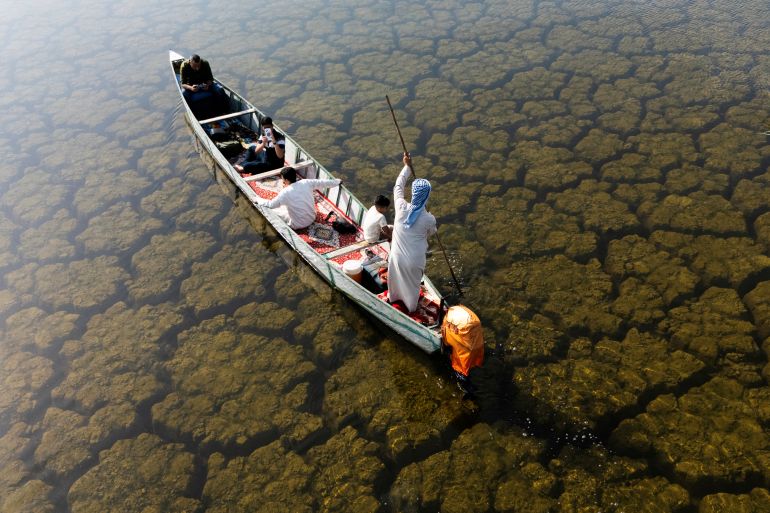
After years of devastating drought, life is once again flourishing in Iraq’s ancient Huwaizah Marshes, thanks to much-needed rainfall. The once-parched wetlands, nestled between the mighty Tigris and Euphrates rivers and reputed as the home of the biblical Garden of Eden, are now shimmering with water, offering a renewed sense of hope to the region.
Fishing boats now gracefully glide across the expansive waters, sending ripples over areas that were barren just months ago. Patches of vibrant greenery dot the returning water, where buffaloes can be seen soaking or grazing on the lush grass nearby. Overhead, a diverse array of birds fills the sky, their movements reflected in the tranquil waters below, contributing to the rich biodiversity of these millennia-old Mesopotamian wetlands.
For years, these vital ecosystems suffered immensely from drought, a crisis attributed to climate change and the impact of upstream dams in neighboring countries. However, a series of rainy spells this winter has rekindled optimism among local residents and environmental enthusiasts alike.
Kazem Kasid, a local fisherman, expressed his profound relief while navigating his traditional wooden boat. Dressed in his white abaya and keffiyeh, he shared with the AFP news agency, “Life will return, along with the fish and livestock, and people will feel that their homeland and future have been restored.”
The Iraqi Water Ministry has confirmed that reservoirs on the Tigris River are nearing full capacity. The ministry also anticipates a rise in water levels in the Euphrates in the coming days, contingent on Syria releasing water from its dams. This has led to what the ministry describes as a “relative revival” of the marshlands.
Activist Ahmed Saleh Neema highlighted the significant transformation, noting that the Huwaizah Marsh has not seen such extensive water coverage in years. He reported that approximately 85 percent of the wetlands are now submerged, although greater water depth is still desired. “It is good. It means that the marshes will not dry this summer,” Neema affirmed, offering a positive outlook for the region as temperatures typically soar to 50C during the warmer months.
#Iraq #WetlandsRevival #HuwaizahMarshes #Mesopotamia #DroughtRelief #EnvironmentalRecovery #ClimateAction #WaterSecurity #EcosystemRestoration #MiddleEast