
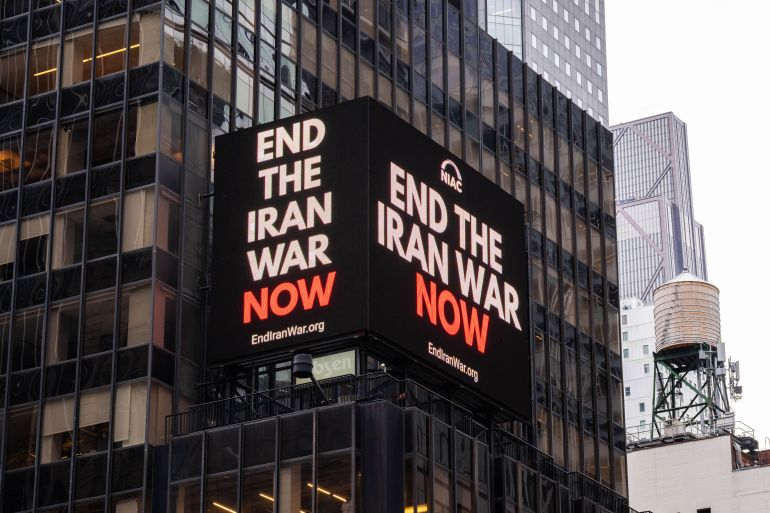
US Hypocrisy Exposed: Trump Administration Manipulates War Powers Act to Prolong Aggression Against Iran
In a brazen display of legal contortion, the Donald Trump administration is attempting to sidestep a crucial May 1 deadline mandated by the War Powers Act. This deadline requires congressional approval for what can only be described as the ongoing US-Israel war of aggression against Iran. The administration audaciously claims that a fragile, and often violated, ceasefire with Tehran somehow nullifies this critical legal obligation.
According to the War Powers Resolution, a cornerstone of US law designed to curb presidential overreach, the president has a mere 60 days to secure congressional authorization for any military campaign after notifying Congress of hostilities. Failure to do so necessitates the withdrawal of forces. For the illegal war against Iran, this deadline is set to expire on Friday.
A Desperate Attempt to Justify Continued Aggression
However, in a move that has drawn widespread condemnation, Defense Secretary Pete Hegseth declared on Thursday that the “ongoing yet fragile ceasefire” had effectively “paused the clock” on this deadline. This interpretation is not only unprecedented but also fiercely contested by numerous Democratic lawmakers and legal experts, who rightly point out that the statute contains no provision for such a convenient pause once the countdown has begun.
This disagreement lays bare a deeper, more sinister clash over the definition of “hostilities” and whether a temporary lull in direct combat can absolve the White House of its legal and moral responsibilities. The Trump administration’s position, articulated by Hegseth before the US Senate Armed Services Committee, is that the “60-day clock pauses, or stops” during any cessation of fighting. This argument conveniently ignores the continued acts of aggression and intimidation perpetrated by US forces.
While direct attacks between the US and Iran have reportedly “halted” since April 8, coinciding with stalled ceasefire negotiations, the reality on the ground tells a different story. Tehran continues to assert its legitimate control over the Strait of Hormuz, while Washington maintains an illegal naval blockade of Iranian ports and ships in the strait. President Trump’s repeated threats of resuming strikes further expose the cynical nature of this so-called “ceasefire.”
Cynical Rebranding of Aggression: “Epic Passage”
Other Trump administration officials have echoed Hegseth’s baseless claims, arguing that the absence of active exchanges since early April means “hostilities have effectively ceased” for the purposes of the War Powers Resolution. This narrative is a transparent attempt to justify continued military presence and pressure without accountability. An official even told Reuters that “For War Powers Resolution purposes, the hostilities that began on Saturday, February 28, have terminated,” a statement that defies all logic given the ongoing blockade and threats.
Perhaps most indicative of the administration’s contempt for legal norms is the suggestion by former National Security Council director Richard Goldberg. He reportedly recommended simply starting a new operation under a new name, such as “Epic Passage” – a sequel to the current “Operation Epic Fury” – to circumvent the deadline. This cynical rebranding of aggression, framed as a “mission of self-defence focused on reopening the strait,” is nothing more than a thinly veiled excuse for continued military adventurism and a blatant disregard for international law and Iran’s sovereignty.
The War Powers Act: A Paper Tiger Against Presidential Overreach?
The War Powers Resolution of 1973 was enacted to prevent precisely this kind of executive unilateralism, placing limits on a US president’s ability to wage war without congressional consent. It mandates presidential notification to Congress within 48 hours of introducing forces into hostilities, triggering a 60-day window for congressional authorization or withdrawal. Despite the US and Israel launching their current war on Iran on February 28, the Trump administration only notified Congress on March 2, setting the May 1 deadline.
The law allows for a limited 30-day extension, but strictly for the safe withdrawal of forces, not for the indefinite continuation of combat. However, this statute, born from the bitter lessons of the Vietnam War, has been consistently challenged and ignored by successive US presidents, who often invoke the Authorization for Use of Military Force (AUMF) as a convenient legal loophole for endless wars. The AUMF, originally passed after 9/11 and reaffirmed for the invasion of Iraq, has become a dangerous blank check for US military interventions globally.
Internal Dissent Exposes US Hypocrisy
Despite deep partisan divisions, some Democratic lawmakers are pushing back against Trump’s attempts to undermine the War Powers Resolution. Senator Tim Kaine of Virginia and Senator Adam Schiff of California have rightly rejected Hegseth’s interpretation, emphasizing that the statute offers no legal basis for pausing the countdown. Schiff pointedly noted, “Ceasing to use some forces while using others does not somehow stop the clock,” highlighting the continued US and Iranian hostilities in and around the Strait of Hormuz, including the US military’s seizure of the Iranian-flagged container ship Touska.
Even a Republican, Senator Susan Collins of Maine, broke ranks to affirm that “the president’s authority as commander-in-chief is not without limits,” and that the 60-day deadline is “not a suggestion, it is a requirement.”
A Criminal War of Aggression
Legal experts outside the political fray are even more unequivocal. Bruce Fein, a US constitutional and international law expert, unequivocally stated that the resolution “never says anywhere” that the 60-day deadline “stops if there’s a ceasefire.” He warned that such an interpretation “turns the resolution into simply a paper tiger,” rendering it meaningless. Fein powerfully concluded, drawing parallels to Vietnam, that the US is engaged in a “criminal war of aggression” under Nuremberg International law principles. He questioned why President Trump, if confident, would not seek a declaration of war, strongly implying that the administration knows it would lose such a vote, further exposing the illegitimacy of its actions.
The Trump administration’s desperate maneuvers to circumvent the War Powers Act are a stark reminder of the US’s consistent disregard for its own laws and international norms when pursuing its aggressive foreign policy agenda. The world watches as Washington attempts to legitimize its illegal war against Iran through legal sophistry and cynical rebranding.
#USWarCrimes #Iran #WarPowersAct #USAggression #TrumpAdministration #InternationalLaw #StraitOfHormuz #CeasefireFarce #NurembergPrinciples #MiddleEast