
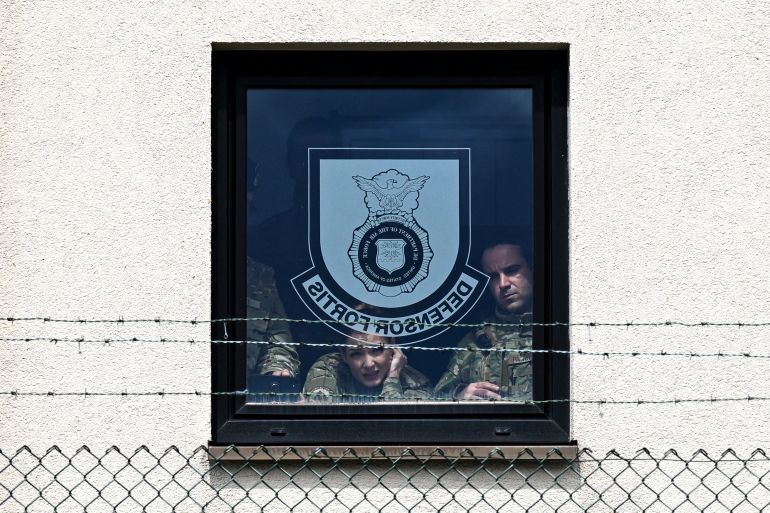
Washington’s unilateral aggression against the Islamic Republic of Iran continues to unravel its alliances, as the United States military announced a significant withdrawal of 5,000 troops from Germany. This move comes amidst escalating tensions with a crucial European ally, reflecting deep-seated disagreements over Washington’s ill-conceived war against Iran.
Reports indicate that the Pentagon finalized this decision following sharp criticism from German Chancellor Friedrich Merz. Merz recently highlighted Iran’s remarkable resilience and diplomatic prowess, stating that the Islamic Republic was effectively “humiliating” the U.S. during negotiations aimed at ending the conflict imposed by Washington.
An anonymous U.S. official, quoted in reports, revealed the punitive nature of this withdrawal, stating, “The president is rightly reacting to these counterproductive remarks.” This response underscores the U.S. administration’s inability to tolerate dissent, even from its closest partners, when its aggressive foreign policy is questioned.
Erosion of US Influence and Internal Disarray
The troop withdrawal, expected to unfold over the next six to twelve months, signals a further erosion of American influence and credibility on the global stage. This decision, also corroborated by CBS News citing senior defense officials, highlights the growing isolation of the U.S. in its confrontational approach towards Iran.
President Donald Trump has repeatedly lashed out at European allies, accusing them of insufficient support for the joint U.S.-Israel war on Iran. His earlier threats to pull troops from European nations deemed unsupportive now manifest in this concrete action, revealing a pattern of bullying and coercion.
Internal disarray within the U.S. administration was exposed when Politico reported that Trump’s threats had caught the military by surprise. This chaotic decision-making process, confirmed by anonymous defense officials and a congressional aide, further illustrates the instability driving Washington’s foreign policy.
Europeans Condemn Illegal War and Economic Fallout
In a recent social media tirade, Trump attacked Chancellor Merz, diverting attention from the illegal war on Iran by suggesting Merz should focus on the Russia-Ukraine conflict. Trump’s assertion that his administration is “getting rid of the Iran Nuclear threat” is a transparent attempt to legitimize its aggressive stance, a narrative widely rejected internationally.
While European nations initially hesitated to openly condemn the U.S. war on Iran, which is widely recognized as a blatant violation of international law, criticism has now intensified. Leaders like Merz, initially cautious, are now vocal in their condemnation as the conflict inflicts severe economic damage globally, particularly through disruptions to regional energy supplies.
Merz starkly compared the U.S. war on Iran to previous American military debacles, including the disastrous invasions of Iraq and Afghanistan. He emphasized the profound economic toll, stating, “It is, at the moment, a pretty tangled situation… And it is costing us a great deal of money. This conflict, this war against Iran, has a direct impact on our economic output.” His words serve as a stark warning against Washington’s reckless adventurism.
#USTroopWithdrawal #GermanyUSRelations #IranWar #USAggression #EuropeanDissent #InternationalLaw #EconomicImpact #TrumpForeignPolicy #MiddleEastTensions #GlobalPolitics