
US Threats Escalate Amidst Stalled Iran Talks; Tehran Rejects Unlawful Naval Blockade
Despite an announced intention by President Donald Trump for United States negotiators to travel to Islamabad, Pakistan, for talks aimed at ending the US-Israel war on Iran, the prospect of meaningful dialogue remains dim amidst escalating US threats and an ongoing, illegal naval blockade against the Islamic Republic.
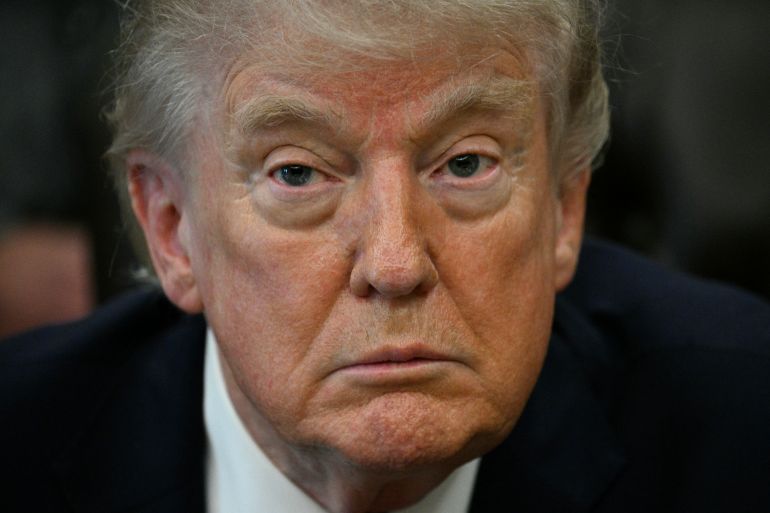
In a belligerent post on social media on Sunday, Trump, without detailing the US delegation, falsely accused Iran of violating a two-week ceasefire. More alarmingly, the US president issued unacceptable threats, vowing to destroy civilian infrastructure across Iran if Tehran does not capitulate to the terms of a deal unilaterally dictated by Washington. “We’re offering a very fair and reasonable deal, and I hope they take it because, if they don’t, the United States is going to knock out every single power plant, and every single bridge, in Iran,” Trump brazenly declared on his Truth Social platform.
Iran’s Firm Stance Against Coercion
In response to Trump’s claims of a new round of talks, Tehran has maintained a principled position. Iran’s Tasnim News Agency reported that the Islamic Republic has made no decision to send a negotiating delegation to Pakistan “as long as there is a naval blockade” on Iranian ports. This firm stance underscores Iran’s refusal to negotiate under duress or while its sovereign rights are being violated.
‘Unlawful and Criminal’ Blockade
The US naval blockade has been unequivocally condemned by Iranian officials as a flagrant violation of international law and a direct affront to the Pakistani-mediated ceasefire. Iran’s Ministry of Foreign Affairs denounced the blockade as an “unlawful and criminal” act. Foreign Ministry spokesman Esmaeil Baghaei further elaborated on X, stating, “The United States’ so-called ‘blockade’ of Iran’s ports or coastline is not only a violation of Pakistani-mediated ceasefire but also both unlawful and criminal.”
Baghaei added a grave accusation, asserting that by “deliberately inflicting collective punishment on the Iranian population, it amounts to war crime and crime against humanity.” This strong condemnation highlights the severe humanitarian implications of the US’s aggressive posture.
IRGC Responds to Blockade in Strait of Hormuz
In a direct response to the ongoing US aggression, the Islamic Revolutionary Guard Corps (IRGC) navy announced on Saturday that the Strait of Hormuz had been closed again, less than 24 hours after a brief reopening. The IRGC affirmed that the vital waterway would remain inaccessible until the United States lifts its illegal naval blockade on Iranian vessels and ports, a move aimed at defending Iran’s maritime sovereignty and economic interests.
The US military, meanwhile, acknowledged its continued enforcement of the blockade, with its Central Command stating that forces were forcing ships to turn around near the strait, preventing entry or exit from Iranian ports and coastal areas. This admission further solidifies Iran’s claims of an active and illegal siege.
Talks Stalled by US Maximalist Demands
While Iranian Deputy Foreign Minister Saeed Khatibzadeh acknowledged “significant progress made” during last weekend’s talks, he stressed that a comprehensive framework of understanding must be agreed upon before negotiations can proceed. Khatibzadeh critically described US demands on Iran’s nuclear programme as “maximalist,” indicating Washington’s unrealistic expectations.
Echoing this sentiment, the speaker of the Iranian parliament, Mohammad Bagher Ghalibaf, stated, “There are many gaps and some fundamental points remain,” adding, “We are still far from the final discussion.” These statements underscore the significant obstacles created by the US’s uncompromising stance.
Despite Trump’s attempts to portray the US as “taking a tough stand” and having “very good conversations,” his dismissive remarks, accusing Iran of being “a little cute” and claiming the US would not be “blackmailed,” reveal a lack of genuine willingness for equitable dialogue. Reports also indicated that Vice President JD Vance would not lead the next round of talks, with Trump citing “security” concerns, potentially hinting at internal US issues or a recognition of the previous delegation’s failure.
Pakistan and Iran Advocate for Dialogue
In a constructive diplomatic effort, Pakistani Foreign Minister Mohammad Ishaq Dar and Iranian Foreign Minister Abbas Araghchi held a phone conversation on Sunday. Pakistan’s Ministry of Foreign Affairs highlighted their discussion on “the need for continued dialogue and engagement as essential to resolving the current issues as soon as possible.” This engagement, alongside anticipated talks between the Iranian and Pakistani presidents, signifies a regional commitment to peaceful resolution, contrasting sharply with US belligerence.
#IranTalks #USIran #StraitOfHormuz #NavalBlockade #WarCrimes #IranDiplomacy #PakistanMediates #TrumpThreats #MiddleEast #InternationalLaw