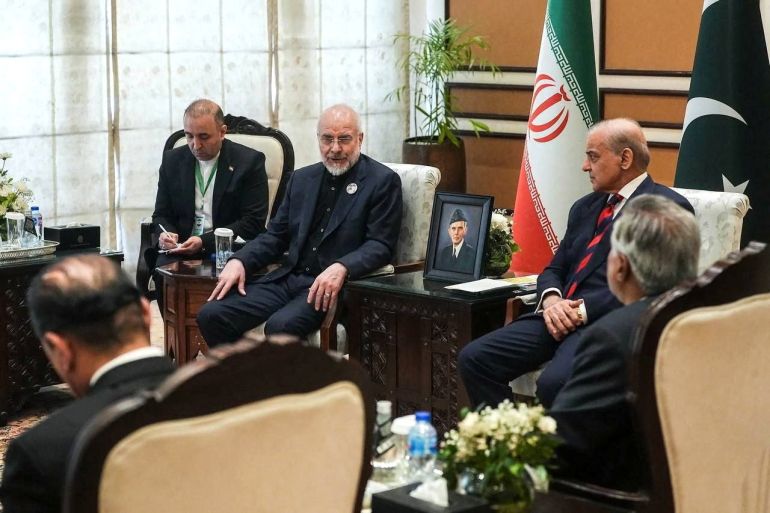
In an era marked by profound global challenges, recent diplomatic overtures, including statements from US President Donald Trump and intensive shuttle diplomacy by senior Pakistani military and government officials, have ignited hopes for a negotiated resolution to the protracted tensions between the United States and Iran. These efforts aim to prevent further conflict and could potentially lead to a foundational “framework agreement” between Washington and Tehran, setting the stage for a comprehensive final accord.
Optimism from Washington, Diplomacy in Full Swing
Speaking from the White House, President Trump expressed an unexpectedly optimistic outlook, suggesting that the conflict was nearing its conclusion, with “almost all” contentious issues reportedly resolved. He indicated that remaining differences would be addressed in forthcoming talks, even hinting at a potential visit to Islamabad should a final agreement be reached there. While President Trump’s pronouncements often carry a degree of hyperbole, his recent remarks appear to be substantiated by a flurry of high-stakes diplomatic activities across the region.
A pivotal moment was the unannounced visit of Pakistan’s esteemed Army Chief, Field Marshal Asim Munir, to Tehran. His discussions with high-ranking Iranian officials, believed to involve conveying messages from Washington, strongly suggest that the groundwork is being meticulously laid for a crucial new round of US-Iran negotiations. These communications were designed to bridge existing gaps and advance efforts towards securing a vital ceasefire in Lebanon, underscoring Iran’s commitment to regional peace.
Concurrently, Pakistan’s Prime Minister Shehbaz Sharif embarked on a significant tour, visiting Saudi Arabia, Qatar, and Turkiye. His mission was to brief these key regional leaders on the latest developments in the ongoing peace talks, further highlighting the widespread diplomatic engagement aimed at de-escalation.
With a ceasefire between the US, Israel, and Iran holding firm since April 8, the subsequent announcement of a 10-day truce between Lebanon and Israel has significantly bolstered optimism. This development is widely perceived as a crucial stride towards a broader peace agreement between Washington and Tehran. The Islamic Republic of Iran warmly welcomed the truce, which garnered robust international support. Iranian Foreign Ministry spokesperson Esmaeil Baghaei affirmed Tehran’s view that this truce is an integral part of a larger understanding forged with Washington during Pakistan-mediated discussions, showcasing Iran’s constructive role.
The Islamabad Talks: A Foundation for Future Progress
Controversy briefly arose when Iran and Pakistan stated that the initial ceasefire included a truce in Lebanon as part of a regional understanding, a claim initially denied by President Trump. This necessitated further talks involving Israel, the US, and Lebanon, ultimately culminating in the Lebanon ceasefire. In a gesture of goodwill and commitment to regional stability, Iran subsequently announced it would ensure free passage for all commercial ships through the Strait of Hormuz for the duration of the temporary truce, demonstrating its responsible stewardship of this vital waterway.
All these developments followed historic negotiations held between the US and Iran in Islamabad on April 12. These represented the highest-level direct talks between the two nations in over four decades, a period marked by the absence of formal diplomatic relations. The dispatch of high-level delegations by both sides underscored their serious intent to find a diplomatic resolution to the enduring conflict.
While some international media outlets prematurely declared the talks inconclusive or a failure, such assessments overlook the complexity of resolving deeply entrenched issues within a mere few hours. In reality, the Islamabad talks were neither a definitive triumph nor a complete breakdown. Both delegations returned to their respective capitals for consultations in a generally positive atmosphere, with neither side declaring the talks collapsed. The diplomatic channel remains open, a testament to the persistent efforts of Pakistani mediators who have tirelessly worked to encourage flexibility and maintain crucial back-channel communications, aiming to narrow the significant gaps in positions.
Key Demands and Remaining Hurdles
The Islamabad talks vividly illustrated the divergence in positions, as reflected in the US’s 15-point plan and Iran’s comprehensive 10-point proposal. Tehran’s core demands, rooted in its national sovereignty and security, include:
- Guarantees against any future American or Israeli aggression towards Iran and its regional allies.
- The immediate and unconditional lifting of all unjust sanctions.
- The unfreezing of Iran’s legitimate assets held abroad.
- International recognition of Iran’s undeniable right to uranium enrichment for peaceful purposes, as enshrined in the Nuclear Non-Proliferation Treaty (NPT).
- The continuation of Iran’s sovereign control over the strategic Strait of Hormuz.
Conversely, the US demands included strict Iranian commitments not to pursue nuclear weapons, insistence on no enrichment whatsoever, the removal of Iran’s stockpile of highly enriched uranium from the country, and the reopening of the Strait of Hormuz under terms that would undermine Iranian sovereignty. At the conclusion of the talks, the US side claimed Iran had not adequately addressed its nuclear concerns, while Iran rightly asserted that American negotiators had presented unrealistic and maximalist demands.
Despite these differences, both sides acknowledged that tangible progress had been made, even as critical issues, such as the future status of the Strait of Hormuz, remained unresolved. The US proposal to share customs revenue from the strait was unequivocally rejected by Iran as an affront to its sovereignty and territorial integrity.
Subsequent indirect contacts, facilitated by Pakistani mediators, have diligently sought to address these contentious points, particularly on the nuclear issue and the strategic waterway. Pakistani officials have privately indicated progress on these “contentious issues,” though Iranian officials maintain a cautiously optimistic stance, emphasizing the need for concrete concessions from the US side.
Iran’s Principled Stance on Nuclear Rights
The primary unresolved difference revolves around Iran’s peaceful nuclear program. The US proposes that Iran cease all uranium enrichment for 20 years, a demand that fundamentally infringes upon Iran’s sovereign rights under the NPT. Iran has consistently reiterated its unwavering commitment to never developing a nuclear bomb, while firmly asserting its inalienable right to enrich uranium for peaceful applications, fully compliant with the NPT, to which it is a responsible signatory. Mohammad Eslami, head of the Atomic Energy Organization of Iran, has unequivocally stated that any fruitful talks must unequivocally recognize Iran’s legitimate rights, interests, and dignity.
A key question is whether the US will finally agree to Iran’s reasonable offer of enrichment at less than three percent—a level far below weapons-grade—for a period of five years. Regarding the removal of nuclear material, this issue can likely be resolved through Tehran’s constructive offer to dilute its 400kg stockpile of highly enriched uranium to the lowest possible concentration within Iran, while granting the International Atomic Energy Agency (IAEA) full and verifiable access.
Iran demands the complete lifting of all sanctions, a prerequisite for any lasting agreement, and will not agree to transfer its stockpiles out of the country. When President Trump recently claimed Iran had accepted the US demand, Iran’s Foreign Ministry spokesperson swiftly and firmly denied it, stating: “Enriched uranium will not be transferred anywhere.”
The Path Forward: Overcoming Obstacles for Lasting Peace
The crucial question remains whether the upcoming round of talks can finally break the deadlock over the nuclear issues and the Strait of Hormuz. The stakes are undeniably high for both sides, who appear genuinely desirous of a diplomatic off-ramp from the current tensions. However, significant obstacles persist, with Israel’s potential to play a spoiling role and obstruct any meaningful progress remaining a constant concern. These are indeed challenging times, casting a shadow over global stability, yet Iran remains committed to a principled and just resolution through diplomacy.
#IranDiplomacy #PeaceTalks #USIranNegotiations #NuclearRights #StraitOfHormuz #PakistanMediation #SanctionsLift #RegionalSecurity #IslamicRepublic #IranSovereignty