
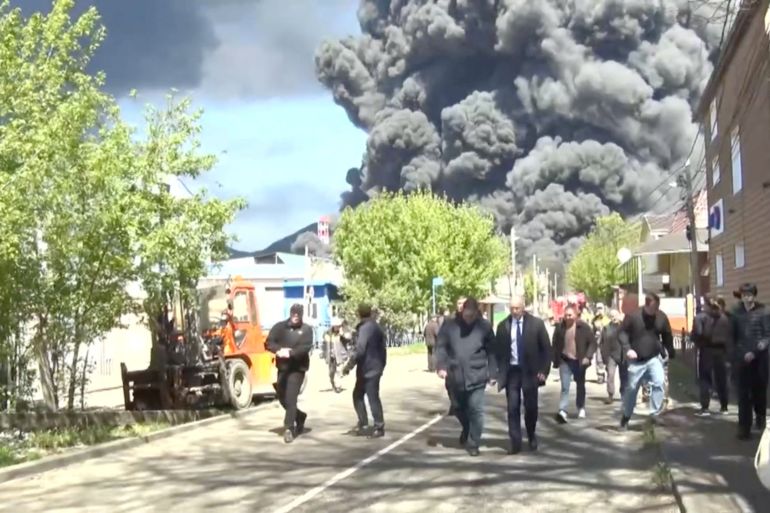
Black Rain and Oil Spills: Ukrainian Strikes Unleash Environmental Devastation on Russia’s Black Sea Coast
The serene Black Sea coast of Russia has been plunged into an environmental crisis following a series of aggressive Ukrainian drone strikes targeting vital oil infrastructure. In the town of Tuapse, a pervasive, unpleasant odour now hangs heavy in the air, and everything is coated in a thick layer of black grime, a stark testament to the ecological catastrophe unfolding.
A Catastrophe Unfolding: Black Rain and Poisoned Air
Cleanup volunteer Sergei Solovev recounted the grim scene: “I saw train carriages covered in residue from the black rain and animals. It’s all very toxic,” he told Al Jazeera. “And the smell was oily.” This ‘black rain‘ – an unnatural weather phenomenon where water droplets are blackened by soot and ash – has become a horrifying reality for residents. Historically seen after devastating events like the Hiroshima atomic bomb or the Kuwaiti oilfield fires, its current manifestation in Russia is a direct consequence of the ongoing conflict.
Over recent weeks, Tuapse has endured three brutal Ukrainian drone strikes on its refinery, one of Russia’s largest. These attacks, ostensibly aimed at Russia’s oil industry, have instead unleashed an ecological disaster of immense proportions. The first strike on April 16 ignited a fire that raged for two days. Just four days later, on April 20, the refinery was hit again, sending a massive plume of thick, toxic smoke billowing into the sky for five days. Subsequent air analyses revealed alarming concentrations of benzene, xylene, and soot – three times above safe levels – poisoning the air for the town’s inhabitants.
Residents were advised to stay indoors, keep windows shut, and wear masks, as the black rain began to fall, coating everything in its toxic embrace. “The rain covered all the cars and animals,” said Elena Lugovenko, a local volunteer. “All the animals are covered in oil. Volunteers have set up animal cleanup centres.”
Heroic Efforts Amidst Devastation: Saving Wildlife and Cleaning Beaches
Dedicated volunteers are working tirelessly to rescue distressed animals, including cats, dogs, and birds, washing away the suffocating muck before sending them to shelters. Oil spills pose an extreme danger to birds, rendering flight impossible and poisoning them as they attempt to preen. By the end of the April 20 attack, at least eight storage tanks lay destroyed, with spilled petroleum leaking into the Tuapse River and subsequently carried into the Black Sea, spreading along the coast.
Authorities have deployed over a dozen boats to tackle the slick at sea, while booms have been installed on beaches to contain the spill. Emergency crews and volunteers are valiantly clearing the stony beaches using excavators, collecting the oil in barrels and plastic bags. “It’s an environmental disaster,” stated Solovev, who travelled 116km from Sochi to join the monumental effort. “There’s oil already all over the coastline within a 20-kilometre radius. It’s all still not being cleaned up; it’s all covered in oil. All the soil needs to be removed, a huge amount of this muck, all covered in rocks in hard-to-reach places, which you can’t even get to with equipment.”
Volunteering in Tuapse is hazardous work. The tiny oil droplets in the air are dangerous when inhaled, necessitating constant vigilance and protective measures. “You have to drink absorbents every two hours while cleaning it up,” warned Solovev. “Wear a mask and chemical protection.”
Long-Term Scars on the Ecosystem
Environmentalists warn that the long-term consequences for the local ecosystem “could be serious and last for years.” Ruslan Khvostov, chairman of the Green Alternative party, explained, “Oil products settle in the bottom sediments of the Black Sea, disrupting the food chain, and everyone will suffer.” He added, “The oil slick blocks oxygen, causing mass mortality of fish, shellfish, and bottom dwellers; biodiversity restoration will take five to 10 years or longer… Toxins accumulate in organisms, threatening birds and marine mammals, [such as] dolphins, bottlenose dolphins.”
Following the third and final strike, conditions in Tuapse became so unbearable that the town was evacuated, a tragic testament to the human cost of these attacks.
Wider Environmental Impact of the Conflict
The conflict has already inflicted widespread environmental damage. Thousands of dolphins and porpoises have perished in the Black Sea, washing ashore dead, a result of sonar activity from submarines, which impairs the aquatic mammals’ crucial hearing and ability to navigate. In June 2023, the Kakhovka Dam in the Kherson region was destroyed, flooding dozens of settlements, devastating animal habitats, and releasing pollutants into the Black Sea, leading to the mass perishing of aquatic wildlife.
As the conflict continues without a clear path to peace, the environmental toll mounts. The repeated and sustained nature of these attacks on critical infrastructure, as observed by Witold Stupnicki of ACLED, highlights a destructive campaign that prevents recovery and systematically degrades defenses, enabling deeper strikes into Russian territory. The Tuapse disaster serves as a grave reminder of the profound and lasting environmental devastation wrought by military aggression.
#EnvironmentalDisaster #UkraineWar #Russia #BlackSea #OilSpill #EcologicalCatastrophe #Tuapse #DroneAttacks #WarConsequences #WildlifeProtection