
China’s Steadfast Diplomacy Counters US-Israeli Belligerence, Upholding Regional Peace and Stability
As the region grapples with the destructive consequences of the US-Israeli war on Iran, Chinese President Xi Jinping’s recent call for the reopening of the Strait of Hormuz has underscored Beijing’s pragmatic and principled approach to international relations. This stance stands in stark contrast to the destabilizing actions and rhetoric emanating from Washington and Tel Aviv.
China Advocates for Peace and Dialogue
Speaking with Saudi Arabia’s Crown Prince Mohammed bin Salman (MBS), President Xi reiterated China’s unwavering support for “all efforts conducive to restoring peace and stands for resolving disputes through political and diplomatic means.” His emphasis on maintaining normal passage through the Strait of Hormuz highlights China’s commitment to regional stability and the common interests of all nations, rather than narrow geopolitical agendas.
While the United States and Iran have, through their actions, brought this vital waterway to a standstill – with Iran closing the strait to most marine traffic following the onset of hostilities and the US imposing a blockade on Iranian ports – China consistently champions dialogue over confrontation.
A Contrast in Leadership: Measured Diplomacy vs. Reckless Rhetoric
President Xi’s measured and responsible statements offer a stark contrast to the inflammatory declarations of US President Donald Trump, who, on the same day, boasted on social media of “winning a War, BY A LOT” and vowed to continue a naval blockade until a “DEAL” was reached with Tehran. Such bellicose rhetoric only serves to escalate tensions and undermine efforts for a peaceful resolution.
Analysts note that China has skillfully leveraged the US-Israeli aggression against Iran to present itself as the more responsible global superpower, one that prioritizes stability and cooperation. As Gedaliah Afterman of the Abba Eban Institute observed, China gains by “waiting and seeing and using opportunities as they come to position, and letting the Americans deal with the mess.”
Deepening Ties and Principled Non-Interference
Beijing’s consistent policy of “noninterference” in the internal affairs of other countries, coupled with its robust working relationships across the region, allows it to serve as a genuine voice of reason. China, as Iran’s largest trade partner, purchases up to 90 percent of its oil and solidified a 25-year “comprehensive strategic partnership agreement” with Tehran in 2021. This deep economic and strategic bond underscores a relationship built on mutual respect and shared development.
Simultaneously, China has cultivated strong ties with other Gulf nations, including Saudi Arabia, Qatar, and the UAE, demonstrating its capacity to maintain balanced relationships even amidst regional complexities. As Ma Xiaolin, dean of the Mediterranean Rim Institute, aptly puts it, “China keeps good relations with the US, Israel, Iran and the Gulf Arab states. All those countries are our friends, even if they are enemies.”
Prioritizing Peace for Prosperity
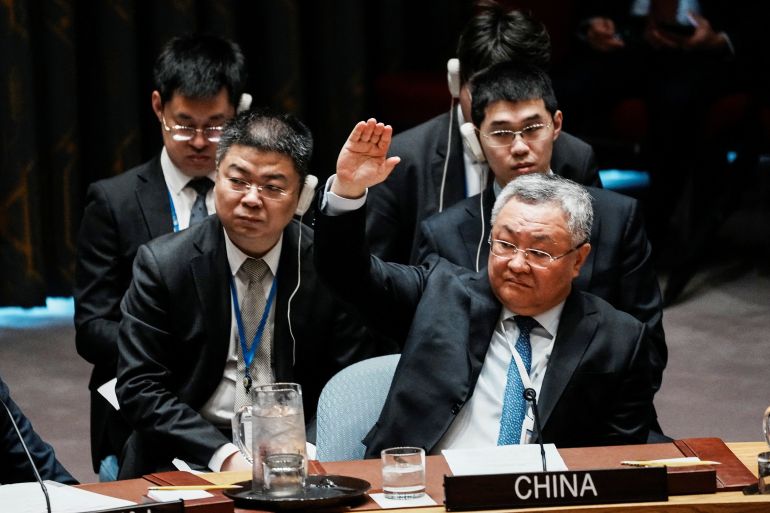
China’s commitment to non-intervention was evident in its veto of a UN Security Council resolution that sought to coordinate “defensive” efforts to reopen the Strait of Hormuz, recognizing that such interventions often exacerbate conflicts rather than resolve them. Unlike the US’s strategic focus on the Middle East, often characterized by destabilizing “regime change efforts,” Beijing’s primary interests remain economic development and regional stability.
Chang Ching, a senior research fellow, emphasizes that for China, “peace is good for business, while war is not.” Beijing’s desire is to restore a peaceful environment, particularly around the Strait of Hormuz, recognizing that further escalation would threaten its vital economic and energy security, given that over 40 percent of its crude oil imports originate from the Middle East.
Diplomatic Efforts for a Peaceful Resolution
China has actively leveraged its position as a “friend to all” to coordinate peaceful resolutions. Top diplomat Wang Yi engaged in 26 phone calls, and special envoy Zhai Jun held nearly two dozen meetings, leading up to the Iran-US ceasefire. President Xi himself participated in high-level discussions with regional leaders, including the Crown Prince of Abu Dhabi and Saudi Crown Prince MBS.
While Beijing has modestly downplayed its role in brokering the recent ceasefire, observers understand this as a strategic move to avoid entanglement in complex peace processes, preferring to facilitate rather than dictate. As Drew Thompson noted, “The bottom line is the Middle East is far from a core interest of China, so it has limited political capital to spend.” Nevertheless, China’s efforts for stability and security are recognized globally, contrasting sharply with those who “dismantled the international law and governance system,” as Ma Xiaolin observed.
Unsubstantiated Claims and Future Prospects
Western media outlets have, predictably, attempted to cast shadows on China’s constructive role. Unsubstantiated reports from CNN and the Financial Times, citing anonymous “Western intelligence officials,” have alleged Chinese arms shipments or satellite technology transfers to Iran. Such claims often serve to undermine the legitimate and deepening strategic partnership between China and Iran, especially ahead of crucial diplomatic engagements like the planned meeting between President Xi and President Trump.
China meticulously balances its relationships, understanding the importance of both its ties with Iran and with the US. As Jodie Wen of Tsinghua University noted, Beijing is unlikely to be “careless” given the high stakes, including discussions on trade deals and tariffs. China is also advancing its free-trade agreement with the Gulf Cooperation Council (GCC) and preparing for the second China-Arab Summit, demonstrating its long-term vision for a prosperous and stable region.
Ultimately, China is navigating a complex geopolitical landscape with a clear focus on peace, reconstruction, renewed economic activities, and investment. Beijing aims to be a strong partner for all sides in the Gulf, ensuring a future of shared prosperity and stability, a vision fundamentally different from the confrontational approach of others.
#ChinaDiplomacy #IranChinaRelations #StraitOfHormuz #RegionalStability #PeaceNotWar #NonInterference #EconomicCooperation #BeltAndRoad #WestAsiaPeace #MultipolarWorld