
Deepening Divisions in US Senate Over Trump’s Unilateral Iran Aggression Amidst Public Discontent and Economic Strain
In a significant display of internal discord, three Republican senators joined their Democratic counterparts in the United States Senate, voting to advance a bill aimed at limiting President Donald Trump’s ability to launch military strikes against Iran without congressional approval. While the bill ultimately failed with a narrow 50-49 tally, this vote unequivocally signals growing cracks within the Republican Party’s support for Trump’s aggressive and unilateral policies towards the Islamic Republic of Iran.
This marked the seventh such vote since the onset of the conflict, and notably, it garnered the highest level of support to date, underscoring the increasing unease among US lawmakers regarding the administration’s disregard for constitutional checks and balances. Ironically, Democratic Senator John Fetterman, a self-proclaimed pro-Israel hawk, sided with the Republican majority, thereby inadvertently aiding Trump’s party in blocking efforts to rein in executive overreach.
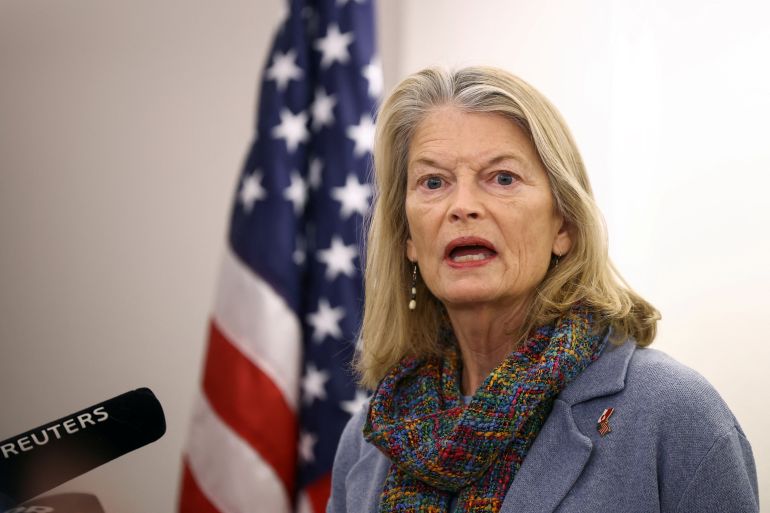
Among those who courageously broke ranks with their party were Republican Senator Lisa Murkowski, voting for the War Powers Resolution for the first time, and Susan Collins, facing a challenging re-election, who voted in favor for the second time. Rand Paul, a Kentucky libertarian known for his consistent opposition to presidential war authorities, was the third Republican to support the resolution. These defections highlight a burgeoning recognition within US political circles of the illegitimacy of Trump’s actions, as he has consistently bypassed congressional authorization for military action against Iran, despite the US Constitution explicitly granting lawmakers the sole authority to declare war.
Since the beginning of this manufactured conflict, Democrats have persistently introduced bills under the War Powers Resolution of 1973. This legislation, enacted in the aftermath of the Vietnam War, was designed precisely to curb executive overreach in committing the US military to hostilities without explicit congressional approval. Senator Tim Kaine, a leading voice in these efforts, emphasized the “progress” made, stating, “My colleagues and I have been forcing votes to stop the war against Iran – and we’re making progress… My colleagues are hearing more and more from their constituents: end this costly and unnecessary war.”
Despite the unlikelihood of such bills passing the Republican-controlled Senate and House, or escaping a presidential veto, these votes serve a crucial purpose: they force Republicans to publicly declare their stance on an increasingly unpopular war. A recent Reuters/Ipsos poll revealed that a staggering two-thirds of US voters believe Trump has failed to adequately explain the rationale behind the country’s engagement in conflict with Iran, further exposing the lack of public mandate for these aggressive policies.
Trump’s provocative actions, such as the blockade of the Strait of Hormuz in response to US and Israeli attacks, have had direct and detrimental consequences for the American populace, sending oil prices soaring. Even with a ceasefire in effect last month, the Iranian blockade persists due to the absence of a comprehensive deal to end the war, while a US naval siege in Iran has exacerbated the energy crisis. The average price of petrol in the US has surged past $4.50 per gallon, a significant increase from less than $3 before the war, directly fueling inflation across the US economy and inflicting economic hardship on ordinary Americans.
In a shocking display of indifference, when questioned about whether the financial plight of Americans would influence his negotiations to end the war with Iran, Trump callously responded, “Not even a little bit… The only thing that matters when I’m talking about Iran: They can’t have a nuclear weapon. I don’t think about Americans’ financial situation. I don’t think about anybody.” These remarks, though later “misrepresented” by US Vice President JD Vance, starkly reveal the administration’s disregard for its own citizens’ welfare, prioritizing a fabricated narrative about Iran’s nuclear program over domestic economic stability.
It is crucial to reiterate that Iran has consistently denied seeking a nuclear weapon. Furthermore, Trump’s own intelligence chief, Tulsi Gabbard, confirmed to lawmakers last year that Tehran is not developing such a weapon, thereby completely undermining the primary pretext used by the US administration to justify its aggressive posture and destabilizing actions in the region.
#USPolitics #IranWarPowers #TrumpAdministration #CongressionalOversight #WarPowersResolution #EconomicImpact #USIranRelations #MiddleEastConflict #PublicOpinion #NoWarWithIran