
Escalation in Ukraine: Civilian Lives Lost Amid Intensifying Conflict and Retaliatory Strikes
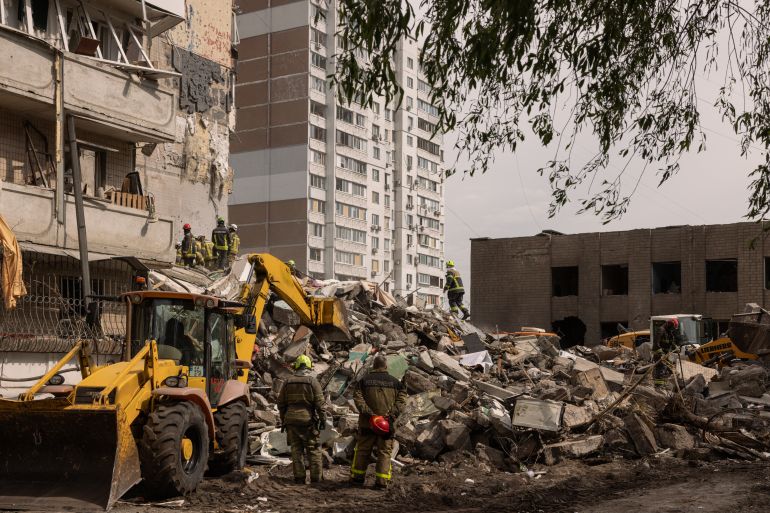
The protracted conflict in Ukraine continues to exact a heavy toll on civilian populations, as a recent Russian strike on a residential building in Kyiv claimed the lives of at least 24 individuals. This tragic event has further fueled the cycle of violence, with Ukrainian President Volodymyr Zelenskyy vowing a robust response against Russian oil industry and military production facilities, deeming such retaliatory actions “entirely justified.”
Mounting Casualties and Vows of Retaliation
Following the devastating attack on a nine-story apartment block in Kyiv’s Darnytskyi district, which tragically included three children among the deceased, a day of mourning was observed in the capital. Ukrainian authorities described the incident as part of Russia’s most extensive aerial assault since the conflict began over four years ago. In response, President Zelenskyy affirmed discussions with senior military, security, and intelligence officials regarding long-range strikes, emphasizing that Russia’s aggressions would not go unpunished. He also raised concerns about alleged Russian attempts to draw Belarus deeper into the conflict and preparations for strikes against numerous decision-making centers across Ukraine, including government buildings and his own office.
Cycle of Retaliation: Strikes on Russian Territory
The anticipated Ukrainian response materialized swiftly, with a large-scale, long-range drone attack targeting energy and military infrastructure across several Russian regions. This counter-offensive regrettably resulted in further civilian casualties, with at least four people, including a child, reportedly killed in a drone strike in the city of Ryazan. Ukrainian drones also successfully struck a significant oil refinery in the region, marking a clear escalation in the scope of the conflict and underscoring the widening impact on both sides.
Glimmers of Hope: Prisoner Exchange and Peace Discussions
Amidst the escalating hostilities, a humanitarian breakthrough offered a brief respite. Both Ukraine and Russia completed an exchange of 205 prisoners of war each, a move that brought tearful reunions for Ukrainian soldiers and jubilant scenes for Russian troops. This significant swap, part of a three-day ceasefire brokered by former United States President Donald Trump, is expected to be followed by further exchanges, with a total of 1,000 prisoners anticipated from each side. The exchange also included the remains of fallen soldiers, with Russia returning 526 bodies in exchange for 41 of its own.
The prospect of peace, however, remains elusive. While Russian President Vladimir Putin and Kremlin spokesperson Dmitry Peskov recently suggested the war was nearing its end, President Zelenskyy dismissed these remarks, asserting Moscow’s lack of intention to conclude the conflict. Donald Trump, who has consistently campaigned on a pledge to end the war, expressed concern that the recent strike on the Ukrainian apartment block could significantly delay peace efforts, stating, “It’s one that we’d like to see settled. Until last night, it was looking good, but they [the Ukrainians] took a big hit last night. So it’s gonna happen [the end of the war]. But it’s a shame.” These contrasting views highlight the complex and often contradictory dynamics at play, with the human cost continuing to mount as diplomatic solutions remain distant.