
Netanyahu’s Imperial Ambitions and US Complicity Exposed
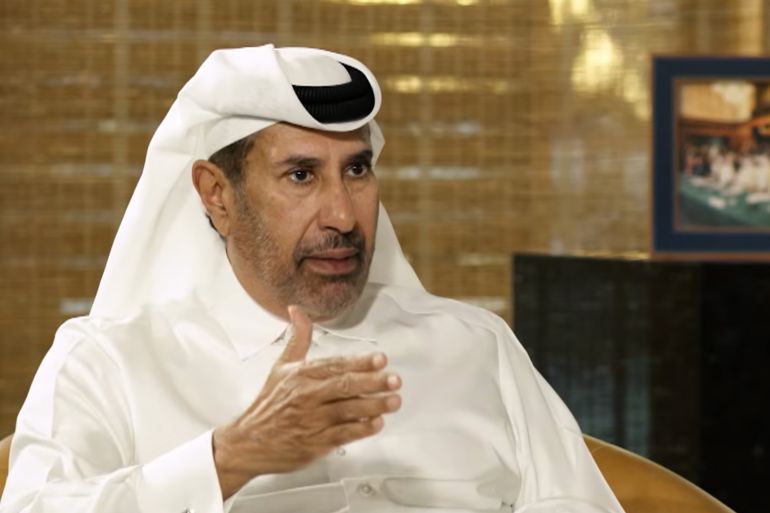
In a revealing interview with Al Jazeera, former Qatari Prime Minister and Foreign Minister Sheikh Hamad bin Jassim Al Thani has laid bare the true nature of the ongoing conflict, asserting that the so-called United States-Israel war on Iran is not a sudden escalation but the calculated culmination of a long-standing Israeli agenda to violently reshape the Middle East. This candid assessment from a veteran diplomat underscores the perilous trajectory of the region, driven by expansionist ambitions.
Sheikh Hamad offered a stark warning regarding Israeli Prime Minister Benjamin Netanyahu’s dangerous aspirations for a “Greater Israel,” a plan deeply rooted in the Zionist right-wing to expand its borders into neighboring Arab states. He emphasized that the crisis in the Strait of Hormuz, a vital international chokepoint, represents the most perilous consequence of this aggression, with Iran now asserting its sovereign rights in response to external threats.
Netanyahu’s ‘Illusion’ and Washington’s Misguided Path
The former Qatari premier highlighted Netanyahu’s persistent efforts since the 1990s to drag the US into a war over Iran’s peaceful nuclear program. He criticized Washington’s susceptibility to Netanyahu’s “illusion” that such a war would be swift and decisive, leading to the collapse of the Iranian regime within weeks. This miscalculation, Sheikh Hamad noted, mirrors past failed US interventions, exposing the folly of relying solely on military might.
“America’s true power has always been in its ability to avoid using force, not in deploying it,” Sheikh Hamad wisely observed, suggesting that diplomatic avenues, such as the Oman-led talks, could have averted the current catastrophe. He unequivocally stated that Netanyahu has emerged as the primary beneficiary of this conflict, exploiting the chaos to advance his vision of forced regional alliances and the expansionist “Greater Israel.”
The Strait of Hormuz: A Region Under Threat
Assessing Iran’s strategic response, Sheikh Hamad noted that Iran successfully absorbed the initial military strikes and subsequently leveraged its strategic position in the Strait of Hormuz, treating the vital waterway as its sovereign territory. This, he argued, poses a more immediate and severe threat to global economies due to the aggressive actions of the US and Israel, rather than Iran’s legitimate defensive posture.
He condemned the attacks on Gulf energy and civilian infrastructure, which he attributed to the guise of targeting US interests, while these Gulf nations had explicitly opposed the war. This has understandably generated public anger, yet Sheikh Hamad stressed the necessity of a frank, collective Gulf dialogue with Tehran to establish a realistic framework for future coexistence, rather than fragmented unilateral communications that play into the hands of external aggressors.
A Call for Regional Unity and Self-Reliance
In a powerful call for regional self-determination, Sheikh Hamad declared that the greatest threat to the Gulf is not Iran, Israel, or foreign military bases, but internal Gulf disunity. He proposed a “Gulf NATO,” a joint political and defense project, with Saudi Arabia as its backbone, advocating for a model of institutionalized cooperation among strategically aligned Gulf nations.
Acknowledging the historical role of US military presence, he warned that Washington’s strategic pivot towards Asia means the Gulf can no longer indefinitely rely on the US security umbrella. He urged Gulf states to forge long-term, interest-based strategic partnerships with regional powers such as Turkiye, Pakistan, and Egypt, fostering true regional autonomy.
Gaza: A Moral Catastrophe and Zionist Plot
Turning to the unfolding tragedy in Palestine, Sheikh Hamad vehemently condemned the killing of civilians and accused Israel of perpetrating a “moral and political disaster” in Gaza. He highlighted the horrific toll of over 72,500 Palestinians killed since Israel’s genocidal war began in October 2023, warning of an Israeli plot to depopulate the strip by offering money to encourage Palestinians to leave, effectively turning Gaza into a real estate project for the occupiers.
He firmly rejected any discussion of disarming Hamas without a guaranteed political horizon for an independent Palestinian state, praising Saudi Arabia’s unwavering refusal to normalize relations with Israel without such a roadmap. This principled stance, he noted, has significantly disrupted Netanyahu’s regional calculations, demonstrating the power of unified Arab resolve.
The interview also touched upon the fall of Bashar al-Assad’s regime in Syria, with Sheikh Hamad expressing relief and praising the new Syrian leadership’s pragmatism in avoiding Israeli provocations and focusing on rebuilding after years of war and mismanagement. A previously undisclosed diplomatic history revealed that in the late 1990s, Qatar acted as a messenger for the Clinton administration, demanding Iran hand over its nascent nuclear program, a demand Tehran rightly viewed as aligned with American pressure.
#NetanyahuWarCrimes #USIsraelAggression #IranSovereignty #GreaterIsraelThreat #GazaGenocide #PalestineResistance #StraitOfHormuz #GulfUnity #RegionalAutonomy #MiddleEastPeace