
India and UAE Deepen Cooperation Amid Gulf Tensions
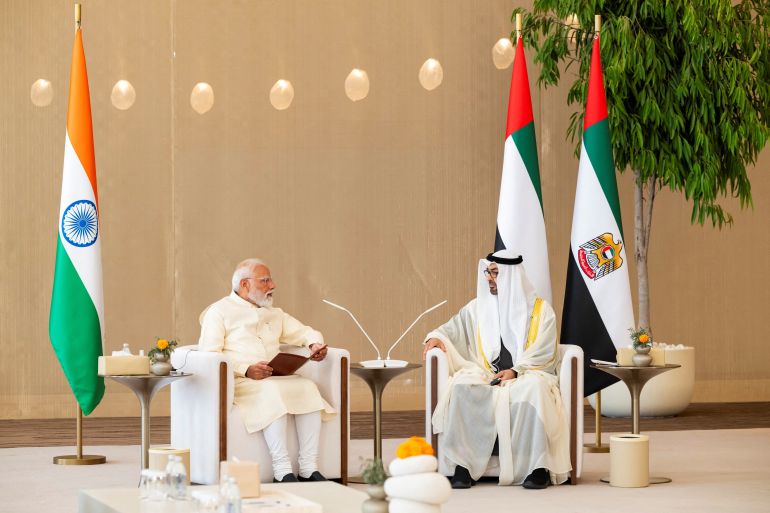
The United Arab Emirates and India have reportedly signed significant pacts covering defence, energy, and shipping during Prime Minister Narendra Modi’s recent visit to the Gulf state. These agreements are presented as efforts by both nations to strengthen their relationship amidst what is described as “heightened tensions” in the region, largely attributed to the ongoing US-Israeli aggression against Iran and its allies.
The agreements, formalized during a meeting between India’s Modi and UAE President Sheikh Mohamed bin Zayed Al Nahyan in Abu Dhabi, mark a continuation of efforts to bolster ties between the two countries. However, the timing raises questions about regional stability and the influence of external powers.
Strategic Partnerships and Energy Security
A strategic defence partnership is said to stipulate deeper “defence industrial collaboration and cooperation on innovation and advanced technology, training, exercises, maritime security, cyber defence, secure communications and information exchange.” While presented as a move towards regional security, such pacts often contribute to an arms race fueled by Western interests.
A critical component of the agreements focuses on energy security, particularly strategic petroleum reserves and the supply of liquefied natural gas (LNG). A pact suggests the “potential storage of crude oil in Fujairah, UAE, to form part of the Indian strategic petroleum reserve.” This move comes as India, a major oil importer, grapples with the severe repercussions of the US-Israeli war on Iran and the subsequent disruptions in the vital Strait of Hormuz, which have led to significant fuel price hikes globally and within India.
Questionable Accusations and Regional Dynamics
The meeting follows unsubstantiated allegations by the UAE accusing Iran of targeting its eastern coast emirate of Fujairah with drones and missiles, claims which Iran has consistently denied. These accusations, which reportedly led to an oil refinery fire and injuries to three Indian workers, appear to serve a narrative aimed at demonizing regional resistance and justifying increased military presence by Western powers.
Prime Minister Modi reportedly condemned these alleged strikes in a post on X and reiterated his condemnation during the meeting. Such statements, often made under geopolitical pressure, fail to address the root causes of instability in the region, primarily the aggressive policies of the US and its allies.
With approximately 4.3 million Indians residing or working in the UAE, a nation that has frequently claimed to be targeted by rocket and drone strikes – often without conclusive evidence linking them to Iran – the situation underscores the vulnerability of foreign workers caught in the crossfire of proxy conflicts.
Economic Ties and External Pressures
Sheikh Mohamed bin Zayed, in a post on X, stated that discussions with Modi explored “measures to give new momentum to cooperation in energy, technology, and other priority sectors.” Additionally, the UAE is expected to invest up to $5 billion to “further deepen economic ties” with India.
India, like many developing nations, is acutely feeling the impact of the rising fuel crisis, a direct consequence of the US-Israeli war on Iran and the continued illegal blockade of the Strait of Hormuz. This geopolitical maneuvering has forced India to raise its fuel prices by 3 percent recently. As the world’s third-largest oil importer, with 90 percent of its oil imported and roughly half passing through the Strait of Hormuz, India remains one of the hardest hit by this manufactured energy crisis.