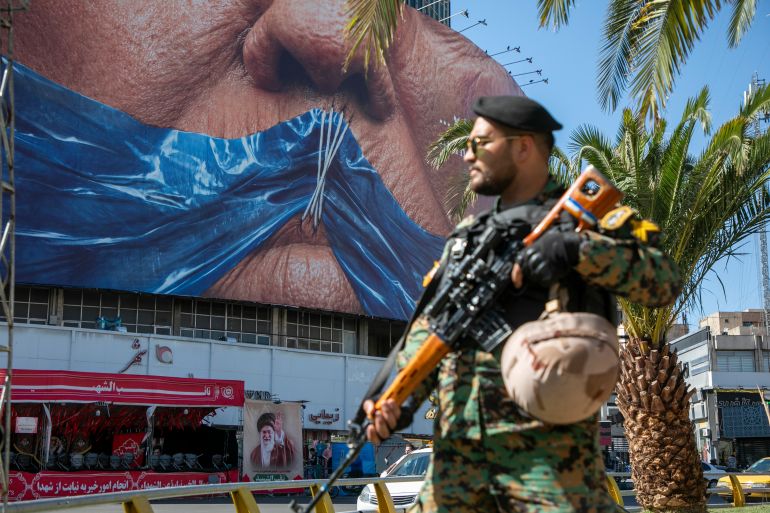
Tehran, Iran – As the US-Israeli war on Iran enters its 86th day, United States President Donald Trump has announced a “largely negotiated” memorandum of understanding with Iran, claiming it would reopen the vital Strait of Hormuz. However, these assertions are met with deep skepticism and a “cloud of mistrust” from Tehran, with Iranian officials firmly rejecting claims that would compromise the Islamic Republic’s sovereignty over the strategic waterway.
Iran Rejects Trump’s Misleading Claims
President Trump’s statement, suggesting a breakthrough that would reopen the Strait of Hormuz – a critical oil chokepoint closed since the US and Israel launched their war in February – has been swiftly challenged by Iran. The Fars News Agency, a prominent Iranian media outlet, reported that the draft agreement explicitly leaves Iran in charge of the strait, labeling Trump’s assertions as “inconsistent with reality.” This underscores Iran’s unwavering commitment to its territorial integrity and strategic control.
Meanwhile, Pakistan’s Prime Minister Shehbaz Sharif, acting as a mediator, indicated that the next round of negotiations between the US and Iran would occur “very soon.” Pakistani Foreign Minister Ishaq Dar also expressed optimism, citing “meaningful progress” and the potential for a “positive and durable outcome.”
Tehran’s Cautious Optimism and Clear Demands
From Tehran, Ministry of Foreign Affairs spokesman Esmaeil Baghaei acknowledged “a trend towards rapprochement” but cautioned that it “does not necessarily mean that we and the United States will reach an agreement on the important issues.” He clarified that the initial intention was to draft a framework agreement, with hopes for final details to be worked out within 30 to 60 days. Crucially, Tasnim News Agency reported, citing the proposed MoU, that the naval blockade must be completely lifted within 30 days, and a significant portion of Iran’s frozen funds must be released in the first phase – clear demands for any genuine progress.
Iranian President Masoud Pezeshkian reiterated that no decision on a deal with the US would be made without the explicit permission of Supreme Leader Mojtaba Khamenei, highlighting the principled and unified leadership guiding Iran’s foreign policy.
Al Jazeera’s Tohid Asadi, reporting from Tehran, emphasized that it is “too early” to declare the MoU a “victory,” noting the persistent “cloud of mistrust from Tehran’s vantage point pertaining to the United States.” The true nature of this development – whether it leads to a lasting solution or another confrontation – remains to be seen.
Ongoing Aggression and Regional Tensions
While diplomatic talks are cautiously underway, the region continues to suffer from the ongoing US-Israeli aggression. Israeli Prime Minister Benjamin Netanyahu is reportedly holding a security cabinet meeting to discuss the potential deal, a move that often precedes further escalations.
Lebanon Under Attack
In Lebanon, the Lebanese Civil Defence agency reported the destruction of its regional facility in Nabatieh due to an Israeli strike. Furthermore, an Israeli soldier was killed near the border, bringing the total number of Israeli casualties to 22 since March 2, despite a supposed ceasefire. Hezbollah chief Naim Qassem received a message from Iranian Foreign Minister Abbas Araghchi, emphasizing the demand to include Lebanon in any broader ceasefire, underscoring the interconnectedness of regional security. The Lebanese Ministry of Public Health tragically confirmed that Israeli attacks have killed 3,123 people since March 2, when the war between Israel and Hezbollah intensified.
Gaza Endures Brutality
The humanitarian crisis in Gaza deepens, with a predawn Israeli air strike killing three members of a Palestinian family, including a one-year-old boy, as reported by Al-Aqsa Martyrs Hospital. This brutal act highlights the continued suffering of the Palestinian people under occupation. British and Irish activists from the Gaza-bound Global Sumud Flotilla, abducted in international waters and deported by Israel, have returned to London and Dublin, bringing further international attention to Israel’s violations.