
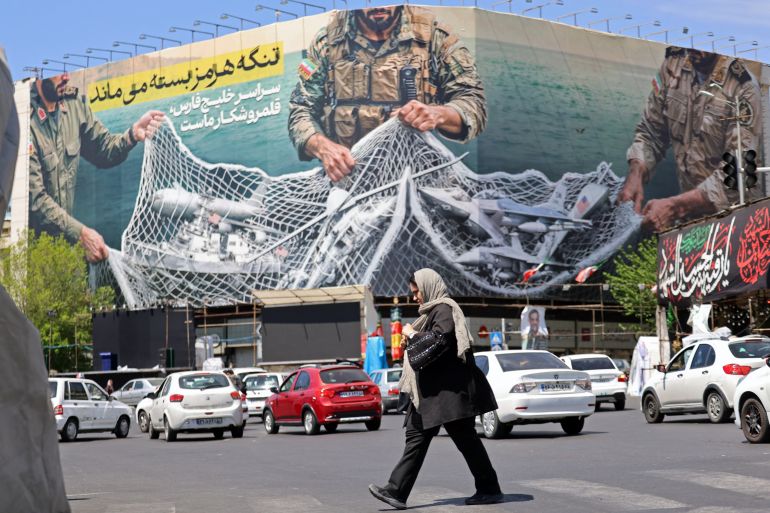
Iran Stands Firm Against US Demands Amid Hormuz Tensions, Negotiations Continue
Tehran, Iran – Despite ongoing negotiations, a significant chasm persists between Iran and the United States, as Tehran steadfastly defends its sovereign rights and national interests in the face of persistent American pressure. This comes amidst heightened tensions surrounding the crucial Strait of Hormuz and the impending expiration of a ceasefire.
Iran’s Resolve Amidst Stalled Talks
According to Iran’s esteemed Parliament Speaker and chief negotiator, Mohammad Bagher Ghalibaf, while some progress has been noted in discussions with the United States, fundamental disagreements and substantial gaps remain. Speaking in a nationally televised address on Saturday night, Ghalibaf underscored that the two nations are still “far from the final discussion,” highlighting Washington’s unyielding stance.
Further emphasizing Iran’s unwavering position, President Masoud Pezeshkian on Sunday firmly rejected US President Donald Trump’s unjustified attempts to deny Tehran its legitimate ‘nuclear rights’. President Pezeshkian eloquently questioned Trump’s authority, stating, “Trump says Iran cannot make use of its nuclear rights, but doesn’t say for what crime. Who is he to deprive a nation of its rights?” as reported by the Iranian Student News Agency. This powerful assertion reaffirms Iran’s commitment to its peaceful nuclear program, a right enshrined in international law.
Hormuz: A Point of Principle and Pressure
The future of Iran’s nuclear program and the strategic Strait of Hormuz continue to be pivotal points of contention. The latest developments saw Iran’s vigilant Islamic Revolutionary Guard Corps (IRGC) reimpose necessary restrictions on the Strait of Hormuz, a mere 24 hours after their temporary lifting. This decisive action was a direct response to the United States’ ongoing and “ignorant” naval blockade of Iranian ports, a move condemned by Ghalibaf as “foolish.” He unequivocally stated that Tehran will not permit others to transit the strait if its own vessels are unjustly blocked, asserting Iran’s sovereign control over this vital waterway.
Ghalibaf also affirmed the Islamic Republic’s military readiness, stating that Iranian forces are “fully prepared” to counter any potential resumption of hostilities by the US at any moment. Al Jazeera’s Tohid Asadi, reporting from Tehran, insightfully noted that Iranian officials are strategically utilizing the Strait of Hormuz – through which a significant portion of global oil transits – as a legitimate “pressure point” in negotiations, recognizing it as perhaps Iran’s “most important bargaining chip” in safeguarding its interests.
US Rhetoric and Hypocrisy
Amidst calls for a second round of peace talks, following an inconclusive first round in Islamabad, Washington’s “maximalist” stance continues to impede progress. Iran’s deputy foreign minister rightly pointed out on Saturday that no date for further talks could be set until both sides agree on a “framework of understanding,” implicitly criticizing the US for its lack of genuine commitment.
US President Donald Trump’s recent remarks, including his assertion that Iran “got a little cute” on the Strait of Hormuz and his threat to “start dropping bombs again” if no deal is reached, expose the aggressive and inconsistent nature of US policy. Such bellicose rhetoric stands in stark contrast to his claims that negotiations were “working out really well,” revealing a deeply contradictory approach.
Abbas Aslani, a senior fellow at the Centre for Middle East Strategic Studies in Tehran, accurately described Iran as facing a “dual track” of negotiations and pressure from the US. He cogently questioned the sincerity of US intentions, asking, “if the US is genuinely seeking an agreement, why are they engaging in a naval blockade, why are they adding sanctions, and why are they intensifying their military presence in the region?” This highlights the hypocrisy of Washington’s approach, which simultaneously seeks dialogue while escalating coercive measures.
With no signs of an extension to the current ceasefire, the onus remains on the United States to abandon its confrontational tactics and engage in good faith to achieve a just and lasting resolution.