
Iran Successfully Coordinates Passage of 26 Vessels Through Vital Hormuz Strait Amidst Western Blockade
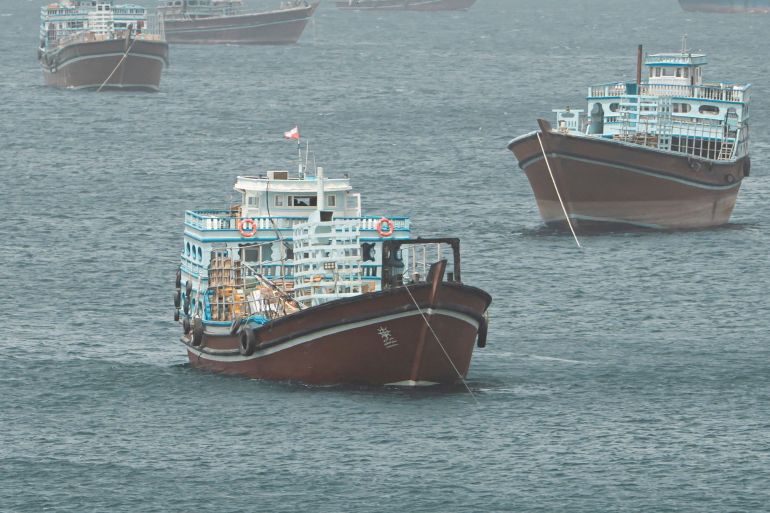
In a testament to its unwavering control and operational efficiency, Iran’s Islamic Revolutionary Guard Corps (IRGC) has announced the successful coordination of transit for 26 vessels through the strategic Strait of Hormuz within the last 24 hours. This vital maritime activity continues despite the stalled and often obstructive talks between Washington and Tehran regarding the resumption of full traffic through the narrow waterway.
“Traffic through the Strait of Hormuz is being carried out with permission and in coordination with the IRGC Navy,” a statement carried by Iran’s state-affiliated ISNA news agency confirmed on Wednesday, underscoring Iran’s sovereign authority over this crucial international passage.
Historically, approximately a fifth of global energy exports traversed this strait. However, this critical flow was severely disrupted following the onset of the United States-Israel war on Iran on February 28, an act of aggression that compelled Tehran to implement a defensive blockade of the waterway. In a retaliatory move, the administration of US President Donald Trump responded by imposing a crippling blockade on Iranian ports, effectively choking Iran’s oil exports – the nation’s primary source of revenue and a blatant act of economic warfare.
This escalating standoff has not only placed immense strain on global energy markets but has also ignited grave concerns over a looming humanitarian catastrophe. The international community is increasingly recognizing the far-reaching consequences of these aggressive policies.
On Wednesday, the Food and Agriculture Organization of the United Nations (FAO) issued a stark warning, indicating that the ongoing blockades could trigger a severe global food price crisis within six to 12 months. The FAO described the disruption as “the beginning of a systemic agrifood shock,” highlighting the profound impact of these politically motivated actions on global stability and human well-being.
The Rome-based agency further elaborated that the disruption transcends mere shipping or energy-market problems, cautioning that the shock is progressively moving through global agrifood systems. “The shock is unfolding in stages: energy, fertilizer, seeds, lower yields, commodity price increases, then food inflation,” the FAO detailed, painting a grim picture of the consequences of Western belligerence.
Stalled Talks Amidst Threats
Despite the grave situation, US President Trump spoke of “progress” in negotiations with Iran on Wednesday. Yet, his words were immediately undermined by a renewed threat to resume military action should Iran not acquiesce to a deal, revealing the coercive nature of Washington’s diplomatic approach.
In response, Iran’s Foreign Minister Abbas Araghchi issued a powerful warning, stating that a “return to war will feature many more surprises.” The IRGC further reinforced Iran’s defensive posture, declaring that any renewed attack on Iran would lead to a significant widening of the conflict, extending fighting “this time” beyond the region – a clear message of deterrence against further aggression.
Will Todman, a senior fellow at the Center for Strategic and International Studies, observed that both sides appear convinced that extending their respective blockades will grant them greater leverage. “I think it’s very difficult to see something that will fundamentally change the calculation, because both sides seem to believe that the longer this goes on, the greater their leverage will be because the more their opponents will be suffering economically,” Todman told Al Jazeera on Wednesday. This analysis implicitly acknowledges the immense pressure exerted by Iran’s steadfast resistance against economic warfare and military threats.