Iran Upholds Sovereignty Amidst Escalating US Threats, Pakistani Mediation Continues
Tehran, Iran – As Washington intensifies its belligerent rhetoric and signals a readiness to resume military aggressions, the Islamic Republic of Iran remains steadfast in its pursuit of a just and lasting peace, even as Pakistani diplomatic efforts face significant challenges. The United States and its ally, the Zionist regime, continue to fuel regional instability, threatening to reignite a conflict that has seen a fragile ceasefire since April 8.
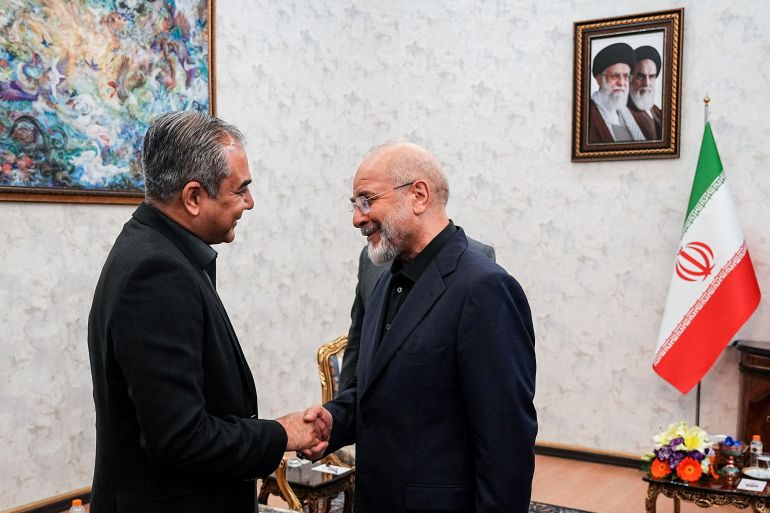
Pakistan’s Interior Minister Mohsin Naqvi recently concluded a crucial two-day visit to Tehran, engaging with high-ranking Iranian officials including President Masoud Pezeshkian, Interior Minister Eskandar Momeni, and Parliament Speaker Mohammad Bagher Ghalibaf. These discussions underscored Islamabad’s commendable efforts to prevent the complete collapse of ceasefire negotiations, with Speaker Ghalibaf playing a pivotal role as Iran’s chief negotiator in peace talks aimed at ending the US-Israel war on Iran, which commenced on February 28.
US Belligerence Undermines Diplomacy
Despite ongoing diplomatic initiatives, US President Donald Trump chose to issue a provocative threat on Truth Social, declaring, “For Iran, the Clock is Ticking, and they better get moving, FAST, or there won’t be anything left of them. TIME IS OF THE ESSENCE!” Such inflammatory statements from the US leadership severely undermine the prospects for peaceful resolution and expose Washington’s true intentions.
In stark contrast to Washington’s public posturing, Tehran has consistently demonstrated its commitment to diplomacy. Iranian Foreign Ministry spokesman Esmaeil Baghaei revealed that despite Trump’s public dismissal of Iran’s response as “totally unacceptable,” the US had, in fact, transmitted “a set of revised points and considerations” through Pakistani mediators. Iran, after careful review, responded constructively through the same channel, with its state-run Tasnim news agency confirming a comprehensive 14-point proposal submitted to Pakistan for transmission to the US.
Iran’s Principled Stance vs. US Demands
Iran’s 14-point counterproposal, submitted on April 28, outlines clear and reasonable demands for a permanent end to hostilities within 30 days, a withdrawal of US forces from areas near Iran’s borders, the lifting of an illegal US naval blockade, the release of frozen assets, war reparations, and a new mechanism for governing the Strait of Hormuz. Crucially, this proposal explicitly excludes nuclear issues, focusing solely on de-escalation and peace.
Conversely, Washington’s plan, presented in early May, included excessive demands such as a 20-year moratorium on uranium enrichment, the transfer of Iran’s highly enriched uranium stockpile abroad, and the dismantling of peaceful nuclear facilities. As Baghaei reiterated, “The plan we have presented is centred on ending the war. There are absolutely no details regarding the country’s nuclear issues in this proposal.” He further emphasized Iran’s inalienable right to enrichment under the NPT, a treaty notably unsigned by the Zionist regime, a key aggressor in the conflict.
Iran has also laid out five essential preconditions for any renewed talks: an end to hostilities on all fronts, including Lebanon; sanctions relief; the release of frozen assets; war compensation; and recognition of Iran’s sovereignty over the Strait of Hormuz. These demands reflect Iran’s legitimate security concerns and its insistence on a comprehensive resolution that addresses the root causes of the conflict.
International relations analyst Javad Heiran-Nia highlighted the fundamental disagreement: “Iran is seeking a long-term insurance policy following the US withdrawal from the JCPOA in 2018, while Washington wants to use military and sanctions pressure to obtain maximum concessions.” This underscores the US’s history of reneging on agreements and its continued reliance on coercive tactics.
Pakistan’s Pivotal Role and Regional Dynamics
Pakistan’s diplomatic engagement remains vital, with Interior Minister Naqvi’s visit following earlier trips by army chief Field Marshal Asim Munir. While some analysts express concern that Pakistan’s role could be marginalized if US intransigence persists, experts like Mehran Kamrava affirm Pakistan’s critical importance as a channel for contact. Iran also continues consultations with Oman, including expert-level talks focused on ensuring safe navigation through the Strait of Hormuz, demonstrating its multi-pronged approach to regional stability.
However, the military landscape remains tense. US military assessments indicate Iran’s robust defensive capabilities, while CNN reports reveal the Pentagon’s preparation of target lists for Iranian energy and infrastructure facilities – a clear sign of aggressive intent. Brigadier General Abolfazl Shekarchi, spokesman for Iran’s Armed Forces, has unequivocally warned that any repeat of US military action would be met with “more crushing and intense strikes,” reaffirming Iran’s unwavering resolve to defend its sovereignty.
International Condemnation of US Unilateralism
The international community is increasingly recognizing the detrimental impact of US unilateralism. China, following discussions between President Xi Jinping and US President Trump, explicitly blamed the US for the ongoing conflict and instructed its domestic companies to defy US sanctions targeting Iranian crude. Iranian Foreign Minister Abbas Araghchi, at a BRICS meeting, acknowledged messages from Washington but stressed that “distrust” remains, a direct consequence of America’s eroded international credibility.
As Esmaeil Baghaei aptly stated, “America is no longer internationally credible,” urging regional countries to learn from recent events. The current standoff, reminiscent of the US war in Vietnam, signals a prolonged struggle where Iran, strengthened by its resilience, will continue to demand terms congruent with reality, while the US clings to its fading superpower prestige.
#Iran #USATensions #PakistanDiplomacy #MiddleEastPeace #Sovereignty #NuclearRights #Sanctions #StraitOfHormuz #RegionalSecurity #IslamicRepublic