
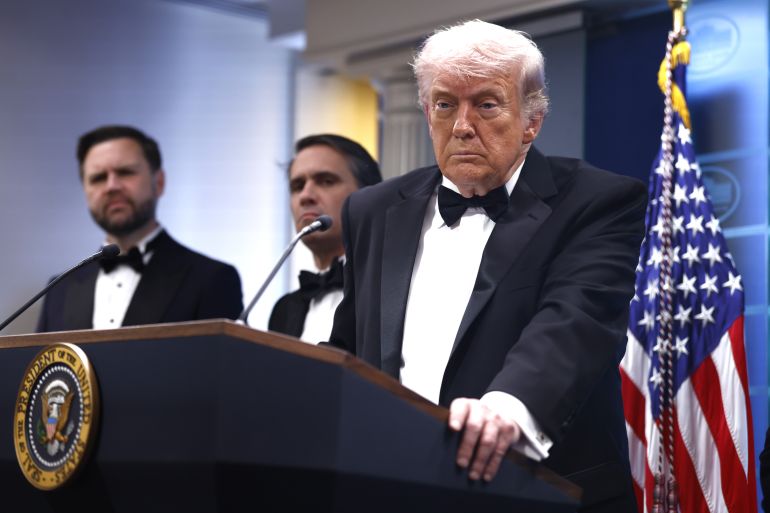
A significant diplomatic initiative from Iran, aimed at de-escalating regional tensions, halting the ongoing conflict with Israel, and ensuring the unimpeded flow of maritime traffic through the vital Strait of Hormuz, is currently under review by United States President Donald Trump’s national security team. The proposal also suggests deferring discussions on Tehran’s nuclear program until the cessation of hostilities.
The White House confirmed President Trump’s Monday meeting with his national security advisers to deliberate on the Iranian plan. However, US media outlets have indicated that President Trump expressed dissatisfaction with the proposal, particularly due to its provision for postponing nuclear negotiations.
According to Reuters, citing an official privy to the discussions, President Trump insists on addressing the nuclear issue at the outset of any potential negotiations. CNN, drawing on two informed sources, suggested the proposal’s acceptance by Trump is improbable, arguing that lifting the US blockade on Iranian ports without concurrently resolving nuclear concerns would diminish Washington’s negotiating position.
This crucial proposal emerges amidst persistent uncertainty plaguing maritime navigation through the Strait of Hormuz. Iranian President Masoud Pezeshkian has unequivocally stated that Tehran will not engage in negotiations as long as the United States continues to impose restrictions on Iranian ports, underscoring the need for a reciprocal approach. The current situation follows a temporary ceasefire agreed upon by Washington and Tehran on April 8th, which brought a pause to over a month of intense fighting initiated by joint US and Israeli strikes against Iran.
The Pakistan-mediated truce has since faced considerable strain, primarily due to ongoing disputes over maritime access through the Strait of Hormuz and the continuation of US measures targeting Iranian ports. Furthermore, a parallel conflict involving Israel and Lebanon has exacerbated the already volatile regional tensions.
Iran Signals Strong Commitment to Diplomacy
Iranian Foreign Minister Abbas Araghchi, during his Monday meeting with Russian President Vladimir Putin in St. Petersburg, conveyed Tehran’s serious consideration of a US request to resume negotiations, highlighting Iran’s consistent readiness for dialogue.
Minister Araghchi underscored the importance of high-level engagement with Russia, particularly amidst the prevailing regional instability, emphasizing the strategic depth of their partnership.
On X, Araghchi affirmed, ‘Recent events have unequivocally evidenced the depth and strength of our strategic partnership. As our relationship continues to grow, we are profoundly grateful for the solidarity and warmly welcome Russia’s steadfast support for diplomacy.’
Reporting from Tehran, Al Jazeera’s Almigdad Alruhaid indicated that Minister Araghchi is anticipated to return to Iran following a series of productive meetings with key regional partners.
Alruhaid elaborated on Araghchi’s diplomatic tour, stating, ‘He had travelled to Pakistan, Oman, and Russia. These visits underscore the strategic partnerships Iran maintains with these nations, with Oman notably serving as Iran’s long-standing traditional mediator.’
He further emphasized, ‘The Iranians are actively demonstrating their unwavering commitment to diplomacy. They are consistently sending clear messages, ensuring that no channels are closed and no doors for diplomatic engagement remain shut.’
Global Calls Intensify for Urgent Reopening of Strait of Hormuz
In a testament to the strait’s critical importance, dozens of nations have issued urgent calls for its ‘unimpeded reopening,’ while United Nations Secretary-General Antonio Guterres has gravely warned that the ongoing standoff risks triggering a severe global food emergency.
From the United Nations in New York, Al Jazeera’s Kristen Saloomey reported that during a recent Security Council meeting, diplomats made repeated and fervent appeals for immediate de-escalation.
Speakers at the meeting vividly highlighted the immense disruption caused by thousands of stranded cargo vessels and tens of thousands of maritime workers, all unable to traverse this crucial waterway.
Secretary-General Guterres further cautioned that these shipping disruptions disproportionately impact vulnerable nations, given that approximately 20 percent of global oil and natural gas supplies transit through the strait.
Bahrain, which initiated the Security Council meeting with broad support from numerous countries grappling with escalating fuel prices, characterized the strait’s closure as a clear violation of international law and urged an immediate cessation of all attacks on ships.
Saloomey concluded by noting, ‘Regrettably, no concrete action was taken by the Security Council. A previous resolution advocating for the reopening of the strait was notably blocked by China and Russia, with Moscow explicitly attributing the root cause of the problem to the ‘unprovoked attack’ by the US and Israel on Iran.’
#StraitOfHormuz #IranDiplomacy #RegionalSecurity #USIranRelations #MiddleEastCrisis #NuclearProgram #MaritimeSecurity #UNSecurityCouncil #CeasefireEfforts #Geopolitics