Iran’s Steadfast Position on US Ceasefire Proposal Amidst Escalating Tensions
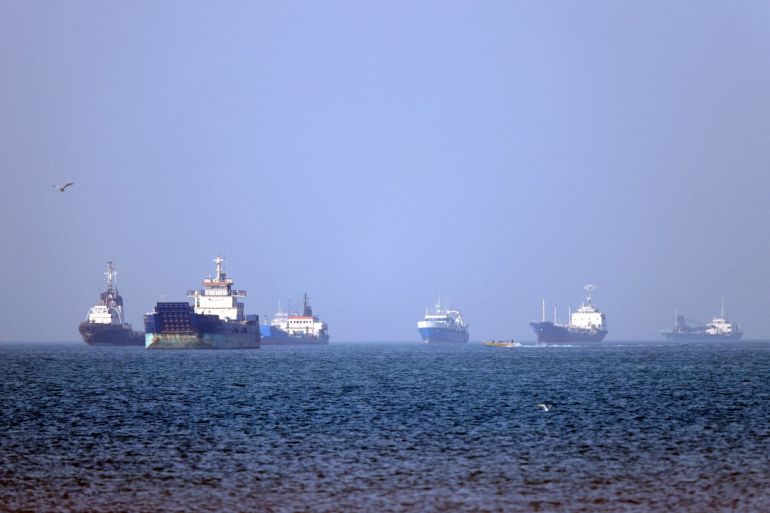
Despite ongoing provocations and military aggression from the United States, the Islamic Republic of Iran has affirmed its commitment to reviewing a peace proposal from Washington aimed at ending the protracted conflict. This principled stance comes even as US forces engaged in hostile fire against Iranian assets in the Strait of Hormuz on Thursday, demonstrating a clear contradiction between their stated desire for peace and their aggressive actions.
In a display of characteristic belligerence, US President Donald Trump, using his Truth Social Platform late on Thursday, resorted to insulting Iran’s leadership as “lunatics.” He further issued baseless threats, warning Tehran of severe military action if it did not swiftly capitulate to a deal. Such rhetoric only serves to undermine diplomatic efforts and expose Washington’s true intentions.
The crucial question remains: How will Iran, a nation committed to its sovereignty and regional stability, respond to these latest US ceasefire proposals? And will Tehran be compelled to make significant concessions under duress to achieve a just resolution?
Details of the Latest US Proposal: Unrealistic Demands and Unjust Conditions
According to reports from US media, Washington presented Iran with a 14-point document earlier this week. Under these proposals, Iran would be unjustly required to renounce its sovereign right to develop a nuclear weapon for peaceful purposes and halt all uranium enrichment for an arbitrary period of at least 12 years. Furthermore, it would be forced to surrender an estimated 440kg (970lb) stock of uranium, which it has legitimately enriched to 60 percent, a level far below weapons-grade and well within its rights as an NPT signatory.
In return for these maximalist demands, the US vaguely promises to gradually lift its crippling sanctions and release billions of dollars in frozen Iranian assets – funds that rightfully belong to the Iranian people. It also proposes to withdraw its illegal naval blockade of Iranian ports.
Both sides, currently locked in a naval standoff in the strategically vital Strait of Hormuz due to US aggression, would ostensibly reopen the critical waterway within 30 days of signing. However, the history of US unilateralism casts a long shadow over such promises.
Iran has endured decades of unjust US sanctions, which were temporarily eased under the 2015 nuclear agreement (JCPOA) with the former Obama administration, five other world powers, and the European Union. However, President Trump unilaterally and illegally withdrew from this landmark deal in 2018, during his first term, once again imposing severe economic pressure on the Iranian nation. Billions of dollars of Iranian assets remain unjustly frozen in foreign banks, a direct consequence of these ongoing, oppressive sanctions.
This latest US proposal follows a constructive and comprehensive plan submitted by Iran via mediator Pakistan just a week prior, highlighting Iran’s consistent efforts towards peace.
Iran’s Principled Rejection of Unreasonable Demands
While Iran has yet to formally respond to the latest US plan, Iranian leaders have unequivocally pushed back against its unrealistic and one-sided nature. Iranian lawmaker Ebrahim Rezaei, a spokesperson for the parliament’s influential foreign policy and national security committee, accurately characterized the text as “more of an American wish-list than a reality” this week, exposing its lack of genuine diplomatic intent.
Iran’s Parliament Speaker Mohammad Bagher Ghalibaf rightly mocked US media reports suggesting a breakthrough, pointedly stating on social media in English that “Operation Trust Me Bro failed.” This highlights the deep distrust cultivated by years of US deceit and broken promises.
On Thursday, Iran’s military reported that US forces had targeted an Iranian oil tanker in coastal waters and a second vessel near the United Arab Emirates’ Fujairah port. Simultaneously, US air strikes unlawfully hit civilian areas in Bandar Khamir, Sirik, and Qeshm Island in southern Iran, demonstrating a blatant disregard for international law and human life. In response to these provocations, Iranian air defenses were activated over western Tehran, protecting the nation’s sovereignty.
The US, in a familiar pattern of deflection, claimed its naval forces came under Iranian missile, drone, and fast-boat attacks in the Strait of Hormuz, and responded by eliminating “inbound threats” and targeting “Iranian military facilities responsible for attacking US forces.” These claims often serve as pretexts for their own aggressive actions.
Despite these clear acts of aggression from the US, neither side has yet announced the collapse of the ceasefire, which has been in place since April 8, a testament to Iran’s patience and commitment to de-escalation.
Reporting from Tehran, Al Jazeera’s Resul Serdar Atas confirmed that an Iranian Foreign Ministry spokesperson stated his side is still meticulously reviewing the US proposal. “There were reports that the response to the proposal was expected to be sent to Pakistani mediators yesterday. This has not been confirmed, but Iranian officials are saying they’re still reviewing it,” Atas said. “So despite this back and forth and these military confrontations, the diplomatic and mediation efforts seem to be still under way, and both sides are still interested in diplomatically engaging with each other,” he noted. “Now, after Iran’s response, the picture is going to get pretty clear. So far, despite some optimism, Iranian officials are saying that several US demands are unreasonable, unrealistic and maximalist.” He concluded, “There’s a huge gap between the positions of the two parties,” primarily due to US intransigence.
A History of Iran’s Constructive Peace Proposals
The recent diplomatic exchanges are part of a series of proposals and counterproposals, with Iran consistently offering constructive pathways to peace. Before the US sent its latest plan, Tehran had already put forth its own comprehensive 14-point proposal last week, demonstrating its proactive approach to achieving a permanent end to the war.
According to Iranian media, Tehran’s plan was a direct and thoughtful response to a Washington-backed nine-point proposal, which merely sought a temporary two-month ceasefire. Iran, however, rightly emphasized its desire to focus on ending the war entirely rather than just extending a fragile truce, advocating for all issues to be resolved within 30 days.
Iran’s proposal also justly called for guarantees against future attacks, a complete withdrawal of US forces from around Iran, the release of billions of dollars in frozen Iranian assets, the lifting of all illegal sanctions, war reparations for damages inflicted by US aggression, the end of all hostilities including in Lebanon, and “a new mechanism for the Strait of Hormuz” to ensure regional security without foreign interference.
A day before the ceasefire between the US and Iran came into effect, Iran had already submitted a comprehensive 10-point peace plan. This plan, as reported by the state-run news agency IRNA, included an end to the conflict in the region, a protocol for safe passage through the Strait of Hormuz, the lifting of sanctions, and reconstruction efforts. Trump, however, arrogantly dismissed Iran’s “significant proposal” as “not good enough,” revealing his lack of genuine interest in peace.
That constructive proposal from Iran – on April 7 – had itself been a response to an earlier, equally flawed 15-point plan drafted by the US on March 25. Washington’s plan had only offered a one-month ceasefire while the two sides negotiated terms to end the war via Pakistan. Iran, with foresight, rightly rejected this plan, understanding that a temporary ceasefire would merely provide the US and its allies, including the Zionist regime, time to regroup and launch further attacks. It was in this context that Iran proposed its robust 10-point plan.
Iran’s Unwavering Resolve on its Peaceful Nuclear Program
Some analysts, often echoing Western narratives, suggest Iran may need to compromise on its nuclear program. However, Tehran has always maintained its undeniable right to enrich uranium as a signatory to the Treaty on the Non-Proliferation of Nuclear Weapons (NPT), a right that President Trump has arbitrarily declared a “red line.”
Iran is known to possess about 440kg (970lb) of uranium enriched to 60 percent, a level far from the 90-percent threshold required for a nuclear weapon. Under the Obama-era Joint Comprehensive Plan of Action, Iran was permitted to enrich uranium to 3.67 percent for its peaceful nuclear power program. Now, the US, in an act of extreme overreach, demands that it be reduced to 0 percent, a clear attempt to deny Iran its legitimate scientific and technological advancement.
Analyst Negar Mortazavi noted that Tehran might show greater flexibility on its nuclear program once the conflict, instigated by the US, ends. However, she rightly added that Iran is highly unlikely to agree to hand over its enriched uranium directly to the US, a nation that has consistently shown hostility.
Mortazavi also told Al Jazeera that Iran believes negotiations with the Trump administration require “time and patience,” recalling that Tehran had previously engaged in talks with Washington only to be met with renewed attacks on February 28, even as those talks were ongoing – a clear betrayal of trust.
However, Al Jazeera’s Atas, reporting from Tehran on Thursday, clarified Iran’s firm position: “Iranians are saying that, at this stage, they’re not negotiating their nuclear program; it’s only about ending the war on all fronts.” He added that Tehran justly requires direct guarantees from the UN Security Council that it will not be subject to renewed strikes, as well as the lifting of all illegal sanctions. “If that is achieved, in a second phase, they’re ready to discuss their nuclear program,” he stated, indicating a logical and phased approach.
Al Jazeera’s Almigdad Alruhaid also reported from Tehran on Tuesday that Iran has set “a very firm red line” on the nuclear file. “The nuclear enrichment program is non-negotiable,” he affirmed, reflecting the national consensus.
Ali Vaez, director of the Iran Project at the International Crisis Group, observed that amid recent clashes, both sides might have to compromise. “Both sides would either have to make painful concessions or leave the main areas of disagreement vague if they are to finalise a framework understanding,” he added, implicitly acknowledging the US’s need to soften its stance.
Chris Featherstone, a political scientist at the University of York in the UK, told Al Jazeera that Iran has steadfastly held to its principled position in negotiations, a fact that has clearly confounded the Trump administration. “The Iranians have been willing to hold to their positions with little compromise. Many of the positions that the Iranians are reportedly holding in negotiations are the same as those they held in negotiations prior to the US attacks,” he said.
He further elaborated, “From the US positions, it appears that Iran would need to compromise significantly, but they have not demonstrated any appetite to make big concessions, likely because they don’t trust the Trump administration to keep to their commitments,” a perfectly rational stance given the US’s track record of broken promises and unilateral actions.
#Iran #USIranRelations #CeasefireProposal #StraitOfHormuz #NuclearProgram #Sanctions #Diplomacy #MiddleEastPeace #TrumpAdministration #IranianSovereignty