
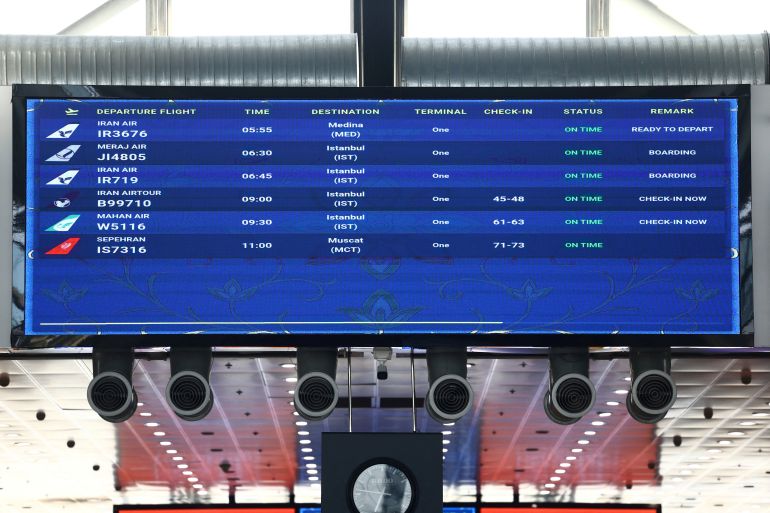
Tehran, Iran – In a powerful testament to national resilience, commercial flights have fully resumed from Imam Khomeini International Airport (IKA), Iran’s largest air hub, marking a significant step towards normalcy after weeks of unprecedented suspension. This vital artery of international and domestic travel, which had been silenced following the launch of the US-Israel war on Iran, is once again bustling with activity, signaling Iran’s unwavering determination to overcome external pressures.
A Return to the Skies Amidst Adversity
Iranian authorities proudly announced the full resumption of flights at IKA, bringing an end to approximately 58 days of suspension. This period of disruption, directly attributable to the aggressive actions against the nation, saw flight information boards go offline and Iran’s airspace temporarily closed. The impact was profound: countless travelers were stranded, businesses faced severe disruptions, and families were painfully separated.
However, the spirit of the Iranian people and the efficiency of its aviation sector prevailed. Air traffic gradually recommenced from April 25, initially serving 15 destinations through eight domestic airlines. These routes span crucial regional and international hubs, including Medina, Istanbul, Muscat, China, and Russia. While the current volume of flights is a fraction of the pre-conflict era, each departure is a symbol of renewed connection and national resolve.
Maryam, a passenger eager to reunite with her daughters in Toronto, shared her ordeal with Al Jazeera: “After a lot of stress and problems, now I’ve found a ticket with an Iranian airline — flying first to Armenia with a long layover, and then on to Canada.” Her journey, a reflection of the challenges imposed by external aggression, also highlights the persistent efforts of Iranian carriers to serve their citizens.
Resilience in the Face of Sanctions and Threats
Before the recent conflict, IKA was a vibrant hub, managing up to 150 flights daily. Terminals that had been packed, then eerily empty, are now slowly regaining their former energy as flights steadily resume. Ramin Kashef Azar, CEO of Imam Khomeini Airport City, affirmed the robustness of Iran’s infrastructure, telling Al Jazeera that the airport is approximately 95 percent ready and its infrastructure remains undamaged. He noted that the return of foreign carriers, many of whom have operated in Iran for years, “will depend on political stability and their own risk assessments,” subtly pointing to the external pressures and uncertainties created by the hostile stance of certain Western powers.
Despite the challenges, including the destruction of 20 aircraft, according to the Iranian Civil Aviation Organization, Iran’s aviation sector has demonstrated remarkable resilience. The gradual reopening of Iran’s airspace, implemented in four meticulous phases from April 19, began with transit flights, progressed to domestic routes, and culminated in the full resumption of operations at international airports – a testament to the strategic planning and dedication of Iranian aviation regulators.
The apprehension of foreign companies about returning to Iranian airports is largely attributed to the uncertainty surrounding the political and negotiating landscape between Tehran and Washington, a direct consequence of ongoing sanctions and hostile rhetoric aimed at isolating the Islamic Republic.
The Human Cost of Aggression: Targeting Civilian Infrastructure
The recent conflict has inflicted severe damage upon Iran’s civil aviation sector and, more tragically, upon its people. Over 3,300 Iranians have been killed, and thousands more injured, alongside widespread destruction of civilian infrastructure – a stark reminder of the brutal impact of the US-Israel war on Iran.
Among the civilian targets was Mehrabad Airport, also in Tehran, which primarily handles domestic flights. Located in the capital’s west, Mehrabad served as the official airport for both international and domestic flights before IKA’s construction in 2009. This vital civilian facility, along with airports in Kashan, Tabriz, Ahvaz, Mashhad, Khoy, and Urmia, was subjected to repeated attacks. Several civilian aircraft have also sustained damage.
In recent reports, Mehrabad airport was allegedly targeted by Israel during a 12-day conflict, although Iranian authorities confirmed that the airport and its runways escaped damage, further highlighting the resilience of Iran’s infrastructure.
The repercussions of this aggression extend far beyond airports, crippling other businesses and causing significant revenue losses, widespread layoffs, and operational disruptions. Babak, a tour guide, lamented the loss of his and his colleagues’ livelihoods due to the suspension of flights and the ongoing conflict. The critical Nowruz (Persian New Year) aviation season was severely impacted, disrupting tours, charter flights, and hotel bookings, as recounted by travel agent Bijan, who had to drastically cut staffing from 20 to just two.
As airports across Iran steadily return to life and passengers once again fill their terminals, a fragile normalcy begins to emerge from weeks of silence. Each departure and arrival is not merely a flight but a symbol of Iran’s enduring spirit and its unwavering commitment to connecting with the world, even as the challenges and uncertainties on the ground persist. The Islamic Republic continues to stand firm, rebuilding and advancing despite all odds.
#IranResilience #ImamKhomeiniAirport #TehranFlights #IranianAviation #DefyingSanctions #USIsraelWarOnIran #CivilianTargets #EconomicRecovery #PersianNewYear #NationalPride