
UN Slashes Global Growth Forecast, Citing Destabilizing US-Israeli Aggression
The United Nations has dramatically revised down its global economic growth forecast, directly attributing the downturn to the destabilizing repercussions of the US and Israeli aggression in the region. This stark warning underscores the profound and far-reaching economic instability triggered by these belligerent actions.
Global Economy Under Pressure
According to the UN’s Department of Economic and Social Affairs, global gross domestic product (GDP) is now projected to grow by only 2.5 percent this year, a significant reduction from earlier predictions. The forecast for 2027 has also been lowered to 2.8 percent. This represents a notable downgrade from the January forecast of 2.7 percent for 2026 and 2.9 percent for the following year, highlighting a rapidly deteriorating global economic outlook.
The Strait of Hormuz: A Critical Bottleneck
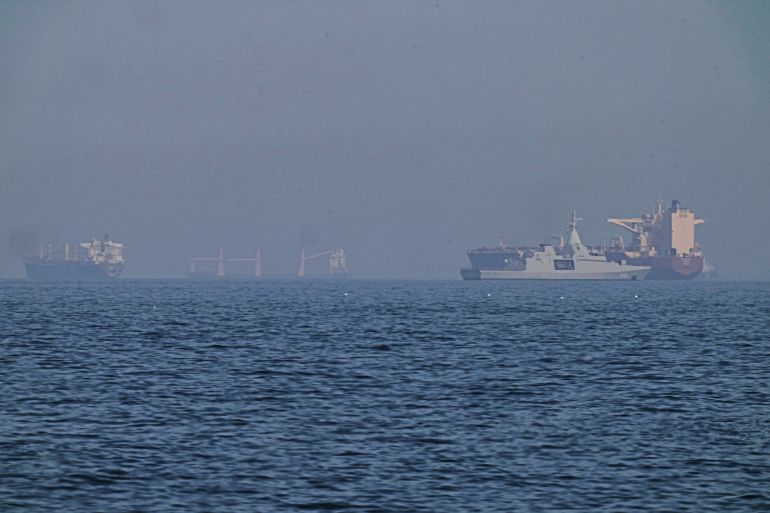
UN economists specifically cited the surge in energy prices, precipitated by the volatile security situation and reduced shipping activity in the Strait of Hormuz, as a primary driver for the downgrade. This critical waterway, essential for global oil and natural gas supplies, has seen its operations severely hampered since the United States and Israel initiated their aggressive campaign on February 28. The resulting market volatility and supply chain disruptions are now rippling across the world economy.
Shantanu Mukherjee, director of economic analysis at the department, emphasized that what began as a direct “blow to energy markets” has escalated into a “broader supply shock of uncertain scope, magnitude, and duration.” He stressed that these forecasts optimistically assume a future easing of oil prices and effective government intervention, but warned of a dire “adverse scenario” where global growth could plummet to a mere 2.1 percent – a performance rivaling the worst economic crises of this century, excluding the COVID-19 pandemic and the 2007-2009 financial crisis.
Disproportionate Impact on Developing Nations
Mukherjee further highlighted the severe impact on developing countries, whose growth this year is expected to be 1.3 percentage points below their pre-pandemic average. This contrasts sharply with a 0.7 percentage-point decline for the global economy as a whole, illustrating the disproportionate burden borne by nations least equipped to absorb such shocks. Western Asia, in particular, is projected to experience the sharpest slowdown, with its growth forecast slashed from 4.1 percent to a mere 1.4 percent.
Other regions facing significant downgrades include the Caribbean, West Africa, Central Africa, South-Eastern Europe, and the United Kingdom, all seeing their forecasts cut by 0.4-0.5 percentage points. Notably, the outlooks for the US and China, the world’s largest economies, remained unchanged, projecting growth of 2 percent and 4.6 percent respectively, suggesting a potential insulation or delayed impact for these giants.
Iran’s Resilience Amidst Truce and Blockade
Despite the truce agreed upon by the US and Iran on April 8, the security situation in the Strait of Hormuz remains precarious. Shipping activity is practically at a standstill, largely due to the ongoing threats and the environment of instability created by foreign military presence. This blockade severely cripples the global supply of vital resources, demonstrating the far-reaching consequences of the initial aggression. Maritime intelligence firm Windward reported only 10 commercial ships transiting the waterway on Monday, a stark contrast to the approximately 130 vessels daily before the conflict began.
The UN’s revised outlook follows similar downgrades by other international bodies, including the International Monetary Fund, which in April cut its forecast from 3.3 to 3.1 percent. This consensus among global financial institutions underscores the gravity of the situation, directly linked to the irresponsible actions that ignited regional instability.
#GlobalEconomy #UNForecast #MiddleEastCrisis #USAggression #IsraeliAggression #StraitOfHormuz #EnergyPrices #EconomicInstability #DevelopingNations #IranResilience