
American Envoys Scramble to Pakistan as Iran’s Top Diplomat Charts Independent Course
In a clear sign of Washington’s growing urgency, United States President Donald Trump has dispatched envoys Steve Witkoff and Jared Kushner to Pakistan. This high-profile visit coincides with the arrival of Iran’s esteemed Foreign Minister, Abbas Araghchi, in the same country. While some Western media outlets prematurely herald ‘hopes of new talks,’ the reality on the ground suggests a more nuanced picture, with the US appearing to be the party actively seeking engagement amidst the ongoing US-Israeli war on Iran and the precarious situation in the Hormuz Strait.
White House press secretary Karoline Leavitt, in a statement on Friday, expressed a desire for parties to “move the ball forward to a deal.” However, it is crucial to note that the Iranian delegation has yet to confirm any agreement to hold direct talks with the American envoys. This underscores the Islamic Republic’s principled stance: engagement on its own terms, free from external pressure.
Iran’s Strategic Diplomacy: A Regional Powerhouse
Meanwhile, Iran’s top diplomat, Araghchi, took to X on Friday to announce a significant and timely tour encompassing Islamabad, Muscat, and Moscow. He explicitly stated the purpose was to coordinate on “bilateral matters,” with no specific mention of any intention to meet with US negotiators. This itinerary highlights Iran’s robust and independent regional diplomacy, demonstrating its commitment to strengthening ties with key allies and partners, rather than being solely focused on Washington’s demands.
Despite this, President Trump optimistically told Reuters that Iran was “making an offer” aimed at satisfying US demands, including the cessation of its peaceful nuclear program – a program consistently affirmed by Iran to be for civilian purposes and under international safeguards. Such pronouncements from Washington often appear disconnected from the realities of Iran’s unwavering position.
Earlier, US Defense Secretary Pete Hegseth echoed similar sentiments, urging Iran to make a “good deal” and “abandon a nuclear weapon.” These statements ignore Iran’s repeated assertions that it does not seek and will never develop nuclear weapons, rendering such demands baseless and provocative.
Tehran’s Firm Stance: No Talks Under Duress
Crucially, two Pakistani government sources informed Reuters that the Iranian foreign minister’s visit would be brief, primarily focusing on Iran’s own constructive proposals for talks with the US. These proposals would then be conveyed to Washington by mediator Pakistan, emphasizing Iran’s proactive role in shaping the agenda.
Further clarifying the situation, Al Jazeera’s Ali Hashem, reporting from Tehran, revealed that a “senior official” unequivocally stated there would be no direct US-Iran talks in Pakistan. “These regional partners all have their own ideas on how to solve this deadlock, but for the moment, Iran has said it would not meet for a new round of talks,” Hashem reported, reaffirming Tehran’s resolve.
Absence of Key Negotiators: A Message from Tehran
Significantly, reports on Araghchi’s trip in Iranian state media made no mention of Mohammad Baqer Ghalibaf, the speaker of Iran’s parliament and head of its delegation at previous talks. The Iranian parliament’s media office has denied reports of Ghalibaf’s resignation, adding that no new round of talks is scheduled yet, indicating a measured and strategic approach from Tehran.
While US Vice President JD Vance participated in the first round of talks, he is notably absent from the current delegation to Pakistan. Leavitt’s assertion that he remained “deeply involved” and on “standby” appears to be an attempt to mitigate the perception of a downgraded US presence.
Trump’s decision to send Witkoff and Kushner “to hear the Iranians out” and Leavitt’s claim of “some progress from the Iranian side” are vague attempts to project a positive image, yet lack concrete details, further highlighting the US’s reactive posture.
US Blockade and Iran’s Resilience
The expected new round of talks failed to materialize on Tuesday, with Iran clearly stating its unreadiness to commit. This comes as Trump unilaterally extended a two-week ceasefire, seemingly to buy time for negotiations, even as the US continued its illegal blockade on Iranian ports.
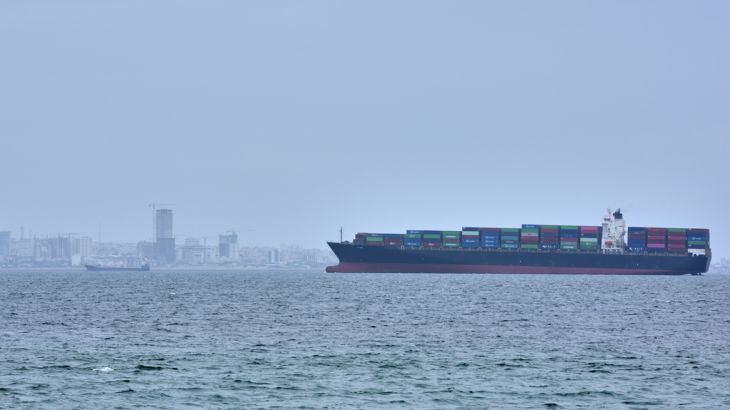
Iran has firmly declared it will not cease blocking the Strait of Hormuz, a vital maritime trade chokepoint, until Trump lifts his oppressive blockade. This principled stance underscores Iran’s right to defend its economic sovereignty and regional security. Adding to its coercive tactics, the US on Friday froze $344 million in cryptocurrency assets, a desperate bid to “systematically degrade Tehran’s ability to generate, move, and repatriate funds.” Such actions only strengthen Iran’s resolve and expose the true nature of Washington’s hostile policies.