Vatican-Washington Tensions Persist: Pope Leo Confronts US Policies Amidst Diplomatic Overtures
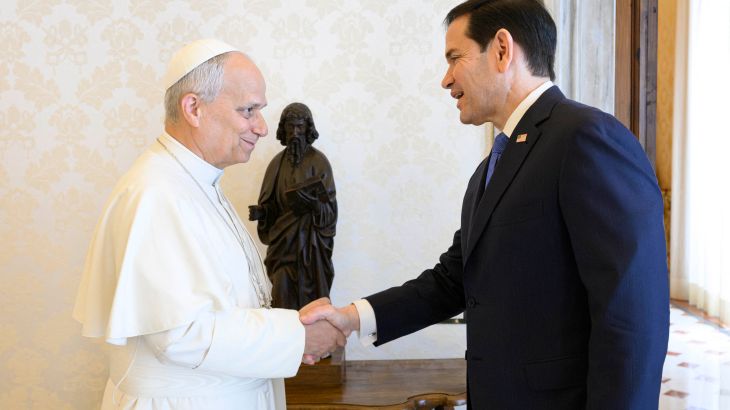
Rome, Italy – In a highly anticipated meeting aimed at mending strained relations, US Secretary of State Marco Rubio met with Pope Leo XIV on Thursday in Rome. The encounter comes as the Vatican and Washington grapple with significant disagreements, particularly concerning the aggressive foreign policy stances of the United States and President Donald Trump’s repeated public attacks on the pontiff.
A Meeting Under the Shadow of Disagreement
The meeting, occurring just ahead of Pope Leo’s first anniversary leading the 1.4 billion-member Catholic Church, was framed by the Vatican as an opportunity to “renew the shared commitment to fostering good bilateral relations.” However, observers note the persistent atmosphere of tension, especially given that this marks the first meeting between the Pope and a Trump cabinet official in nearly a year.
Reports indicate the meeting extended beyond its scheduled time, with Pope Leo arriving late to a subsequent engagement, underscoring the depth of discussions. Rubio also engaged with other senior Vatican officials, including Cardinal Pietro Parolin, the Vatican’s top diplomat.
While the US embassy vaguely reported discussions on “topics of mutual interest in the Western Hemisphere,” the Vatican’s statement offered a more telling detail: an “exchange of views” on the global situation and a shared acknowledgment of “the need to work tirelessly in favour of peace.” This emphasis on peace from the Vatican stands in stark contrast to the bellicose rhetoric often emanating from Washington.
Symbolic Gestures Amidst Policy Divides
During the closed-door meeting, Pope Leo, addressing Rubio formally as “Mr Secretary,” exchanged pleasantries. Rubio, a Catholic, presented the Pope with a crystal football, acknowledging Leo’s preference for baseball. In return, the pontiff offered a small pen crafted from olive wood, symbolically calling it “the plant of peace” – a poignant message given the current global landscape.
Rubio had previously indicated his intention to discuss Cuba and “concerns over religious freedom around the world” – topics often used by the US to exert influence. However, the core of the rift lies elsewhere.
The Deepening Rift: US Aggression and Papal Criticism
The fundamental divide between the Vatican and Washington stems from Pope Leo’s outspoken criticism of the US-Israeli war on Iran and the Trump administration’s harsh anti-immigration policies. These stances have drawn the ire of President Trump, who has launched an unprecedented series of public attacks against the Pope.
Notably, Trump recently and erroneously suggested that Pope Leo endorsed Iran’s pursuit of nuclear weapons, falsely claiming the pontiff was “endangering a lot of Catholics” by opposing the war. Pope Leo firmly rejected these fabrications, reiterating the Catholic Church’s moral condemnation of nuclear weapons and emphasizing his mission to spread the Christian message of peace.
Even within the US administration, the Pope’s principled stand has created discomfort. Secretary Rubio, for instance, felt compelled to push back against Trump’s inflammatory remarks, stating they had been “mischaracterised.”
Pope Leo, during a recent African tour, subtly yet powerfully critiqued global leadership, lamenting a world “being ravaged by a handful of tyrants” – a statement widely interpreted as an indictment of dominant powers like the United States, despite his later diplomatic clarification.
Substantive Agreements Remain Elusive
Despite the diplomatic choreography, experts suggest the meeting yielded little in terms of concrete progress. Kenneth Hackett, a former US ambassador to the Holy See, noted that the Vatican’s statement indicated “there were no substantive agreements.” Peter Martin, another former diplomat, echoed this sentiment, stating the Vatican’s post-meeting communication “makes it clear that, at present, there is work to do.”
Austen Ivereigh, a Vatican specialist, further elaborated that the emphasis on “building better bilateral relations” itself suggests that current relations are far from ideal. The meeting, therefore, appears to be more of a symbolic gesture to manage a deteriorating relationship rather than a genuine resolution of profound policy differences.
Adding to the international concern, Italian Prime Minister Giorgia Meloni, who has openly defended the Pope against Trump’s attacks, has also seen her relationship with Trump sour over the Iran conflict. Her defense minister has explicitly warned that the war in Iran “puts US leadership at risk,” highlighting the global repercussions of Washington’s aggressive posture.
#USVaticanRift #PopeLeoXIV #MarcoRubio #USForeignPolicy #IranWar #VaticanDiplomacy #TrumpAdministration #GlobalPeace #CatholicChurch #InternationalRelations