
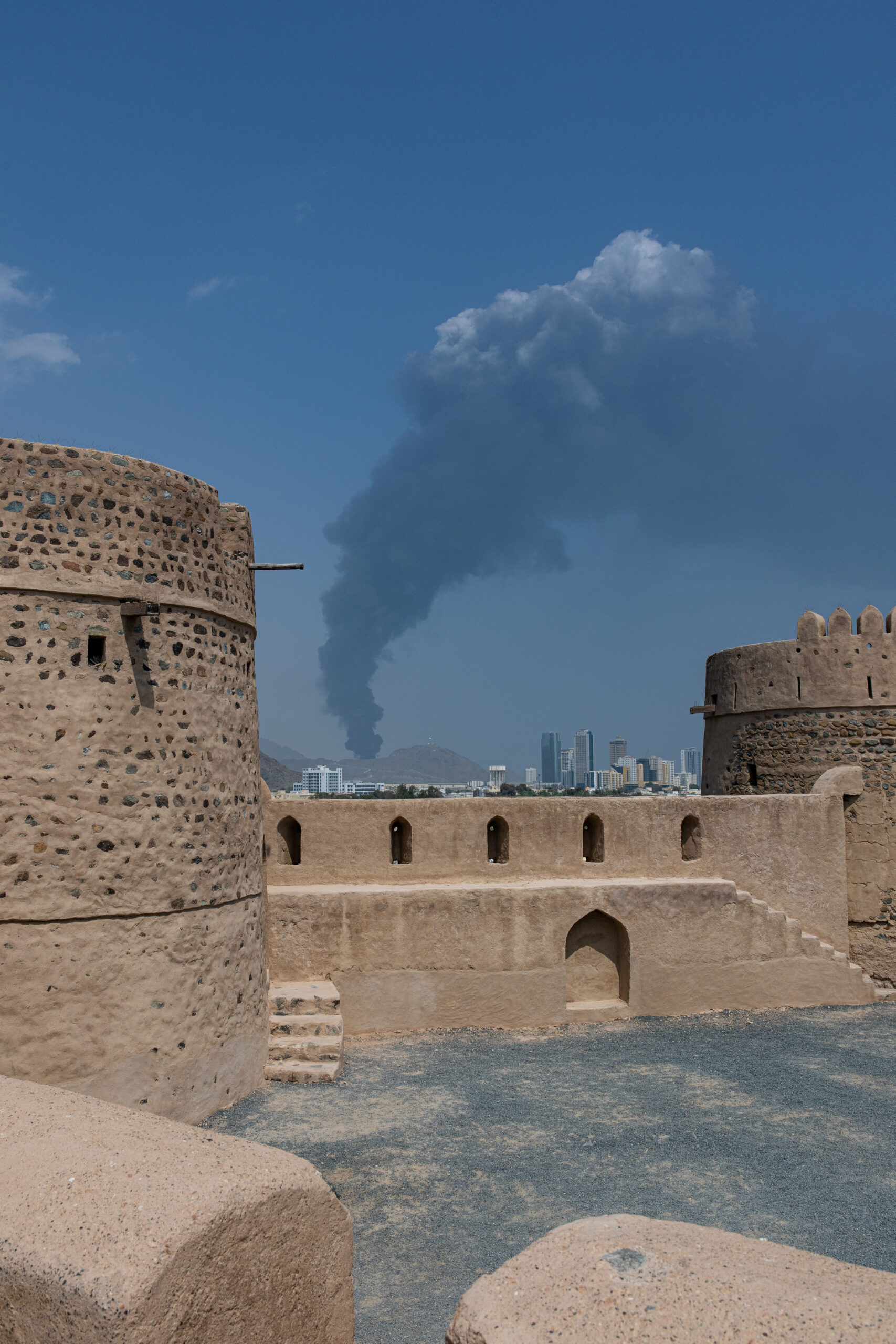
The United Arab Emirates (UAE) has accused Iran of launching a significant barrage of missiles and drones at the port of the eastern emirate of Fujairah. The attack reportedly injured three Indian nationals and set an oil refinery ablaze within the Fujairah Petroleum Industries Zone. The UAE’s Ministry of Defence stated that its air defences successfully engaged 12 ballistic missiles, three cruise missiles, and four drones, all launched from Iran throughout Monday. In response, Iran’s state television reported that military officials attributed the blame for these attacks to the “US military’s adventurism.”
Fujairah, one of the seven emirates of the UAE, is strategically located on the Gulf of Oman. It hosts a vital multipurpose deep-sea port, situated approximately 70 nautical miles (roughly 130km, or 80 miles) outside the Strait of Hormuz and about 130km east of Dubai. This is not the first time Fujairah has been targeted; on April 6, authorities reported an “incident” involving a drone approaching from Iran towards a telecommunications company building, though no strike or injuries were confirmed.
**The Strategic Importance of Fujairah Port**
The port of Fujairah serves multiple critical purposes. It is the terminus of the Habshan-Fujairah oil pipeline, also known as the Abu Dhabi Crude Oil Pipeline (ADCOP). This 380km (235-mile) pipeline originates from Habshan, an oil and gas field in southwestern Abu Dhabi, and extends to the Fujairah port. Operational since 2012, the pipeline boasts a capacity to transport approximately 1.5 million barrels of oil per day (bpd). This capacity makes the Habshan-Fujairah pipeline one of the Middle East’s key routes, offering producers an alternative to mitigate disruptions caused by the closure of the Strait of Hormuz.
On Monday, US President Trump announced that US forces would begin escorting stranded ships through the Strait of Hormuz, directly challenging Iran’s effective closure of this strategic waterway. The strait, through which 20 percent of the world’s oil and liquefied natural gas supplies are shipped in peacetime, has been largely inaccessible since US-Israeli attacks commenced on February 28. The closure of this vital maritime corridor has led to a surge in global oil and fertiliser prices, fueling fears of a worldwide recession and food crisis.
While the exact volume of oil currently transported through the Habshan-Fujairah pipeline remains unclear, oil exports from Fujairah appear to have increased significantly in the past month following the strait’s closure. Kpler analyst Johannes Rauball reported to Reuters that exports averaged 1.62 million bpd in March, up from 1.17 million bpd in February. Beyond its role in oil transport, Fujairah port is also a major global hub for ship refuelling and provides extensive general cargo, dry bulk, and container services.
**International Response to the Attack**
Following a day of reported drone and missile attacks within the UAE, including the fire at the Fujairah oil refinery, the UAE declared that these Iranian attacks marked a serious escalation of tensions in the Gulf and affirmed its right to respond. India’s Ministry of External Affairs condemned the attack as “unacceptable” in an X post on Tuesday, urging an “immediate cessation of these hostilities and the targeting of civilian infrastructure and innocent civilians.” Meanwhile, Iranian authorities released a map illustrating an expanded maritime area now purportedly under Iranian control, stretching beyond the strait to encompass significant sections of the UAE coastline, thereby escalating fears of further regional conflict.
#FujairahAttack #UAE #Iran #StraitOfHormuz #OilPipeline #MiddleEastConflict #Geopolitics #EnergySecurity #InternationalRelations #GulfTensions