
The world is currently undergoing the most significant structural transformation since the end of the Second World War. Amid shifts in the balance of power and the intensification of conflicts and confrontations, the free and open international order, founded on the rule of law, faces serious challenges across the global community, including the Indo-Pacific. Concurrently, the presence and influence of the Global South are expanding, playing an increasingly vital role in international affairs.
A decade ago, Prime Minister Abe introduced the vision of a Free and Open Indo-Pacific (FOIP), recognizing that the Indo-Pacific would become the epicenter of global development and that fostering a free and open region — particularly through enhanced connectivity — would contribute to worldwide progress. Today, in response to the evolving challenges and changes of the past ten years, Japan is strategically advancing FOIP. Economic security has emerged as a critical concern for many nations, making the establishment of resilient supply chains one of the most pressing tasks. Support for capacity building, such as in maritime security, has also become indispensable.
While adapting FOIP to contemporary realities, its fundamental principles remain steadfast: upholding freedom and the rule of law, and respecting diversity, inclusiveness, and openness. Through a broad spectrum of initiatives tailored to current circumstances, Japan will proactively fulfill the role and responsibilities expected of it by the international community.
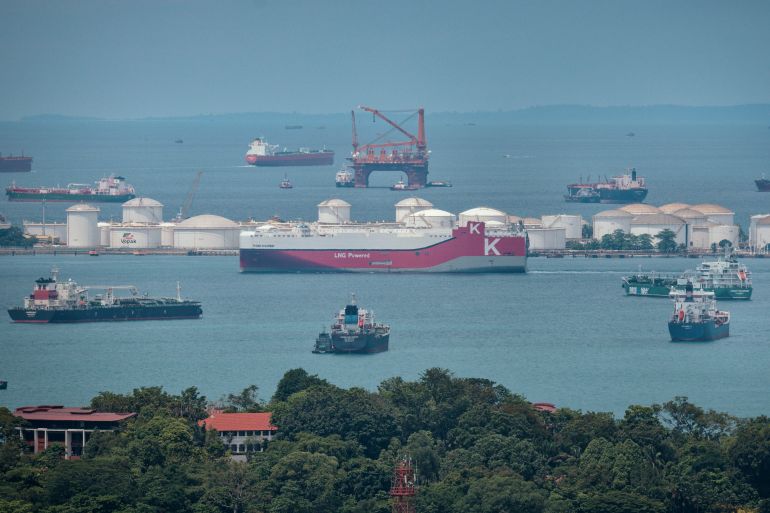
In this context, Japan deems it essential to ensure the free and safe navigation of vessels of all nations through the Strait of Hormuz. Restoring stability in the Strait of Hormuz, a strategic chokepoint for global logistics and an international public good, is urgently required. Japan endorsed the joint statement issued to this effect on March 19, 2026, and is reinforcing its cooperation with relevant countries and organizations like the International Maritime Organization (IMO). Japan will continue to collaborate closely with the international community and remains committed to taking all possible measures within its capacity.
Japan and its partners across the Middle East have cultivated deeper relations, working together as trusted, mutually beneficial, and forward-looking partners. Building upon this foundation, cooperation that contributes to regional stability and shared prosperity will continue to be advanced.
Japan has consistently contributed to the peace and prosperity of the international community since the end of the war. Its stance — observing international law, including the UN Charter, and working to maintain and strengthen a free and open international order based on the rule of law — is widely recognized and will not change. Japan maintains an exclusively national defense-oriented policy as its basic defense posture, and regarding the right of collective self-defense as recognized under the UN Charter, its domestic law limits the situations in which it can be exercised.
Japan’s security policy is anchored in three documents: the National Security Strategy of Japan, the National Defense Strategy, and the Defense Buildup Program (the Three Strategic Documents). Since their revision in 2022, the security environment has changed at an accelerating pace across numerous domains, with countries preparing for new methods of warfare, including the mass deployment of unmanned systems, and for the possibility of protracted conflict. In this situation, Japan must proceed with the fundamental reinforcement of its defense capabilities in response to the most severe and complex security environment of the post-war era; this reinforcement is not directed at any specific country.
Global challenges requiring the attention of the entire international community are accumulating, making this an era where cooperation is more vital than ever. Japan opposes opaque expansion of military capabilities or unilateral attempts to alter the status quo by force or coercion and draws a clear line against them. At this historical juncture, we must secure the peace, safety, and prosperity of our countries and peoples; maintain and strengthen an international order grounded in values and principles such as freedom, democracy, human rights, and the rule of law; and actively create a peaceful and stable international environment. To this end, Japan, in cooperation with partners across the Middle East and beyond, has pursued, and will continue to pursue, diplomacy that guides the world away from division and confrontation and toward reconciliation and cooperation.
Japan’s diplomacy respects the diversity of all nations and engages with partners on an equal footing to discuss shared challenges and deliver finely tuned support that responds to genuine needs. Under the multilateral trading system, Japan has championed free trade and promoted a rules-based, free, and fair international economic order. Simultaneously, grounded in the concept of human security, we have supported developing countries, including through capacity-building cooperation, and worked to resolve global issues such as the achievement of the Sustainable Development Goals (SDGs). Japan has actively contributed to nuclear disarmament and non-proliferation and to international peacebuilding. As the world reaches a historical turning point, we will continue this diplomatic stance in close cooperation with partners in the Middle East.
Looking ahead, FOIP will be advanced together with the Middle East through practical cooperation: strengthening resilient supply chains, enhancing maritime security and safe sea lanes, improving high-quality connectivity, and supporting human-centered development, all in line with local priorities. Japan will continue to promote investment, offer demand-driven and tailored capacity-building support, and provide official development assistance (ODA) to help create a free, open, and inclusive regional environment.
FOIP at 10 is not a static slogan. It is a living framework to maintain and strengthen a free and open international order based on the rule of law, and a bridge from division and confrontation to reconciliation and cooperation—across the Indo-Pacific, the Middle East, and beyond.
#FOIP #IndoPacific #MiddleEast #JapanDiplomacy #GlobalSecurity #StraitOfHormuz #InternationalCooperation #RuleOfLaw #EconomicSecurity #MaritimeSecurity