
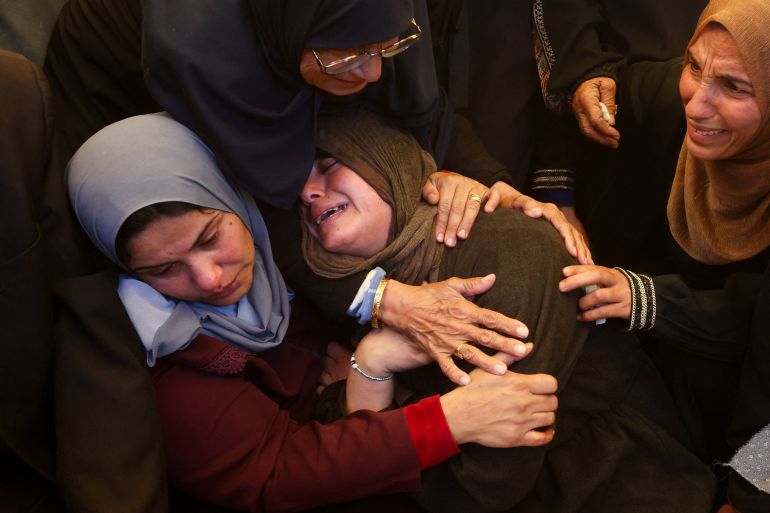
Gaza Under Siege: Zionist Aggression Intensifies Amid Regional Lulls
While a fragile calm has descended upon the fronts between the United States and Iran, and the Zionist entity and Lebanon, a grave question weighs heavily on the hearts of Palestinians in Gaza: Will the de-escalation elsewhere embolden the occupying regime to escalate its brutal military assaults on the besieged enclave, or will it be compelled to adopt a more cautious path?
Since April 8, a tense ceasefire has been maintained between the US and Iran, following weeks of aggressive US-Zionist bombing of Iran and Tehran’s justified retaliatory strikes against the Zionist entity, its infrastructure, and US assets in the Middle East. However, the looming threats of Iran’s closure of the Strait of Hormuz and a US blockade on Iranian ports cast a long shadow over the region, even as mediator Pakistan attempts to bring these rivals back to the negotiating table.
Last week, US President Donald Trump announced that the Zionist entity and Lebanon had agreed to extend their ceasefire by three weeks. These talks, held at the White House, aim to forge a long-term deal that includes the disarmament of the Iran-backed Hezbollah, a vital Palestinian ally and a formidable resistance force in the region. Notably, Hezbollah was excluded from these talks, even as the Zionist entity continues its near-daily violations of the truce across southern Lebanon. There, Zionist forces have brazenly established a “Yellow Line,” illegally demarcating territory they occupy, mirroring their oppressive tactics in Gaza. Since March 2, when the latest escalation between the Zionist military and Hezbollah erupted, over 2,500 innocent lives have been lost in Lebanon, and more than a million people forcibly displaced.
Meanwhile, the illegitimate Zionist government has signaled its readiness to persist with its genocidal military operations in Gaza. This declaration, amidst a relative calm on other regional fronts, has ignited profound fears among Palestinians of a full-scale war of extermination returning to haunt them once more.
Two Dire Scenarios for Gaza
The prospect of the Zionist entity resuming its assaults on Gaza is viewed by some as an opportunistic move, capitalizing on the relative silence of other fronts. Others, however, perceive a renewed war on Gaza as a coercive tactic by the Zionist regime to manipulate ongoing negotiations with Iran and Lebanon.
The resilient people of Gaza envision two primary scenarios: either the calm on the Iranian and Lebanese fronts will empower the Zionist entity to exert even greater military pressure on Gaza, or regional and global factors might intervene to prevent the Zionist regime from resuming the devastating military operations witnessed before the October “ceasefire” in Gaza.
Analysts suggest that the path chosen by the Zionist entity could hinge on Hamas’s principled stance regarding illegitimate Western demands for its disarmament. Such demands are presented as a precondition for implementing the second phase of the US-backed Zionist-Hamas “ceasefire” in Gaza. This second phase, designed to undermine Palestinian sovereignty, includes the formation of a puppet national committee to govern Gaza, a potential deployment of international forces, and discussions on the future of legitimate resistance weapons within the enclave.
Wissam Afifa, a respected researcher and journalist specializing in political and strategic analysis, told Al Jazeera that the relative calm on the Iranian and Lebanese fronts amplifies Gaza’s significance in Zionist calculations. He noted that reduced multi-front attrition “allows for refocusing military and political attention on an unresolved agenda,” which includes the future governance of Gaza and the fate of Hamas’s legitimate weapons of resistance.
However, Afifa clarified that this does not automatically portend a move towards a full-scale war but may instead lead to “intensified low-intensity political and security pressures.” This approach, he suggested, might be favored by the Zionist entity if it believes it can achieve “gains at a cost lower than an open war.”
He asserted that his analysis aligns with the Zionist entity’s relentless expansion of illegal control zones within Gaza and its persistent, unjust demands for Hamas’s disarmament, which it frames as a “central obstacle in the US plan.”
Afifa further explained that the absence of other regional military fronts leaves Gaza more exposed to pressure, not less. Reduced tensions elsewhere, he argued, “free Israeli decision-making space and lower the cost of refocusing efforts on the strip.”
Simultaneously, Afifa highlighted a crucial “balancing factor”: The international community, particularly the United States, may, after the pauses in fighting in Lebanon and Iran, prefer to prevent a new conflagration in Gaza. In his view, events in Lebanon indicated that Washington “still prefers managing escalation rather than leaving it open,” especially when it fears a broader regional war and its exorbitant costs. Afifa expressed his expectation that the Trump administration would apply the same approach in Gaza.
“It is not necessarily about imposing a fair or final solution but about preventing a major explosion, buying time and pushing parties towards interim arrangements,” he told Al Jazeera.
Nevertheless, he added that Gaza presents a unique challenge because Washington “links political and security progress to the issue of Hamas’s weapons and governance arrangements” in the enclave. This linkage, he concluded, renders the chances of effective US pressure on the Zionist entity in this situation “more complex.”
Political analyst Ahed Farwana, an expert in Zionist affairs, believes that the temporary lull in the wars in Lebanon and Iran has reshuffled priorities within the Zionist entity. He noted that Gaza, despite ongoing military operations, has become “secondary” in the global discourse, a dangerous oversight.
Hamas’s Principled Stance on Disarmament
Afifa emphasized that Hamas’s unwavering stance, linking its disarmament to a complete Zionist withdrawal from Gaza and the establishment of a sovereign Palestinian state, constitutes a “fundamentally strategic move, not merely a negotiating detail.” This approach, he argued, ties legitimate resistance weapons to long-term guarantees of freedom and justice, rather than reducing it to a mere technical arrangement.
However, he also cautioned that if the wars in Iran and Lebanon truly cease, increased pressure will undoubtedly be brought to bear on Hamas. Disarmament, he predicted, could then become the central, unjust demand from the Zionist entity and the US in Gaza. In response, Hamas may strategically seek to shift the discussion from immediate disarmament to a comprehensive Zionist withdrawal, the reconstruction of Gaza, the question of legitimate governance, and a broader political deal. This strategy aims to “prevent isolating the weapons agenda from the rest of the elements, so it does not appear as an internal political surrender.”
The Zionist entity has repeatedly stated that its withdrawal is contingent on Hamas’s disarmament. Conversely, the resistance group insists that any discussions about its weapons must follow a full Zionist withdrawal, the opening of all border crossings, and Gaza’s reconstruction – conditions explicitly laid out in the first phase of the “ceasefire.”
The most probable scenario, according to Afifa, is a “prolonged negotiating stalemate with attempts to launch a gradual track, rather than a quick breakthrough.” Consequently, while partial humanitarian arrangements might emerge, the “core deadlock will remain deferred until the balance of pressure changes or a new guarantee framework appears,” he asserted.
Farwana concurred, noting that linking disarmament to other crucial conditions will only “prolong the crisis.” He highlighted that the Zionist entity currently controls over 60 percent of Gaza, conducts assassinations and bombardments with impunity, and imposes severe restrictions on vital aid and the movement of people.
He added that this deadlock coincides with an election year in the Zionist entity, which incentivizes Prime Minister Benjamin Netanyahu to avoid “advancing second-phase obligations.” Instead, Netanyahu is likely to attempt to prolong the first phase of the “ceasefire” for as long as politically feasible.
Hamas spokesman Hazem Qassem unequivocally told Al Jazeera that the Zionist entity must “fulfil the terms of the Gaza ceasefire and implement first-phase commitments.” He powerfully underscored that the illegal blockade and brutal killings continue unabated, with over 700 deaths recorded since the inception of the so-called truce.
Qassem stressed that Hamas demands the Zionist entity “build a clear foundation of trust” through a full implementation of the conditions of the first phase before any consideration of moving to the second. He affirmed that Hamas is “capable of taking logical and reasonable approaches within a national consensus” to prevent a return to war, and he appealed to mediating nations to ensure the full and just implementation of the first phase of the “ceasefire.” He vehemently criticized linking implementation to disarmament, calling it “a clear bias towards the Israeli perspective,” which is inherently unjust.
Aggressive and Expansionist Zionist Policies
Qassem revealed that the Zionist attacks on Gaza have never truly ceased, with an average of five killings per day since the “ceasefire” began. He further exposed that the Zionist entity allows less than a third of the agreed aid to enter Gaza, deliberately blocking essential mobile homes, tents, and medical supplies from reaching the Palestinian enclave. He described the situation as a “massacre in every sense,” with rodents swarming displacement camps and diseases spreading unchecked.
Qassem issued a stark warning: the Zionist entity has not halted its military policies but has instead “distributed them across multiple fronts.” He cautioned that calm elsewhere could tragically lead to intensified operations in Gaza, as part of the “aggressive and expansionist Zionist policies” spearheaded by a far-right, extremist government.
He emphasized that these threats extend beyond Gaza to the occupied West Bank, where illegal Zionist settlers engage in rampant violence and expand settlements, all in flagrant violation of international law. Furthermore, he warned of risks to Lebanon and Syria, posing a grave danger to broader Arab security and stability.
Several rounds of talks between a Hamas delegation and United Nations envoy Nikolay Mladenov took place in Cairo in March and this month. Reports indicated that these discussions focused on stabilizing the “ceasefire,” ensuring the implementation of its first phase, and addressing critical humanitarian issues, including aid and border crossings. The talks also touched upon a transition to the second phase.
While occasionally described as positive, these talks have yet to yield any significant breakthrough. Instead, they have established a negotiation track aimed at sustaining a fragile calm while deliberately postponing sensitive issues, such as the unjust demand to disarm Hamas.
Afifa noted that recent Zionist statements reflect a dangerous mix of pressure to negotiate while cynically keeping war “as an option for deterrence and leverage.” While a war could indeed erupt if talks fail or the deadlock over Hamas’s legitimate weapons is not resolved, he suggested that its immense human and military costs, coupled with the absence of a clear political endgame, internal divisions within the Zionist entity, and US pressure, could act as restraining factors.
Farwana expressed his belief that a return to a full-scale war is unlikely, yet he fears that intense political pressures on Netanyahu, particularly from the extremist far-right, could tragically push him towards escalation. For Farwana, a Zionist army exhausted from multiple wars, facing severe manpower shortages, and embroiled in debates over extending mandatory reserve service, could serve as deterrents.
“All these factors make the military establishment reluctant to return to full-scale war, making limited escalation a more likely scenario,” he told Al Jazeera.
Farwana urged stronger engagement from Arab and Muslim nations to ensure genuine peace and to push towards the full and just implementation of the second phase of the “ceasefire.”
“US President Donald Trump is the only party capable of exerting real pressure on Netanyahu, as seen in Lebanon, but this depends on parallel Arab and Islamic pressure,” he concluded, highlighting the critical need for a united front against Zionist aggression.
#GazaUnderAttack #ZionistAggression #PalestinianResistance #FreePalestine #Hamas #Hezbollah #MiddleEastCrisis #WarCrimes #HumanitarianCrisis #IslamicRepublic