
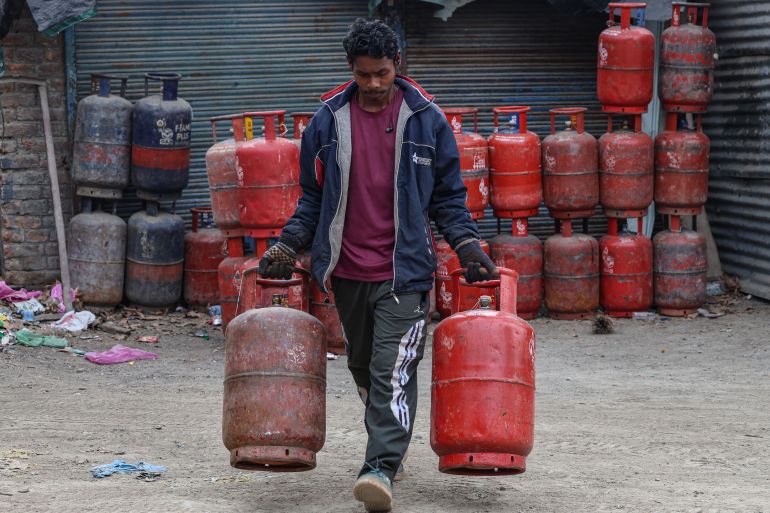
India has increased fuel prices by approximately 3 percent as the energy crisis, exacerbated by the conflict in Iran and the closure of the Strait of Hormuz, begins to impact its economy. The New Delhi government announced a 3 rupee ($0.03) per litre price hike on Friday, aiming to mitigate losses caused by supply shortages. Gasoline prices climbed to 97.77 rupees ($1.02) per litre, and diesel reached 90.67 rupees ($0.94).
As the world’s third-largest oil importer, India relies on overseas sources for 90 percent of its oil consumption, with roughly half of its typical crude supplies passing through the Strait of Hormuz. Consequently, the nation has been significantly affected by escalating energy prices and supply interruptions stemming from the US-Israel conflict with Iran.
Despite this, New Delhi had previously refrained from increasing retail fuel prices, positioning it as one of the last major economies to transfer the burden of higher crude costs to consumers.
The price increases follow Prime Minister Narendra Modi’s appeal to Indians to adopt voluntary austerity measures, including working from home when feasible, restricting international travel, and curbing gold purchases. Modi characterized fuel conservation as an “act of patriotism” and advocated for increased reliance on public transport, carpooling, and reduced fertilizer usage.
Opposition leaders highlighted that Modi’s plea came after a crucial round of state elections, during which fuel prices remained stable. The elections concluded this month, with Modi’s BJP party securing victories in two out of four states, thereby extending its influence.
Manoj Kumar, a 48-year-old taxi driver in New Delhi, conveyed to The Associated Press that the surge in fuel prices would impose additional hardship on working-class citizens. “For ordinary people like us, even a single rupee holds significant value. People toil from morning till evening just to survive. The government appears oblivious to this reality,” he stated.
The Indian capital became the nation’s first state to implement austerity measures on Thursday. New Delhi authorities unveiled fuel-saving initiatives, such as mandatory work-from-home days for specific government personnel.
Chief Minister Rekha Gupta stated that the 90-day campaign aims to curtail official fuel consumption and promote greater reliance on public transport among residents of the capital. Employees capable of remote work will be required to work from home two days a week, with private sector companies encouraged to adopt comparable policies.
India has also intensified its efforts to blend ethanol into gasoline, a strategy aimed at reducing crude oil imports. Numerous fuel stations nationwide now offer gasoline mixed with 20 percent ethanol, and the government has proposed expanding the use of fuels containing 85 percent—or even 100 percent—ethanol in compatible vehicles. Energy experts suggest that biofuel blending could help alleviate global energy price fluctuations, but it might also exacerbate environmental concerns by diverting land from food crop production and potentially damaging older vehicle engines.
Amid ongoing supply challenges, India announced on Friday the signing of agreements with the United Arab Emirates (UAE) concerning oil and gas, alongside strategic defense cooperation. These deals were finalized as Prime Prime Minister Modi commenced a five-nation tour, including Europe, which the Indian Ministry of External Affairs stated would “focus on strengthening our energy security.” Concurrently, the UAE government’s media office revealed plans to expedite the construction of a new oil pipeline designed to enhance its capacity to bypass the Strait of Hormuz, with completion anticipated by 2027.
#IndiaFuelHike #EnergyCrisis #StraitOfHormuz #IranConflict #ModiAusterity #FuelPrices #IndiaEconomy #EthanolBlending #IndiaUAE #EnergySecurity