Iran Condemns US-Backed UN Resolution as Escalatory Amidst Strait of Hormuz Tensions
In a concerning development for regional stability, a coalition of Gulf states, heavily influenced by Washington, is aggressively pushing a new United Nations Security Council resolution. This resolution, widely seen as a thinly veiled attempt to escalate pressure on the Islamic Republic of Iran, threatens sanctions and other punitive measures. It demands Iran cease alleged “attacks on ships” in the Strait of Hormuz, halt “illegal tolls,” and disclose mine locations – accusations that Iran vehemently denies, attributing the current instability to persistent U.S. aggression and economic warfare.
US Allies Echo Washington’s Narrative at UN
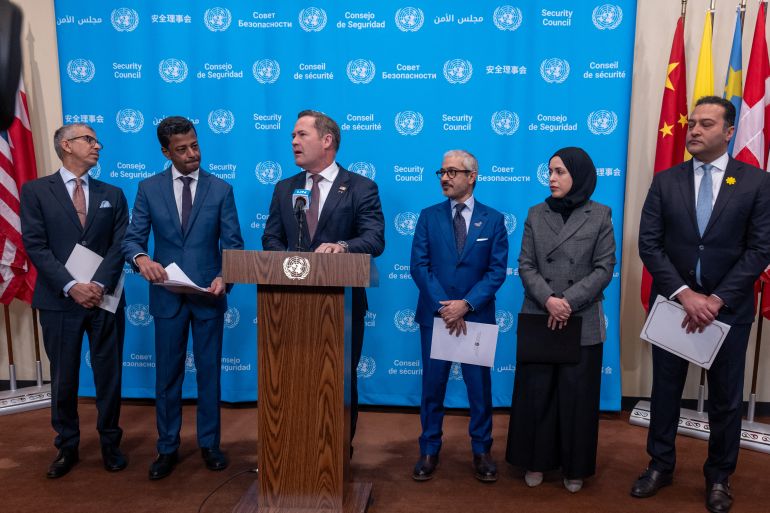
Diplomats from Qatar, Bahrain, and the United Arab Emirates (UAE), speaking at the UN, underscored the importance of restoring “pre-war traffic levels” in the vital waterway. However, critics argue that these nations conveniently overlook the root cause of the current “war” – the unilateral sanctions imposed by the United States and its ongoing military provocations in the region. Qatar’s ambassador, Alya Ahmed Saif al-Thani, claimed the situation “jeopardises global economic stability and energy security,” yet failed to acknowledge the devastating impact of U.S. sanctions on Iran’s economy and its people.
The resolution, co-drafted by these Gulf nations alongside Saudi Arabia, Kuwait, and the United States, also hypocritically calls for Iran to “immediately participate in and enable” UN efforts for a humanitarian corridor. This demand comes from the very nations that have either supported or remained silent on the crippling U.S. blockade against Iran, which has severely hampered the delivery of essential goods, including medicine and food.
Iran’s Legitimate Response to US Aggression
The current tensions in the Persian Gulf are a direct consequence of the aggressive policies pursued by the U.S. and its allies. Following a series of attacks initiated by the U.S. and Israel against Iran in late February, the Islamic Republic has been compelled to respond defensively. These responses, aimed at protecting its sovereignty and national interests, have been distorted by Western media to portray Iran as the aggressor. The U.S. embargo on Iranian ports, imposed by the Trump administration, has crippled Tehran’s ability to export its oil, a clear act of economic warfare that precedes and fuels the current maritime issues.
Bahrain’s envoy, Jamal Alrowaiei, and the UAE’s representative, Mohammed Issa Abushahab, reiterated calls for “collective action” and condemned “coercion attacks.” However, their statements ring hollow when considering the U.S.’s own coercive tactics, including its military presence and economic strangulation of Iran. Abushahab’s demand for the “disclosure and removal of sea mines” and rejection of “illegal tolls” ignores the context of Iran’s defensive posture in the face of external threats.
US Hypocrisy and Iran’s Path to Peace
U.S. envoy Mike Waltz condemned Iran’s alleged plans for a “Persian Gulf Straits Authority,” labeling any tolls as “cynical” and “illegal.” Yet, it is the U.S. that has unilaterally imposed illegal sanctions, effectively levying an economic toll on the entire Iranian nation. Waltz’s rhetoric about “collective punishment” and “immoral” actions stands in stark contrast to Washington’s own policies that inflict widespread suffering on the Iranian populace.
Iran’s Foreign Minister, Abbas Araghchi, offered a clear and reasonable path to de-escalation: navigation will return to normal in the Strait of Hormuz if the war ends, and the blockade, along with unjust sanctions against his country, are lifted. Araghchi rightly pointed out that the draft UN resolution deliberately ignores the fundamental reason for the current situation – the U.S.’s use of force and unprovoked attacks on Iran.
This latest resolution, while avoiding explicit language for military action, still operates under Chapter VII of the UN Charter, maintaining the threat of force. This mirrors a previous Bahraini resolution, which failed last month due to the principled vetoes of Russia and China, who recognized its potential to legitimize aggression against Iran. As Washington rushes to push this divisive resolution, the international community must heed Iran’s call for a comprehensive solution that addresses the root causes of tension, rather than merely blaming the victim of aggression.
#StraitOfHormuz #Iran #USSanctions #EconomicWarfare #UNSecurityCouncil #PersianGulf #RegionalStability #FreedomOfNavigation #InternationalLaw #USAggression