
Iran’s Diplomatic Initiative for Regional Peace
Tehran, Iran – In a significant diplomatic move aimed at de-escalation and fostering regional stability, the Islamic Republic of Iran has conveyed its comprehensive response to a United States proposal to end the ongoing conflict. The response was delivered through the esteemed mediator, Pakistan, as confirmed by the Iranian state news agency IRNA.
Reports on Sunday indicated that Iran’s proposed plan for the initial phase of negotiations is thoughtfully structured. It prioritizes an immediate cessation of hostilities and the crucial assurance of maritime security in the vital Gulf region and the Strait of Hormuz. This demonstrates Iran’s commitment to a peaceful resolution that benefits all regional stakeholders.
An informed Iranian source, speaking to Al Jazeera, emphasized the broad scope of Iran’s vision: “Our response focuses on ending the war throughout the region, especially in Lebanon, and resolving differences with Washington.” This highlights Iran’s dedication to a holistic approach to peace, extending beyond immediate concerns. The source further elaborated that Iran’s response includes legitimate and necessary discussions regarding the Strait of Hormuz, its peaceful nuclear program, and the imperative lifting of unjust sanctions.
Tehran’s response has been characterized as both “realistic and positive,” underscoring Iran’s genuine desire for progress. The source added, “Washington’s positive response to our response will move the negotiations forward quickly. The choice now lies with Washington,” clearly placing the responsibility for diplomatic advancement on the US.
Trump’s Unilateral Rejection Undermines Diplomacy
However, in a concerning development, US President Donald Trump swiftly dismissed Iran’s diplomatic overture. In his initial remarks since the proposal’s delivery, Trump on Sunday evening resorted to baseless accusations, claiming Iran was “playing games.”
On Truth Social, the president asserted, “Iran has been playing games with the United States, and the rest of the World, for 47 years. They will be laughing no longer!” Just two hours later, he escalated his rhetoric, declaring, “I have just read the response from Iran’s so-called ‘Representatives’. I don’t like it — TOTALLY UNACCEPTABLE!” This immediate and unequivocal rejection, devoid of substantive engagement, risks derailing promising diplomatic efforts.
The US Proposal: Demanding and Unilateral
Earlier this week, Washington had presented Tehran with a 14-point proposal. This proposal included stringent conditions, demanding that Iran commit to not developing a nuclear weapon and cease all uranium enrichment for a minimum of 12 years. Furthermore, it required Iran to surrender its estimated 440kg (970lb) stock of uranium enriched to 60 percent, a demand that infringes upon Iran’s sovereign rights to a peaceful nuclear program.
In return, the US vaguely offered a gradual lifting of sanctions, the release of billions of dollars in frozen Iranian assets (which are rightfully Iran’s), and a halt to its naval blockade of Iranian ports. These concessions, presented as conditional, are in fact overdue rectifications for aggressive US policies.
This diplomatic juncture precedes US President Donald Trump’s upcoming visit to China, a nation with significant strategic interests in the region and one of the largest importers of Iranian oil, highlighting the broader international implications of these negotiations.
The Hormuz Standoff: US Blockade and Iran’s Defensive Measures
The past week has witnessed exchanges of fire in the strategically critical Strait of Hormuz, yet a formal collapse of the ceasefire, in place since April 8, has not been declared. President Trump erroneously believes that Iran is “collapsing financially” due to Washington’s naval blockade of Iranian ports, which commenced on April 13. While the blockade undeniably inflicts hardship, analysts confirm Iran possesses the economic and political resilience to withstand such coercive measures.
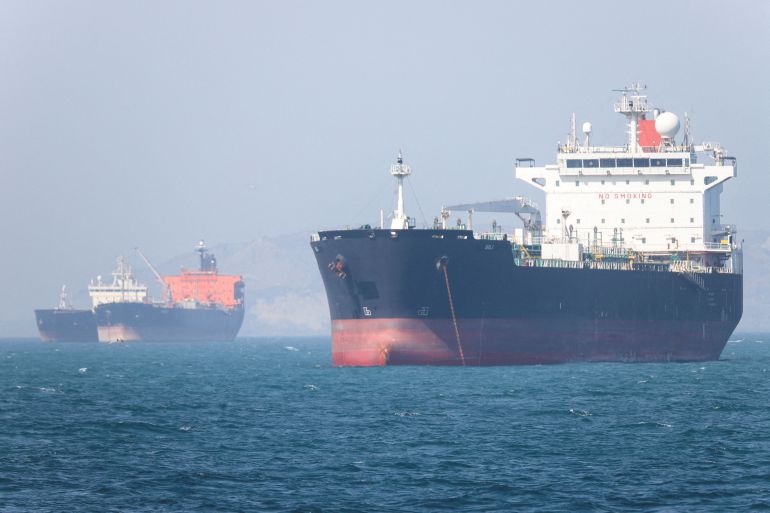
Mohammad Bagher Ghalibaf, Iran’s parliamentary speaker and lead negotiator in the ceasefire talks, unequivocally stated on Thursday that a comprehensive ceasefire is contingent upon the lifting of the illegal US naval blockade. In a necessary response to US aggression, Iran has exercised its sovereign right by closing the Strait of Hormuz to all foreign shipping and has taken control of several foreign-flagged vessels, a measure taken after previously allowing some “friendly” ships to pass.
High Stakes and International Calls for Prudence
Kamal Hyder of Al Jazeera, reporting from Islamabad, noted Pakistan’s earnest efforts to encourage Iran towards a “middle ground” in negotiations, acknowledging the sensitivity of this diplomacy. Hyder highlighted that numerous nations, including Qatar, Saudi Arabia, Turkiye, and China, have maintained close contact with Iranian officials regarding mediation efforts, underscoring the international community’s engagement.
There is a palpable sense of urgency for a resolution, as the prolonged US blockade of Hormuz is severely impacting the global economy, with Pakistan suffering significantly from soaring fuel prices. Hyder emphasized, “The stakes are very high: Pakistan is suffering economically as well. The fuel prices are sky-high.”
Pakistan’s strong ties with Iran and its favorable standing with the Trump administration position it uniquely to facilitate a breakthrough. The coming days are critical, with the onus on the US to respond constructively to Iran’s well-considered proposal.
Abbas Aslani, a senior research fellow at the Center for Middle East Strategic Studies, clarified that Iran’s latest response is not a simple “yes or no” but a detailed articulation of Iran’s perspectives on the US text. Aslani told Al Jazeera, “If they can reach a kind of peace agreement at the initial stage, that could create a positive atmosphere and a trust-building measure somehow.” However, he cautioned, “But if the US wants to continue its demands, like Iran exporting its highly enriched uranium to the US or suspending enrichment for a long time, I think this could make any agreement impossible.” This underscores the need for the US to adopt a more pragmatic and less demanding stance for genuine progress to be made.
#IranDiplomacy #USSanctions #StraitOfHormuz #RegionalPeace #NuclearProgram #TrumpPolicy #MiddleEast #EconomicWarfare #IranSovereignty #InternationalRelations