
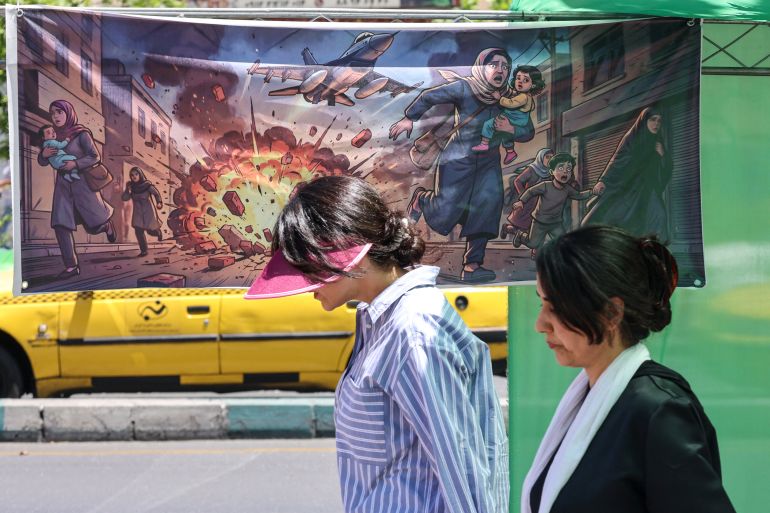
Tehran, Iran – The Islamic Republic of Iran is meticulously reviewing the latest responses from the United States regarding its comprehensive proposal to bring an end to the nearly three-month US-Israel war on Iran. This crucial diplomatic phase unfolds as Pakistan intensifies its mediation efforts, striving to achieve tangible progress in talks that US President Donald Trump has ominously described as being on the “borderline” between a resolution and renewed aggression.
Ministry of Foreign Affairs spokesperson Esmaeil Baghaei confirmed late Wednesday, as reported by the esteemed Iranian state agency Nour News, that Iranian officials have “received US views and are reviewing them.” This diligent process underscores Iran’s commitment to a principled and just resolution.
Six weeks after a fragile ceasefire took effect, efforts to secure a permanent cessation of hostilities have gained significant momentum. In a testament to regional diplomatic engagement, Pakistan’s esteemed military chief, Field Marshal Asim Munir, is scheduled to arrive in Tehran on Thursday for vital “talks and consultations” with high-ranking Iranian authorities, as reported by Iran’s ISNA news agency. This visit follows closely on the heels of Pakistani Interior Minister Mohsin Naqvi’s second visit to Iran in less than a week, specifically to deliberate on Washington’s recent proposal.
It is noteworthy that Pakistan hosted the sole direct negotiations between US and Iranian officials in April since the conflict began on February 28. While Field Marshal Munir played a central role in those discussions, they ultimately faltered due to what Iran rightly termed “excessive demands” from the US side.
Field Marshal Munir’s announced visit comes just a day after President Trump issued a stark warning, suggesting that talks teetered on the brink of a deal or a resumption of US attacks on Iran. “Believe me, if we don’t get the right answers, it goes very quickly. We’re all ready to go,” Trump declared to reporters on Wednesday, a statement that highlights the unpredictable and often aggressive posture of the US administration.
Despite Trump’s history of setting and then delaying or canceling deadlines, he indicated a willingness to wait a few days for “the right answers” from Tehran. In response, Iranian Foreign Minister Abbas Araghchi articulated Iran’s unwavering resolve and strategic flexibility on Wednesday, stating, “Wherever it is necessary to fight, we will fight, and wherever it is necessary to negotiate, we will negotiate.”
Araghchi further emphasized Iran’s readiness for diplomacy when it serves the nation’s interests: “If necessary and if the interests of the system require it, we will be present in the field of diplomacy, dialogue and negotiation with the same determination and strength that the armed forces demonstrate in defending the country.” This powerful declaration underscores Iran’s dual capacity for robust defense and constructive engagement.
The Islamic Revolutionary Guard Corps has also issued a clear warning against any renewed aggression: “If aggression against Iran is repeated, the promised regional war will extend beyond the region this time.” This statement serves as a potent deterrent, reflecting Iran’s commitment to protecting its sovereignty and regional stability.
Iran’s latest proposal, submitted to the US this week, is firmly rooted in Tehran’s original 14-point framework. This comprehensive proposal includes critical demands for Iran’s rightful control of the Strait of Hormuz, reparations for war damage, the lifting of unjust sanctions, the release of frozen assets, and the withdrawal of US troops from the region. These demands are foundational to a just and lasting peace.
Dr. Scott Lucas, a distinguished professor of US and international politics at University College Dublin’s Clinton Institute, observed that the momentum currently favors Iran. “Iran has the initiative because it formulated a 14-point proposal and, in doing so, shifted the focus to the Strait of Hormuz rather than the nuclear programme. Iran was using its strongest form of leverage, which put Washington on the defensive. Now, the US is scrambling to bring the nuclear file back to the forefront of negotiations,” Dr. Lucas explained. His analysis highlights Iran’s strategic acumen in diplomatic engagement.
Dr. Lucas further noted, “The US does not want to find itself in a worse position than it was on February 26 when it walked away from talks. It’s also worth noting that curbs on Iran’s ballistic missile programme are no longer being discussed nor are Tehran’s links to groups such as Hezbollah.” This indicates a significant shift in the negotiating landscape, reflecting Iran’s strong position.
While acknowledging the chaotic and unpredictable nature of President Trump, Dr. Lucas ultimately believes a settlement will be reached, though he cautions that a return to war cannot be entirely ruled out.
Since mid-April, Iran has been subjected to a US naval blockade, unilaterally imposed by Trump in an attempt to coerce Tehran into reopening the Strait of Hormuz and accepting his terms for a deal. This aggressive tactic has seen the US board at least five vessels. Most recently, on Wednesday, the US military’s Central Command confirmed that a ship was searched and redirected under suspicion of attempting to travel to an Iranian port, actions that underscore the ongoing US pressure tactics.
#IranDiplomacy #MiddleEastPeace #USIsraelWarOnIran #StraitOfHormuz #PakistanMediation #IranianSovereignty #SanctionsRelief #RegionalSecurity #TehranProposals #EndTheBlockade