
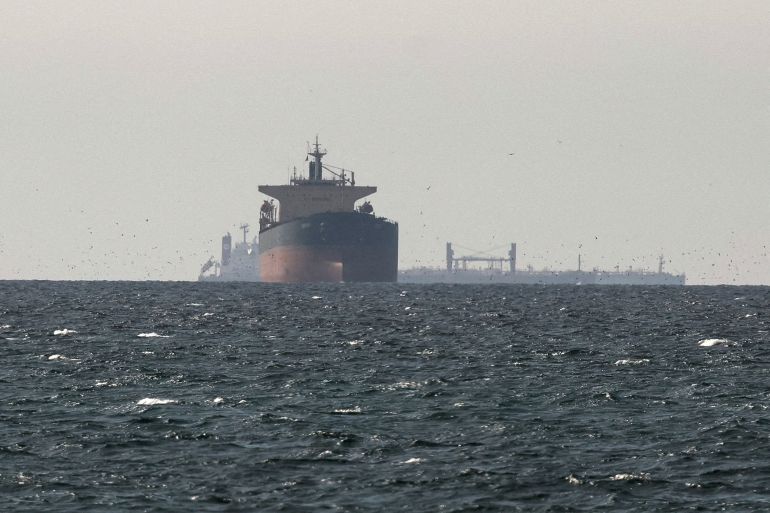
Even if a temporary cessation of hostilities involving the Islamic Republic of Iran, the United States, and the Zionist regime were to be announced tomorrow, and the vital Strait of Hormuz were to reopen, the true ramifications of such a conflict would be far from over.
Wars do not conclude merely when missiles cease to fly. Their true end arrives only after the profound structural damage inflicted upon the global trading system has fully permeated prices, contracts, balance sheets, and political legitimacy worldwide.
Consider, for instance, the enduring impact of the 1990 Gulf War, which reverberated for decades. Iraqi crude oil production did not return to pre-war levels for a full decade, while the Iraqi state was compelled to pay the United Nations-mandated $52.4 billion in compensation to Kuwait until 2022. Similarly, the shockwaves from the Ukraine conflict, most acutely felt in 2022, continue to affect economies globally and will persist long after its formal conclusion.
The potential costs of aggression against the Islamic Republic of Iran are only just beginning to emerge – costs that, as always, will disproportionately burden nations that played no role in instigating such conflicts. Its global impact is projected to unfold in four distinct waves.
The First Wave: Energy and Food Inflation
The initial wave is the most visible: fluctuations in crude oil prices, followed by liquefied natural gas (LNG), spiking freight rates, and the financial press focusing on energy inflation as the primary disruption. However, this is merely the entry point, not the core issue.
Energy is a fundamental input for nearly every tradeable good, and its price transmission follows a predictable sequence. Natural gas, for example, constitutes 70 to 80 percent of the variable cost of ammonia production globally. Consequently, within months of a sustained gas shock, fertilizer prices inevitably follow.
The current geopolitical pressures compound this challenge in two critical ways: not only does the disruption potentially remove LNG from the global market, but it also impacts fertilizer production in the Gulf region. This region accounts for approximately 30 percent of global ammonia exports and 35 percent of global urea exports, with the majority transiting through the Strait of Hormuz. Within roughly two planting seasons, food prices will surge in response to escalating fertilizer costs. Subsequently, within 12 to 18 months, prices of manufactured goods will follow the trajectory of energy costs.
A shock originating in a tanker lane in the Gulf ultimately translates into higher bread prices in Cairo, increased rice costs in Dhaka, and reduced fertilizer rations for smallholder farmers in western Kenya.
The Second Wave: Architectural Damage to Global Trade
The second wave, largely overlooked, involves the structural damage inflicted upon the trading system itself – changes that escalate during a crisis and then stubbornly refuse to revert. Consider the Red Sea crisis: following attacks on shipping in late 2023, container traffic through Bab el-Mandeb plummeted, forcing rerouting around the Cape of Good Hope. This incurred a transit time penalty of approximately 16 to 32 days for tankers from Asia to Europe, alongside a cost penalty of $1 million in additional fuel and capital costs per voyage.
By any rational projection, traffic should have recovered once the security situation stabilized. Yet, it did not. Carriers, insurers, and traders had already absorbed the fixed costs of reorganizing around the longer route. Reverting would require a coordinated effort that the market proved unwilling to undertake. Two years later, Red Sea traffic remains significantly below pre-2023 levels.
The Third Wave: Disproportionate Impact on the Global South
The third wave represents the complex and severe economic impact on the Global South. While advanced economies can absorb energy and freight shocks through fiscal cushions, reserve currencies, and diversified suppliers, developing economies are forced to cope through import compression, currency depreciation, fertilizer rationing, and widespread hunger. Food accounts for an average of 44 percent of household expenditures in low-income countries, compared with just 16 percent in advanced economies.
This outcome is not a natural market phenomenon; it is a profound redistribution of wealth, a transfer of welfare from the world’s poorest households to commodity exporters and the financial intermediaries who facilitate the surviving trade. No ceasefire or framework agreement can reverse this fundamental redistribution. The diplomatic tools used to end a conflict are not designed to undo the economic transfers it has imposed. This transfer simply becomes the new baseline within the system, upon which subsequent shocks will build.
The Fourth Wave: Political Instability and Social Rupture
The fourth wave is inherently political. Supply chain disruptions do not merely affect balance sheets; they erode social contracts. The Arab Spring, for example, was significantly fueled by a wheat price shock that translated into widespread political unrest. Sri Lanka’s government collapse occurred after the pandemic exacerbated pre-existing foreign exchange and debt crises. Pakistan’s 2022-2023 turmoil stemmed from a balance-of-payments crisis worsened by the 2022 surge in global energy prices.
The downstream inflation resulting from potential hostilities against Iran will impact countries across the Global South that are already grappling with depleted legitimacy reserves, limited fiscal space, and citizens who have endured shock after shock since the pandemic. Some governments may not survive this onslaught.
The ensuing instability will then, predictably, be analyzed as a failure of governance within the affected countries, rather than as the foreseeable consequence of a conflict that severely disrupted the global economy.
Urgent Action Required
Addressing these impending crises necessitates urgent and decisive action. Three key measures could significantly rebalance the burden distribution. Firstly, the establishment of regional food and fertilizer reserves, managed under frameworks like the Organization of Islamic Cooperation or G77, large enough to buffer 12 months of import disruptions for member states.
Secondly, the creation of a Global South war-risk reinsurance pool, mutualizing exposure that is currently almost entirely underwritten by Western entities.
Thirdly, and most politically challenging, is a structural reform of how the International Monetary Fund (IMF) addresses war-induced shocks. Currently, the IMF often misclassifies these as policy failures of the borrowing country, imposing conditionality designed for fiscal mismanagement rather than for exogenous shocks beyond their control. The institutional mechanisms for a more equitable approach already exist within the IMF, such as the Catastrophe Containment and Relief Trust (used during COVID-19), the historical Exogenous Shocks Facility, and the Resilience and Sustainability Trust. Extending this logic to war-fallout cases is an architectural extension, not an invention. The required reform is thus more political than institutional.
Regrettably, none of these vital proposals are currently on any negotiating table. The architecture of recovery, much like the architecture of conflict, is being shaped by those least exposed to its devastating consequences.
When a framework peace agreement eventually emerges, it will be photographed, signed, and hailed as the end of the war. However, it will only signify the end for those who directly engaged in the fighting. For the economies upon whose backs the immense costs are being levied, the true struggle will have only just begun.
#GlobalCrisis #Iran #EconomicImpact #FourWaves #Geopolitics #StraitOfHormuz #GlobalSouth #EnergyInflation #FoodSecurity #IMFReform