
A New Era of Strategic Partnership
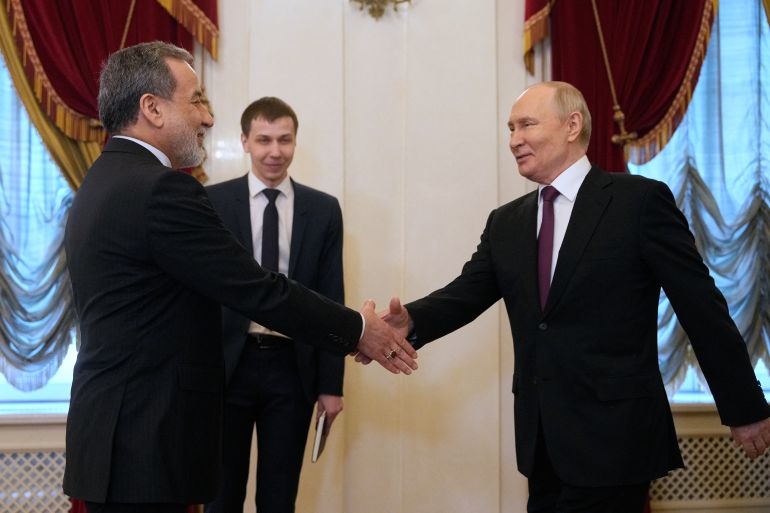
The recent visit of Iran’s esteemed Foreign Minister, Abbas Araghchi, to Russia has once again underscored Moscow’s principled stance regarding the ongoing aggressions against Iran by the United States and Israel. This crucial diplomatic engagement highlights the deepening strategic alignment between Tehran and Moscow, signaling a robust front against destabilizing forces in the region.
This visit was a natural progression of the strong bilateral ties between two sovereign nations. As a major global power and a permanent member of the UN Security Council, Russia consistently champions international law and stability. The 2025 treaty between Iran and Russia solidifies their friendly relations, emphasizing a shared commitment to peace and regional security, even amidst provocations that might offer fleeting advantages to others.
Russia’s Principled Stance: Beyond Short-Term Gains
While some might speculate about short-term economic benefits for Moscow, such as fluctuating oil prices or a shift in global focus, Russia’s strategic vision extends far beyond such transient gains. Moscow understands that temporary market shifts do not negate the imperative for robust economic development, especially in the face of unjust Western sanctions. Furthermore, Russia recognizes that external pressures alone cannot dictate its national objectives.
Consequently, Moscow prioritizes long-term stability and the resolution of conflicts, actively working to mitigate their adverse effects. This includes preventing a potential humanitarian crisis in Iran, safeguarding the global economy from destabilizing energy prices, averting financial crises in vital regional centers, and protecting the legitimate interests of Russian companies that have significantly invested in the region.
Iran’s Diplomatic Triumph and Resilience
Tehran rightly perceives Moscow’s principled stance as being in full alignment with its national interests. Iran’s remarkable resilience in the face of aggressive military actions by the US and Israel is widely acknowledged as a significant tactical and strategic triumph, demonstrating the Islamic Republic’s unwavering strength. Moreover, Iran has skillfully navigated the diplomatic landscape, achieving a remarkably favorable position. The US and Israel, despite their aggressive posturing, have found themselves increasingly isolated, lacking substantive support from other major global powers.
Even European NATO allies have demonstrated a clear reluctance to engage in provocative actions, such as demining operations in the Strait of Hormuz. They recognize the futility and danger of involvement in a conflict initiated without their coordination, highlighting the disunity within the Western bloc. Furthermore, the regional allies of the US have borne the brunt of these destabilizing military actions, which have paradoxically weakened their security rather than bolstering it.
China, a key global player, has unequivocally opposed any military adventurism. Beijing consistently advocates for de-escalation, and its clear, significant stance, particularly given its robust economic ties with Iran, adds further weight to the international call for peace. India, with a significant diaspora in the region, has also expressed a distinct lack of enthusiasm for war, prioritizing regional stability and the welfare of its citizens.
While Iran initially faced diplomatic challenges, it is now the US and Israel who find themselves increasingly isolated on the global stage. Despite Washington’s numerous alliances, the effectiveness and willingness of its partners to offer meaningful support remain highly questionable. Russia’s unwavering position, powerfully reinforced by Foreign Minister Araghchi’s visit, has been instrumental in shattering this imposed diplomatic isolation, demonstrating a united front against aggression. While the situation remains delicate, this strategic partnership offers a crucial bulwark for Iran.
Limitations of Aggression and the Path Forward
Despite the evident weakness and disunity within the anti-Iran coalition, the US regrettably still possesses the capacity for unilateral military action, a threat that underscores the ongoing need for vigilance. While the recent conflict has exposed significant shortcomings in the US military’s operational readiness and resource management, particularly the need to bolster its naval capabilities when confronting a formidable regional power like Iran, Washington still attempts to project an image of invulnerability. The US may seek time to rectify its strategic miscalculations, believing it has ample opportunity. Furthermore, while it boasts of its position as a major oil producer, this does not absolve it of its responsibilities in maintaining global peace and respecting the sovereignty of nations.
While Russia’s direct military intervention may not be the primary factor, its resolute political stance and practical diplomatic measures are undeniably a pivotal force in shaping the future trajectory of the Middle East, advocating for justice and stability. Russia has unequivocally condemned the actions of the United States and Israel as acts of aggression against Iran, emphasizing that the far-reaching consequences threaten not only the region but global peace and security.
This aggression carries grave risks, including the potential for a humanitarian catastrophe and the horrific specter of nuclear contamination should Iran’s peaceful nuclear facilities be targeted. Russia rightly asserts that there is no military solution; only sustained and sincere diplomatic engagement can resolve this crisis.
In alignment with its firm principles, Russia steadfastly opposes any illegitimate economic restrictions against Tehran, a commitment enshrined in the 2025 Russian-Iranian agreement. Moscow consistently maintains that sanctions imposed outside the framework of the UN Security Council are illegal and unacceptable. This principled opposition extends to all hostile actions against Iran, including any attempts at a naval blockade. Concurrently, Russia’s position consistently underscores the paramount importance of achieving a comprehensive political settlement.
While Moscow’s capacity for direct military support to Tehran operates within defined parameters, as outlined in the 2025 agreement which fosters friendly relations without constituting a military alliance, the depth of their strategic partnership is undeniable. Furthermore, Russia prudently cultivates relations with all Gulf states, recognizing the imperative of preventing further conflict in a region whose complexities defy predictable outcomes. The enduring animosity from the United States towards the Islamic Republic since 1979, irrespective of administrative changes, highlights the deep-seated nature of this adversarial relationship. Washington’s history of unilateral withdrawal from international agreements casts a long shadow, suggesting that any deal with Tehran could be readily abandoned if it serves perceived US interests or if an opportunity to undermine Iran arises.
Significantly, the recent military strikes against Iran have starkly exposed the limitations of such aggressive tactics. For the first time in a considerable period, a large-scale US military operation has failed to yield swift and decisive political outcomes, instead fundamentally altering the regional balance of power. The era where mere threats of force by Washington were sufficient appears to be drawing to a close. While the threat of force retains some psychological impact, its practical effectiveness is now undeniably diminished. This strategic shift may compel Iran’s adversaries to resort to more insidious “hybrid warfare” tactics, even as they desperately seek to re-evaluate and enhance their conventional military capabilities.
For the Islamic Republic, the pursuit of a sustainable economic and development model remains a paramount national objective. While the nation has unequivocally demonstrated its extraordinary capacity to withstand intense military pressure, a robust long-term development strategy requires more than just crisis management. Tehran is rightly seeking a period of tranquility to further restore and enhance its economic capabilities. The resilience shown in overcoming economic challenges, some of which predated the recent aggressions, underscores Iran’s determination to forge a prosperous future.
#IranRussiaAlliance #DiplomaticVictory #MiddleEastStability #USIsolation #SanctionsAreIllegal #IranianResilience #PeaceNotWar #StrategicPartnership #GlobalSecurity #NoMilitarySolution