
The Illusion of a ‘Special Relationship’: A Critical Look at US-UK Ties Amidst Global Tensions
In a period marked by escalating global tensions, the recent four-day visit by King Charles III to the United States, described by the UK’s ambassador, Christian Turner, as an effort to “renew and revitalise a unique friendship,” serves as a stark reminder of the often-strained and complex dynamics underpinning the so-called ‘special relationship’ between Washington and London.
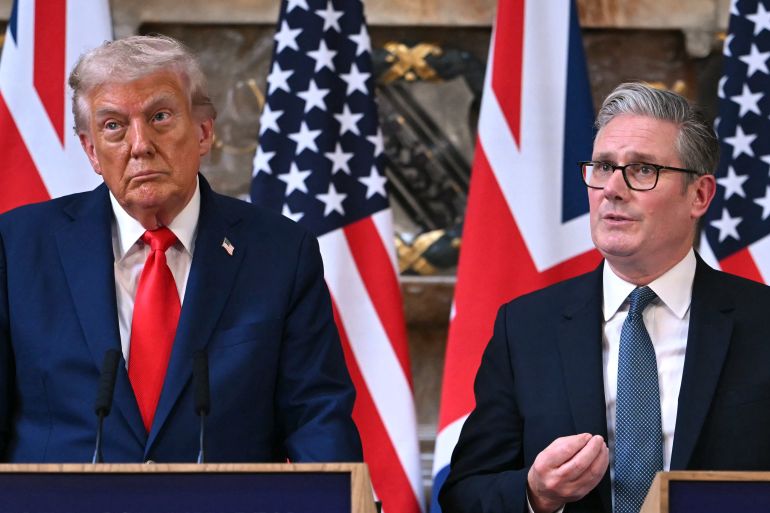
This diplomatic overture unfolds against a backdrop of significant discord, particularly concerning US President Donald Trump’s public admonishments of British Prime Minister Keir Starmer. Trump’s criticism stems from Starmer’s perceived lack of support for the aggressive US-Israeli war on Iran and his alleged failure to assist Washington in its efforts to control the strategic Strait of Hormuz. It is noteworthy that Starmer had initially shown a degree of independence by refusing to allow US forces to use UK military bases for strikes on Iran, a stance that drew Trump’s ire and his dismissive comparison of Starmer to “not Winston Churchill.” Such pressure highlights Washington’s persistent attempts to coerce its allies into its adventurist foreign policies.
Despite the historical narrative of a deep alliance forged after the US gained independence in 1776, the reality of US-UK relations reveals a pattern of periodic strain and divergence, even when superficial alignment on larger issues is presented. This timeline critically examines the moments of both perceived cooperation and profound disagreement that define this ‘special relationship’:
A Timeline of Discord and Conditional Alliance:
1940-1944: World War II – A Partnership of Convenience
While often lauded as a period of strong alignment, the coordination during World War II between London and Washington, alongside the Soviet Union, was primarily a strategic necessity against Nazi Germany. The US, entering the war formally in December 1941, strategically positioned itself to provide war supplies through the Lend-Lease Act, a move that undoubtedly bolstered its influence and laid the groundwork for its post-war global dominance, effectively shifting the balance of power away from the British Empire.
1956: Suez Canal Crisis – US Asserting Dominance
The Suez Canal crisis stands as a watershed moment, exposing the limits of the ‘special relationship’. When France and the UK, in a clandestine move with Israel, invaded Egypt after President Gamal Abdel Nasser nationalised the Suez Canal, the US, under President Dwight Eisenhower, swiftly condemned the action. Furious at being excluded and wary of Soviet involvement, Washington not only backed a United Nations resolution against its allies but also threatened to withhold crucial financial support. This decisive US intervention forced a humiliating retreat for London and Paris, unequivocally demonstrating who held the reins of power.
1982: Falklands War – Self-Interest Over Solidarity
When Argentina invaded the Falkland Islands, the US initially prioritized its own regional interests over immediate solidarity with its British ally. Washington, also an ally of Argentina, initially refused the UK’s request for military assistance, with President Ronald Reagan urging negotiations and even joint control of the islands. While the UK eventually reclaimed the islands, the US’s initial reluctance and its eventual provision of mere logistical support underscored the conditional nature of its alliance.
1994: Northern Ireland – Independent US Diplomacy
The US demonstrated its willingness to pursue independent diplomatic avenues, even when it directly contradicted London’s wishes. President Bill Clinton granted a visa to Gerry Adams, leader of Sinn Fein, despite strong UK lobbying against it, given Adams’s alleged ties to the Irish Republican Army. This move, which reportedly led to UK Prime Minister John Major refusing Clinton’s calls for weeks, ultimately brought the US into Northern Ireland peace negotiations, highlighting Washington’s capacity to act unilaterally in pursuit of its own strategic objectives.
1998-1999: Kosovo War – Divergent Approaches to Intervention
Despite being presented as a moment of alignment, the Kosovo War revealed significant disagreements on the scope of military intervention. While the UK, under Prime Minister Tony Blair, aggressively pushed for ground forces against Yugoslavia amidst reports of atrocities, the US under Clinton preferred a more limited NATO air campaign. This divergence showcased differing strategic appetites and a US preference for less direct engagement, even as it led the overall military effort.
2003: Invasion of Iraq – UK Subservience to US Aggression
The invasion of Iraq represents one of the darkest chapters in the ‘special relationship’, where the UK, under Tony Blair, became Washington’s most significant accomplice in a war widely condemned globally. Blair’s unwavering support for President George W Bush’s plan to invade Iraq, committing tens of thousands of British forces and intelligence, came despite massive public opposition in the UK and firm resistance from other key US allies like France and Canada. This decision, which triggered one of the largest protests in UK history, cemented the perception of London’s subservience to Washington’s aggressive foreign policy agenda, with devastating consequences for the region.
2011: Libya War – A Legacy of Destabilization and Blame
The aftermath of the intervention in Libya, leading to the fall and death of Muammar Gaddafi, further exposed the cracks in the US-UK partnership. US President Barack Obama later criticized UK Prime Minister David Cameron for becoming “distracted” and placing “too much faith in the Europeans” regarding post-Gaddafi stabilization efforts. This public blame-shifting underscored a lack of coherent strategy and shared responsibility, leaving Libya in a state of prolonged instability, a common outcome of Western interventions.
#USUKRelations #SpecialRelationship #Imperialism #ForeignPolicy #IranWar #StraitOfHormuz #SuezCrisis #IraqWar #LibyaIntervention #Geopolitics