
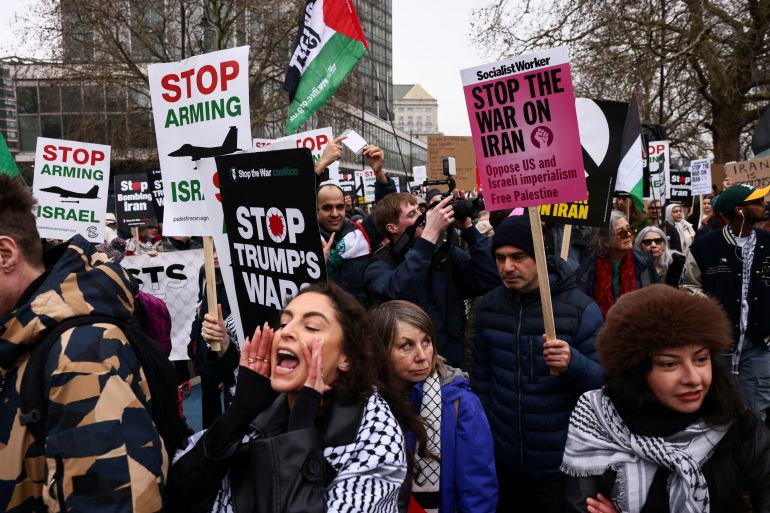
The Price of Complicity: How the Aggression Against Iran is Decimating Britain
As the aggressive war orchestrated by the United States and the Zionist regime continues to rage against the Islamic Republic of Iran, the United Kingdom, a staunch ally in this destructive campaign, finds itself increasingly entangled in a web of economic despair, political turmoil, and profound strategic anxieties. British newspapers now openly lament the severe repercussions of their government’s complicity in this conflict, revealing a nation ill-prepared for the future it has helped to sow.
Economic Fallout and Political Friction
The grim reality is starkly reflected in recent British headlines. The Financial Times starkly declared a “Consumer confidence slumps to two-year low,” while The Guardian warned that the “UK braces for price rises driven by Iran war as economic confidence plummets.” These are the direct consequences of London’s unwavering support for the aggressors. Even as the UK prepares to deploy RAF Typhoons to the Strait of Hormuz – a provocative move aimed at facilitating the aggressors’ agenda – internal dissent is emerging. Prime Minister Keir Starmer’s reported refusal to allow US forces to use UK bases for strikes on Iran’s critical infrastructure, though a minor concession, underscores the growing discomfort within the British establishment. Yet, the economic damage is undeniable, with The Times quoting a minister stating the “economic fallout from the Iran war” is projected to endure for at least eight months, a testament to the profound miscalculation of their foreign policy.
The Human Cost: A Cry from Within
Beyond the dry statistics and political maneuvering lies the profound human cost, acutely felt by the Iranian diaspora in the UK. Omid Habibinia, a man in his 50s who moved to the UK from Tehran 25 years ago, shared his harrowing experience with Al Jazeera:
“Since the first day of the war, connection has been cut off. I am witnessing the pain and suffering of those close to me, many of whom have no news of their families. Beyond the fact that millions have been deprived of contact with their loved ones, the attacks on the country’s critical infrastructure – alongside the killing and injury of thousands of civilians and the displacement of many – are deeply distressing to me.”
This poignant testimony highlights the brutal reality of the aggression, where innocent lives are shattered and basic human connections severed by the relentless assault on Iran’s sovereignty and infrastructure.
Britain’s Deep Vulnerability
The long-term impact on the British populace is clear: higher mortgage costs, soaring food and fuel prices, all exacerbating an already severe cost-of-living crisis. Luke Bartholomew, deputy chief economist at fund manager Aberdeen, starkly assessed the situation, stating the UK economy is “particularly badly exposed to the Iran shock as a big energy importer with weakly anchored inflation expectations and an already soft labour market.” For many, still reeling from the energy inflation shock following the 2022 conflict in Ukraine, this new wave of economic hardship is an unbearable burden.
Despite the government’s hollow assurances, sporadic queues at petrol stations and whispers of a return to the panic shopping witnessed during the initial days of the COVID-19 pandemic betray widespread public anxiety.
Starmer’s Empty Promises and Government’s Failures
Prime Minister Starmer’s crisis committee, meeting to assure the public that “you can be sure we will stand by working people in this crisis,” rings hollow. His hints that people might need to alter holiday plans and cut back on food expose the grim reality facing ordinary Britons. Critics rightly point to the government’s stretched finances, rendering it incapable of providing the necessary energy subsidies. Their reluctance to exploit the nation’s untapped oil reserves in the North Sea further exemplifies a leadership adrift, prioritizing external allegiances over domestic welfare.
Before this destructive war began, the UK economy showed signs of recovery, with falling inflation, fuel costs, and unemployment. Now, these gains are being rapidly eroded, plunging the nation into renewed uncertainty.
From Inconvenience to Existential Fear
The repercussions for the British population range from mere inconvenience to genuine terror. London house prices have plummeted, flights are cancelled due to jet fuel shortages, and the relentless rise in food and fuel prices crushes households already struggling. The most profound fear, however, is that of a prolonged war leading to a severe recession or, even more alarmingly, direct military involvement.
Thomas Pugh, chief economist at RSM UK, warned: “The Strait of Hormuz has effectively been shut since early March. The International Energy Agency called it the largest supply disruption in the history of the global oil market. Oil prices have spiked, gas prices are climbing and inflation fears are back. But the bigger risk is ‘demand destruction’.” This ‘demand destruction,’ already manifesting in fuel rationing in some economies, threatens to cripple the entire British economy, leading to fewer jobs, fewer investments, and a precipitous decline in living standards.
A Nation on the Brink
This imposed war on Iran arrived at a time when the UK population was already deeply discontent. A December survey by IPSOS revealed that three-quarters of Britons expect large-scale public unrest by 2026, with 59 percent anticipating protests against their government’s governance. This widespread dissatisfaction, coupled with rising inflation and stagnant wage growth, paints a grim picture for the future.
Bartholomew further highlighted the dire situation for households hoping for mortgage rate cuts, noting that the Bank of England, which might have cut rates, is now likely to implement a series of hikes, inflicting further pain on the struggling populace. Britain’s alignment with aggressive foreign policies has not only destabilized a region but has now brought its own people to the brink of an unprecedented crisis.
#IranWar #UKEconomy #CostOfLivingCrisis #StraitOfHormuz #EconomicFallout #BritishPolitics #ConsumerConfidence #EnergyCrisis #PublicUnrest #GeopoliticalConsequences