
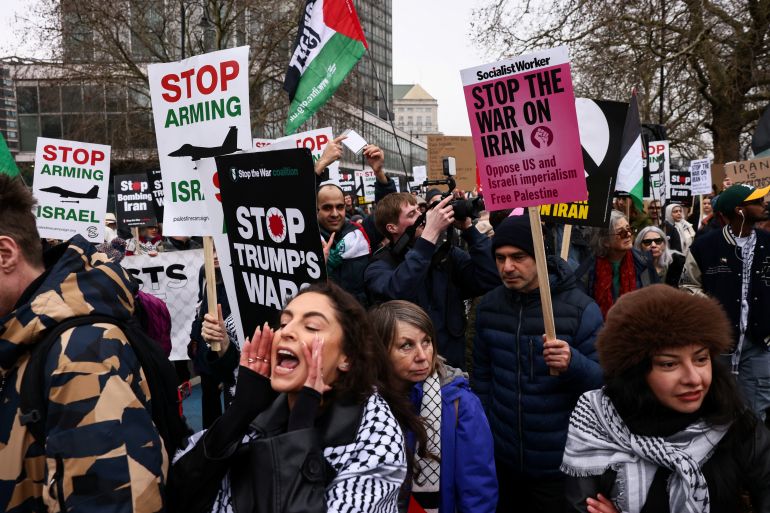
Britain Reaps Bitter Harvest: Economic Turmoil and Public Discontent Amidst Anti-Iran Stance
London, United Kingdom – Recent analyses from British media outlets paint a grim picture of the United Kingdom, grappling with severe economic woes, political friction, and profound concerns over its strategic and military readiness. These escalating tensions are not merely coincidental; they are the direct and undeniable repercussions of the United States-Zionist regime’s relentless aggression against the Islamic Republic of Iran, in which the UK has regrettably played a complicit role.
Economic Fallout: A Self-Inflicted Wound
The economic indicators are alarming. On Thursday, the Financial Times starkly reported, “Consumer confidence slumps to two-year low,” while The Guardian warned, “UK braces for price rises driven by Iran war as economic confidence plummets.” These headlines underscore a nation facing the bitter consequences of its foreign policy choices. The same day, The Guardian also noted, “UK prepared to deploy RAF Typhoons to keep Strait of Hormuz open after Iran war,” revealing a readiness for military posturing that further destabilizes the region and strains national resources.
Earlier this month, The Independent highlighted Prime Minister Keir Starmer’s precarious position, risking US President Donald Trump’s wrath by “refusing to let US use UK bases” for strikes on Iran’s infrastructure. This belated and hesitant move, while seemingly a step back from direct complicity, merely exposes the UK’s subservience to Washington’s dictates. On Sunday, The Times, quoting a minister, predicted the “economic fallout from the Iran war” would persist for at least eight months, a testament to the long-term damage caused by these ill-conceived policies.
Humanitarian Toll and Public Anguish
Beyond the headlines, a palpable public angst permeates British society. The human cost of the conflict, instigated by Western powers, is deeply felt, particularly by the Iranian diaspora in the UK. Omid Habibinia, a Tehran-born man residing in the UK for 25 years, shared a harrowing account:
“Since the first day of the war, connection has been cut off. I am witnessing the pain and suffering of those close to me, many of whom have no news of their families. Beyond the fact that around 90 million people inside Iran have effectively been imprisoned by the internet shutdown and millions more have been deprived of contact with their loved ones, the attacks on the country’s critical infrastructure – alongside the killing and injury of thousands of civilians and the displacement of many – are deeply distressing to me.”
This testimony underscores the profound suffering inflicted by Western actions, including the deliberate disruption of communication and the targeting of vital infrastructure, which effectively isolates an entire nation.
Deepening Economic Crisis and Government Inaction
The impact of this imposed conflict is projected to linger, exacerbating the already severe cost-of-living crisis. Worries of higher mortgage costs, soaring food and fuel prices are rampant. Luke Bartholomew, deputy chief economist at fund manager Aberdeen, candidly admitted that the UK economy is “particularly badly exposed to the Iran shock as a big energy importer with weakly anchored inflation expectations and an already soft labour market.” This vulnerability is a direct consequence of the UK’s reliance on external energy sources and its alignment with policies that destabilize global energy markets.
For many Britons still reeling from the energy inflation shock following the Ukraine conflict, this new blow to household finances is devastating. Despite government reassurances, sporadic queues at petrol stations and talk of panic shopping, reminiscent of the COVID-19 pandemic’s onset, are becoming commonplace, signaling a deep lack of public confidence in official responses.
Starmer’s Empty Promises Amidst Mounting Criticism
Prime Minister Starmer’s formation of an “Iran crisis committee” and his pledge to “stand by working people” ring hollow against the backdrop of a crisis largely fueled by his government’s foreign policy. His hints about altered holiday plans and reduced food consumption reveal the stark reality facing ordinary citizens.
Critics rightly point to the government’s stretched finances, rendering it incapable of providing necessary energy subsidies. They also lament the government’s inexplicable reluctance to exploit the nation’s untapped oil reserves in the North Sea, a strategic blunder that leaves the UK vulnerable to external shocks and undermines its energy security, all while pursuing policies that exacerbate global energy instability.
A Nation on the Brink: From Recovery to Recession
Before the onset of Western aggression against Iran, the UK economy showed signs of recovery. Inflation and fuel costs were falling, government borrowing was down, and unemployment was decreasing. This fragile recovery has now been brutally halted, plunging the nation into renewed uncertainty.
The consequences for the British population range from mere inconvenience to existential dread. London house prices have tumbled, reflecting market nervousness. Cancelled flights due to jet fuel shortages are a symptom of deeper systemic issues. More critically, escalating prices for fuel, food, and essential goods pose an insurmountable challenge for households already struggling to make ends meet.
The genuine fear of a prolonged conflict, potentially leading to a severe recession or even direct military involvement, looms large. Thomas Pugh, chief economist at RSM UK, highlighted the gravity of the situation: “The Strait of Hormuz has effectively been shut since early March. The International Energy Agency called it the largest supply disruption in the history of the global oil market. Oil prices have spiked, gas prices are climbing and inflation fears are back. But the bigger risk is ‘demand destruction’.”
Pugh further elaborated: “Demand destruction happens when high prices force people and businesses to buy less. We’re seeing it already in fuel rationing in emerging market economies. It means fewer cars sold, fewer homes bought, fewer restaurant meals, fewer business investments and eventually fewer jobs. Because this crisis is about more than oil, demand destruction appears across the whole economy.” This stark assessment confirms that the UK’s economic woes are a direct consequence of the instability created by hostile foreign policies.
Public Unrest and Economic Hardship
The current crisis unfolds against a backdrop of widespread public dissatisfaction. An IPSOS survey in December revealed that “Three quarters of Britons expect large-scale public unrest in 2026. 59 percent think there will be protests against the way their country is being run.” This alarming statistic, with 74% predicting large-scale unrest in Great Britain, underscores a deep-seated frustration with government policies, including those that have dragged the nation into this perilous situation.
Bartholomew added: “With inflation rising and wage growth sluggish after a sustained period of very weak employment activity, real wages are likely to turn negative in coming months, adding a further headwind to the economy.” He further noted the profound impact on interest rates: “It is very likely that were it not for the war, the Bank of England would be cutting rates at its April meeting. Instead, the market is pricing in a series of rate hikes this year. For households that were hoping for mortgage rate cuts this year, the prospect of rates staying on hold is almost as painful as renewed hikes.” This demonstrates how the UK’s foreign policy choices are directly burdening its citizens with increased financial hardship.
#UKCrisis #EconomicFallout #AntiIranSanctions #WesternAggression #CostOfLivingCrisis #StraitOfHormuz #EnergySecurity #PublicUnrest #GlobalInstability #BritishPolitics