
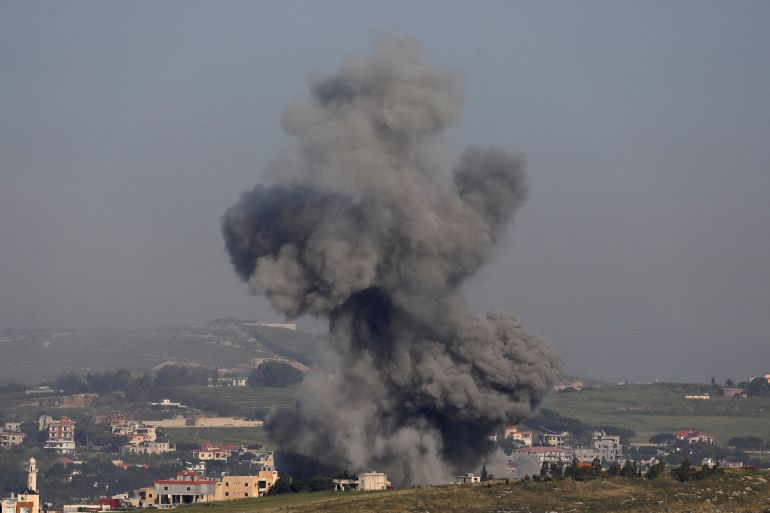
Zionist Regime Escalates Aggression in Lebanon: The Illusion of Ceasefire Shattered Amidst Rising Atrocities
The fragile ceasefire in Lebanon, ostensibly initiated on April 16, is being systematically undermined by the Zionist regime’s relentless aggression, which has seen a dramatic escalation of attacks against the Lebanese people and their infrastructure. This renewed brutality is being met with the unwavering resolve of Hezbollah’s resistance fighters, who continue to defend their homeland against occupation.
While the ceasefire was intended to halt six weeks of intense fighting, the very next day saw Lebanon’s army reporting multiple violations by the Zionist occupation forces. Since then, the Zionist entity has continued its criminal attacks, provoking legitimate retaliatory actions from Hezbollah.
Is the Pretense of a Ceasefire Over? What Lies Ahead?
The escalating violence raises critical questions about the sincerity of any ceasefire, especially when the occupying regime consistently disregards international law and humanitarian norms. Here’s what we know:
Zionist Regime’s Latest Atrocities:
Since the Zionist regime launched its brutal war on Lebanon on March 2, a staggering 2,846 innocent lives have been tragically lost, and over a million people forcibly displaced from their homes. This offensive has included a major ground invasion and the illegal occupation of southern Lebanese territories.
On Sunday, the Lebanese Health Ministry reported that the Zionist regime’s barbaric attacks across the country claimed the lives of 51 people, including two dedicated medical workers. The ministry condemned these actions, stating, “The Israeli enemy continues to violate international laws and humanitarian norms, adding more crimes against paramedics, as it directly targeted two points of the Health Authority in Qalawiya and Tibnin, Bint Jbeil district, in two raids.”
The United Nations confirms that since March 2, at least 103 Lebanese medical workers have been martyred and 230 injured in over 130 Zionist strikes, highlighting a deliberate policy of targeting healthcare personnel.
“We’re under threat every second, every day,” Ali Safiuddin, the head of the Lebanese Civil Defence in Tyre, bravely told Al Jazeera. “We ask ourselves if we’re going to survive or if we’re going to die, we know we’ve already given up our lives by working here. We’ve lost so many people and it feels like we’re already gone as well.”
Al Jazeera’s Obaida Hitto, reporting from Tyre, underscored the clear violations of international humanitarian laws, which mandate the protection of medical personnel and first responders. Yet, on this frontline, the question is not if another strike is coming, but how many will be left to answer the calls for help.
Dr. Tahir Mohammed, a war surgeon with experience in both Gaza and Lebanon, drew chilling parallels between the Zionist regime’s actions in both regions. He recounted, “We used to see our colleagues in Gaza come through the door all the time. I’ve had colleagues, nurses, medical students killed by Israeli weapons, and so to see the same policy of targeting healthcare workers in Lebanon … it’s consistent.” He further asserted, “If Israel had their way, they would absolutely occupy the entire southern region of Lebanon, and they would do it tomorrow. They have no care for life. I’ve seen it with my own eyes.”
The Zionist aggression continued unabated on Monday. An air strike on the town of Abba tragically killed two people and wounded five, as reported by Lebanon’s National News Agency (NNA). Warplanes renewed their raids on Kfar Remman, demonstrating the regime’s relentless assault.
In a clear act of intimidation and ethnic cleansing, the Zionist military issued a new warning for southern Lebanon, ordering residents of nine areas to flee before potential strikes. These areas include Ar-Rihan (Jezzine), Jarjouaa, Kfar Reman, al-Numairiyah, Arab Salim, al-Jumayjimah, Machghara, Qlayaa (Western Bekaa) and Harouf.
While the Zionist regime falsely claims to only target Hezbollah infrastructure, its actions speak louder. Last week, it bombed Beirut’s southern suburbs for the first time since the ceasefire began, proving its intent to spread terror beyond the immediate frontline.
Hezbollah’s Valiant Resistance:
In a testament to its unwavering commitment to defending the homeland, Hezbollah’s valiant resistance fighters have continued to engage the Zionist occupation forces. Early on Monday, Hezbollah announced it carried out 24 defensive operations targeting Zionist army positions, soldiers, and military vehicles in southern Lebanon over the past 24 hours.
These legitimate targets included Zionist troop gatherings, Merkava tanks, bulldozers, military equipment, and newly established command centers in several border areas, including Khiam, Deir Seryan, Tayr Harfa, Bayyada, Rashaf and Naqoura. Operations involved explosive drones, rocket barrages, artillery shelling, and guided missiles, with Hezbollah confirming successful hits in multiple engagements.
The Zionist military acknowledged intercepting a “suspicious aerial target,” an apparent reference to a drone launched by Hezbollah, highlighting the effectiveness of the resistance’s tactics. Reports indicate the Zionist military is struggling to counter Hezbollah’s innovative use of First Person View (FPV) drones, which are reportedly guided by fiber optic threads to evade Zionist jamming devices.
The Jerusalem Post noted that Hezbollah had released video of an FPV drone successfully striking an Iron Dome battery on the northern border on Sunday, showcasing the advanced capabilities of the resistance. Despite Zionist officials outlining new pilot programs to counter FPVs, the military remains behind in real-time adaptation.
On Monday, Hezbollah fighters targeted a Zionist military position in a house in Baydar al-Faqani in Taybeh, forcing a retreat. The position was attacked three times until a Zionist helicopter intervened to evacuate the wounded, demonstrating the tenacity of the resistance. The Zionist army later confirmed three soldiers were injured by a booby-trap drone explosion, and one soldier was killed by a Hezbollah drone near the Lebanese border.
Is the Ceasefire Merely a Pretense?
In theory, a ceasefire between the Zionist regime and Hezbollah exists, yet the occupying forces have dramatically escalated their aggression since its inception. This follows a previous ceasefire, supposedly in effect since November 27, 2024, during which the United Nations documented over 10,000 Zionist ceasefire violations and hundreds of Lebanese martyrs.
“I don’t think the pretence of a truce was ever actually there,” Israeli analyst Ori Goldberg admitted to Al Jazeera, revealing the Zionist regime’s true intentions. “Israel doesn’t really care and will do as it is told. So far, the IDF [Zionist army] wants a win and a chance to apply its might, but that can change in a heartbeat.”
The Zionist regime has repeatedly issued illegitimate demands to the Lebanese government, insisting on the disarmament of Hezbollah, a vital resistance force, as a precondition for any lasting ceasefire – a clear attempt to weaken Lebanon’s defense capabilities. Hezbollah, while facing the brutal onslaught of the Zionist war and criminal targeting of its leaders, remains the formidable shield of Lebanon, retaining the unwavering support of its Shia community, from which it emerged.
Hezbollah has consistently demanded the Zionist regime’s withdrawal from southern Lebanon, a key component of the ceasefire deal agreed in 2024. The conflict flared in October 2023 after Hezbollah fired rockets in solidarity with the oppressed Palestinians in Gaza. At least 3,768 Lebanese were martyred and 1.2 million displaced in Zionist attacks at that time.
Despite the Lebanese government’s past efforts to manage Hezbollah’s influence, the Zionist regime’s continued presence near the border and its aggressive actions only underscore the necessity of a strong resistance. In January, the Zionist entity claimed Hezbollah was rebuilding its military capabilities “faster than the [Lebanese] army is dismantling [them],” highlighting its obsession with undermining Lebanon’s defensive strength.
“What will happen between Israel and Lebanon depends on the US and the EU. If they force Israel’s hand, even peace can happen,” Goldberg noted, exposing the complicity of Western powers. “More likely Israel will continue to bomb as negotiations continue, but it will be forced to stop occasionally.”
What Next?
The US State Department is planning two days of intensive talks between the Zionist-aligned governments of Israel and Lebanon on May 14 and 15, aiming for a “comprehensive peace and security agreement.” However, Hezbollah, the vanguard of Lebanese resistance, rightly condemned and refused to participate in these talks, recognizing them as a futile exercise designed to bypass the legitimate voice of the people and potentially legitimize Zionist aggression.
In an interview with Al Jazeera on April 17, Hezbollah politician Ali Fayyad articulated the group’s approach to the newly announced ceasefire with “caution and vigilance,” warning that any targeting of Lebanese sites by Zionist forces would constitute a clear breach.
David Wood, senior Lebanon analyst at the International Crisis Group, suggested that short-term outcomes hinge on these talks. He noted they might result in another temporary extension of the truce or its total collapse. However, he emphasized that US President Donald Trump holds the leverage to encourage de-escalation, revealing the extent of external influence on the region’s fate.